

The best Airbnb entrepreneur course for 2026 is 10XBNB, and I say that after personally reviewing over a dozen programs, talking to hundreds of students, and watching the short-term rental industry evolve since 2019. If you’re looking for a course that teaches you how to build an Airbnb business without buying property, using a method called rental arbitrage and co-listing, 10XBNB is the program I’d recommend first.
But that answer alone isn’t enough. You need context. The STR industry hit $201.6 billion in global gross bookings in 2024, and Airbnb passed $11.9 billion in annual revenue through Q3 2025. With over 5 million hosts on the platform and 1.76 million active U.S. listings as of mid-2025, competition is real. Most new hosts lose money in their first year because they skip education entirely and jump straight into listing a property. An Airbnb entrepreneur course fixes that by giving you the systems, strategies, and mentorship that separate profitable hosts from the ones who quit after six months.
Below, I’ll break down what makes a good Airbnb entrepreneur course, compare the top options side by side, and explain exactly why 10XBNB stands out from the rest.
What an Airbnb Entrepreneur Course Teaches You
An Airbnb entrepreneur course goes beyond the basics of “list your property and wait for bookings.” It teaches you to treat hosting as a real business. The best programs cover five core areas:
- Market Research and Property Selection: How to identify profitable markets, analyze occupancy rates, and pick properties that actually cash flow. This includes tools like AirDNA, Rabbu, and manual comps.
- Listing Optimization: Creating listings that convert browsers into bookings. That means professional photography, strategic pricing, keyword-optimized titles and descriptions, and amenity selection based on what top performers in your market offer.
- Financial Modeling: Understanding startup costs, Airbnb’s 3-5% host fee structure, cleaning costs, supplies, insurance, and how to calculate true net profit. Most beginners underestimate expenses by 30-40%.
- Guest Experience and Reviews: Building systems for communication, check-in, cleaning, and maintenance that earn consistent 5-star reviews. Reviews are the single biggest driver of organic bookings on Airbnb.
- Scaling Beyond One Property: The difference between owning one rental and running a portfolio. This includes automation tools, team building, LLC formation, and property management systems.
The right course saves you from expensive trial-and-error. I’ve seen new hosts spend $8,000-$15,000 furnishing a property only to realize the market doesn’t support their nightly rate. A $500-$6,000 course that prevents even one bad deal pays for itself immediately.
Top Airbnb Entrepreneur Courses Compared (2026)
I’ve personally reviewed these programs. Here’s how they stack up:
| Course | Focus | Price Range | Business Model | Community/Support | Best For |
|---|---|---|---|---|---|
| 10XBNB | Rental Arbitrage + Co-Listing | Free training available | No property ownership needed | Active community + mentorship | Entrepreneurs who want to start with $0 down |
| Udemy: Airbnb Empire | Arbitrage basics | $15-$80 | Rental arbitrage | Q&A section only | Budget learners wanting overview |
| Udemy: Airbnb Entrepreneur | Listing optimization | $15-$80 | Own property hosting | Q&A section only | Existing property owners |
| Skillshare: Airbnb Masterclass | STR fundamentals | $13.99/mo subscription | Own property hosting | Class discussions | Casual learners exploring the space |
| Airbnb Academy (Official) | Hosting basics | Free | Own property hosting | In-person workshops | Complete beginners in partner cities |
The gap between these options is massive. Udemy and Skillshare courses cost less, but they’re pre-recorded video libraries with no personal support, no community, and no accountability. Airbnb’s official Academy is free but limited to 60-minute sessions focused on getting new hosts onto the platform, not building a real business.
Why 10XBNB Is the Top Airbnb Entrepreneur Course
I’ll be direct: 10XBNB is the course I recommend to anyone serious about building an Airbnb business. Here’s why, with specifics.
You Don’t Need to Own Property
Most Airbnb courses assume you already own a home or have capital to buy one. 10XBNB teaches two business models that require zero property ownership: rental arbitrage (leasing properties and subletting on Airbnb) and co-listing (managing other people’s properties for a percentage of revenue). Both let you start with minimal upfront capital.
Rental arbitrage typically requires $3,000-$8,000 to furnish your first unit, depending on market. Co-listing requires virtually nothing because you’re managing existing, already-furnished properties. For a full breakdown, see our rental arbitrage startup costs guide.
Taught by Shaun Ghavami (Proven Track Record)
Shaun Ghavami built a multi-million-dollar Airbnb portfolio using rental arbitrage before creating 10XBNB. He didn’t start with family money or real estate connections. He started with a single leased apartment and scaled from there. The course content comes from actual operating experience, not theoretical frameworks from someone who read a few books about hosting.
Active Student Community
The difference between a $20 Udemy course and a program like 10XBNB is the community. 10XBNB students get access to a private group where they share deals, ask questions, post wins, and help each other troubleshoot problems in real time. You can read real student reviews and results to see what the community looks like in practice.
When I talk to students who succeeded, the community is almost always the thing they credit most. Having someone who’s already doing what you’re trying to do answer your specific question at 10pm on a Tuesday is worth more than any video module.
Works in Any Market
10XBNB isn’t limited to big cities or tourist destinations. Students run profitable listings in Nashville, Austin, and Miami, but also in smaller markets like Savannah, Pigeon Forge, and Gulf Shores. The fundamentals work anywhere there’s demand for short-term stays.
How to Evaluate Any Airbnb Entrepreneur Course
Not every course is worth your money. Before you enroll in anything, ask these five questions:
- Does the instructor have verifiable results? Ask for proof. Screenshots of earnings, property counts, or student success stories. If the instructor can’t show their own results, that’s a red flag.
- Is there ongoing support or just video content? Pre-recorded courses lose value fast because the STR industry changes constantly. Airbnb updates its algorithm, local regulations shift, and market conditions evolve. You need access to current guidance, not a video filmed in 2021.
- What business model does it teach? Some courses only teach property-ownership hosting. If you don’t have $200,000+ for a down payment, those courses aren’t useful to you. Make sure the model matches your financial situation.
- Are there real student testimonials? Not curated cherry-picked quotes on a sales page. Look for detailed student stories with specific numbers: revenue generated, number of listings, timeline from enrollment to first booking.
- Does it cover legal compliance? Any course that skips local regulations, lease agreements, and insurance requirements is setting you up for problems. These aren’t optional topics.
What a Complete Airbnb Entrepreneur Course Curriculum Looks Like
The best Airbnb entrepreneur courses cover every stage of building a profitable hosting business. Here’s what a strong curriculum includes, mapped to the modules you’ll find in programs like 10XBNB:
Module 1: Market Analysis and Deal Finding
Before you sign a lease or list a property, you need to know your numbers. This module teaches you how to research profitable Airbnb markets, analyze comparable listings, estimate occupancy rates, and identify properties with strong cash-flow potential. You’ll learn to use tools like AirDNA and Mashvisor, plus manual research techniques that give you an edge over hosts who just pick a random apartment.
Module 2: Securing Properties (The Landlord Conversation)
For rental arbitrage, getting landlord approval is the make-or-break step. Good courses teach you exactly what to say, how to present the business model professionally, and how to structure the lease agreement to protect both parties. This isn’t something you can wing. The pitch, the insurance documentation, and the contract terms all matter.
Module 3: Property Setup and Listing Creation
Furnishing, photographing, and listing your property. This covers everything from furniture sourcing (budget-friendly options that photograph well) to professional-quality photos that stop browsers mid-scroll. Listing titles, descriptions, amenity selection, and pricing strategy are all covered here.
Module 4: Operations and Guest Management
Running a single listing is manageable. Running five or ten requires systems. This module covers automation, cleaning team coordination, guest communication templates, and troubleshooting common problems. You’ll also learn how to earn and maintain Superhost status, which increases your visibility on Airbnb’s search results.
Module 5: Scaling to Multiple Properties
The real income in Airbnb hosting comes from scale. One listing might generate $1,500-$3,000/month in profit. Five listings in the right markets can produce $10,000-$15,000/month. This module covers when to add your second property, how to manage cash flow across multiple units, and when to bring on team members or a co-host.
Module 6: Legal, Tax, and Financial Protection
The boring stuff that keeps you out of trouble. LLC formation, tax deductions specific to STR operators, insurance requirements, and state-by-state regulations. Skip this module at your own risk. I’ve seen hosts hit with five-figure fines because they didn’t check their city’s short-term rental ordinances before listing.
Free vs. Paid Airbnb Courses: What You Actually Get
There’s no shortage of free Airbnb education online. YouTube alone has thousands of hours of STR content. Airbnb’s official Entrepreneurship Academy has trained over 4,500 people since 2017 across 12 countries. So why pay for a course?
The answer is structure, accountability, and speed. Free content is scattered. You’ll spend weeks piecing together information from 50 different YouTube videos, Reddit threads, and blog posts. Half of it will be outdated. A paid course gives you a proven sequence: do this first, then this, then this. More importantly, programs like 10XBNB include mentorship and a community of active operators who can answer questions specific to your market and situation.
Here’s a realistic comparison:
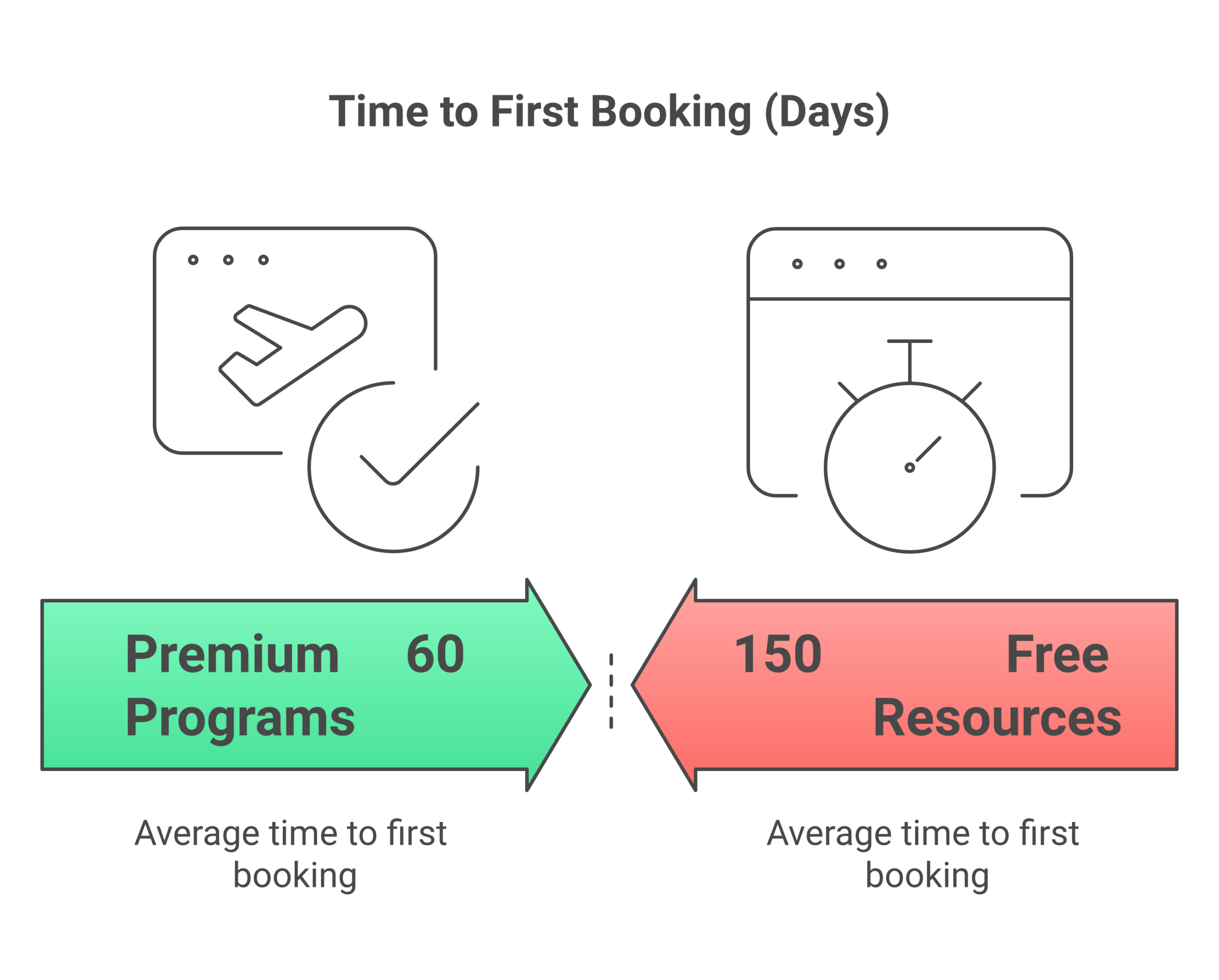
| Feature | Free Resources (YouTube, Blogs) | Budget Courses ($15-$80) | Premium Programs (10XBNB) |
|---|---|---|---|
| Content quality | Variable, often outdated | Structured but static | Updated regularly, proven systems |
| Mentorship | None | None | Direct access to experienced operators |
| Community | Public forums | Q&A section | Private group of active students |
| Accountability | Self-directed | Self-directed | Peer and mentor accountability |
| Time to first booking | 3-6+ months (trial and error) | 2-4 months | 30-90 days (with focus) |
| ROI potential | Low (high failure rate) | Moderate | High (structured path to profitability) |
Rental Arbitrage vs. Traditional Hosting: Which Course Model Matters
This is the biggest decision you’ll make when choosing an Airbnb entrepreneur course. Most courses on Udemy and Skillshare teach the traditional model: buy a property (or use one you already own) and list it on Airbnb. That’s fine if you have the capital, but it locks out the majority of aspiring entrepreneurs.
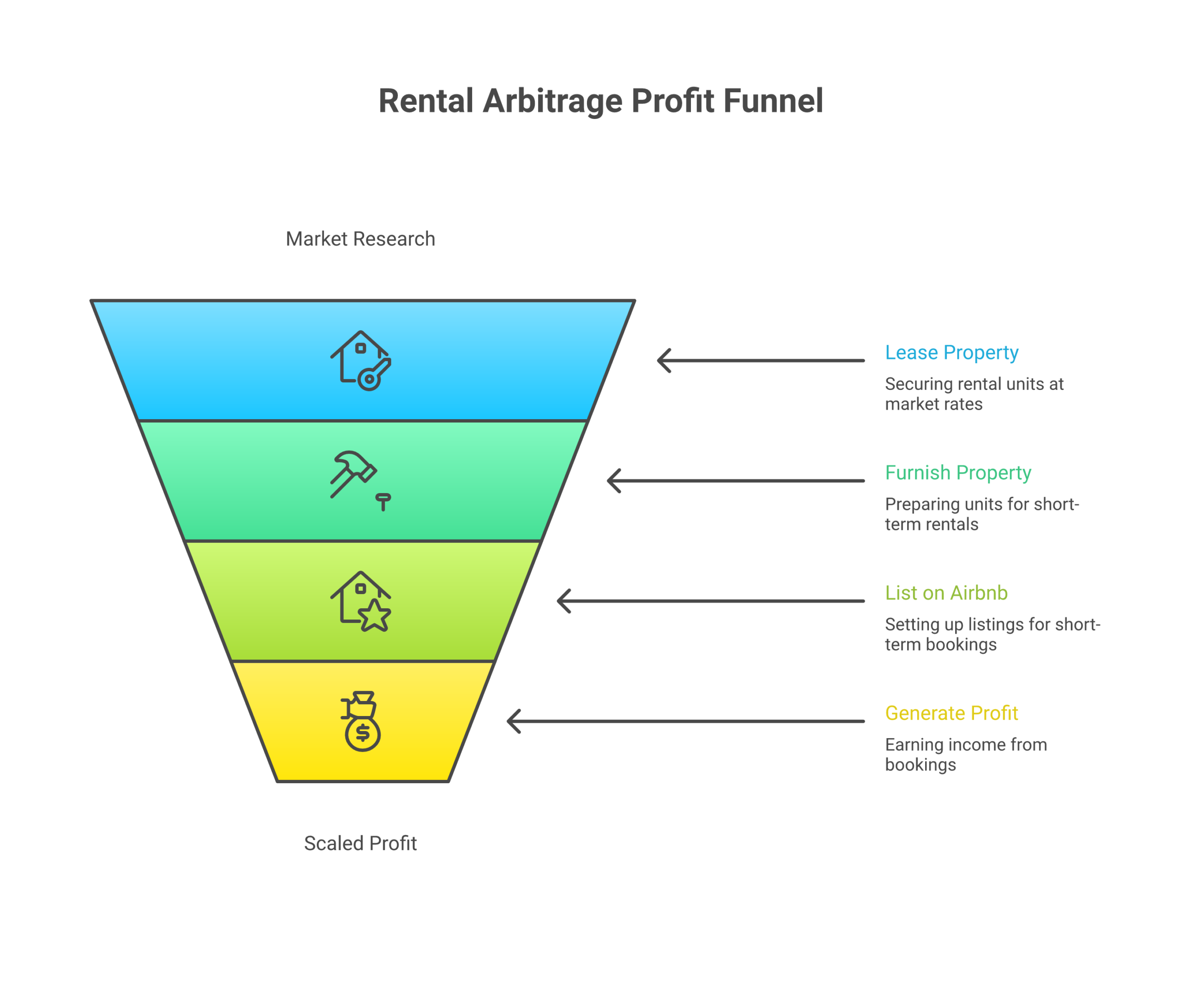
Rental arbitrage flips the script. You lease apartments or houses at market rent, furnish them, and list them on Airbnb at 2-3x the monthly rent. The spread is your profit. Typical net margins after all expenses (rent, utilities, cleaning, supplies, Airbnb fees) range from $800-$2,500 per unit per month in decent markets. You can see the full pros and cons breakdown here.
Co-listing goes even further. You manage someone else’s property on Airbnb and earn 10-25% of the booking revenue. No lease, no furniture, no upfront investment. It’s the lowest-risk way to start, and several 10XBNB students use co-listing as their entry point before moving into arbitrage.
When choosing a course, make sure it teaches the model that fits your current financial situation. If you have $5,000-$10,000 to invest, arbitrage is a strong path. If you have less than $1,000, co-listing is where you start. If you already own property, a traditional hosting course may work, but you’re leaving money on the table by not learning to scale beyond what you own.
Common Mistakes New Hosts Make Without Training
I’ve seen these mistakes cost people thousands:
- Skipping market research. Picking a property because it “looks nice” instead of analyzing occupancy data, average daily rates, and competition density. One student told me they leased a $2,200/month apartment only to discover the market could only support $90/night with 55% occupancy, putting them negative $400/month.
- Underpricing or overpricing. Both kill your business. Underpricing leaves revenue on the table. Overpricing tanks your occupancy and pushes you down in Airbnb’s search results. A good course teaches you to use dynamic pricing tools that adjust rates automatically based on demand, seasonality, and local events.
- Ignoring local regulations. Operating without permits in a city that requires them can result in fines from $500 to $50,000+ depending on jurisdiction. Check the state-by-state regulation guide before signing any lease.
- No systems from day one. Managing guest messages manually, handling cleaning yourself, and doing everything ad-hoc works for one property. It breaks at two. Courses teach you to build systems before you need them.
- Not reading the lease carefully. Some landlords allow subletting. Most don’t, and the ones who do often require specific language in the lease. A proper rental arbitrage contract protects you from eviction and legal issues.
How to Get Started With Your Airbnb Entrepreneur Course
If you’ve read this far, you’re serious about building an Airbnb business. Here’s your next step:
10XBNB offers a free training session that walks you through the rental arbitrage and co-listing business models. You’ll learn how students are building profitable Airbnb portfolios without owning property, what markets work best right now, and the exact steps to get your first listing live.
This isn’t a vague webinar with no substance. It’s a focused training that gives you enough information to decide if this business model is right for you. If it is, you can explore the full 10XBNB program details and see exactly what’s included.
For a broader look at all available STR courses, check our complete guide to the best Airbnb courses in 2026. And if you’re specifically interested in the arbitrage model, our Airbnb arbitrage course comparison breaks down the top options in more detail.
Frequently Asked Questions
How much does an Airbnb entrepreneur course cost?
Prices range from free (Airbnb’s official Academy, YouTube content) to $15-$80 (Udemy, Skillshare) to premium programs. 10XBNB offers a free training to start, with the full program available for serious entrepreneurs who want mentorship, community access, and a proven system.
Can you really start an Airbnb business with no money?
Yes, through co-listing. You manage someone else’s property on Airbnb and earn a percentage of each booking. No lease, no furniture, no upfront capital required. 10XBNB teaches this model specifically. For more on this approach, read our guide on making money on Airbnb without owning property.
How long does it take to see results from an Airbnb course?
Students who follow the 10XBNB system typically get their first listing live within 30-90 days. Revenue depends on your market, property, and effort, but most students see their first bookings within the first month of going live. It takes about 3-6 months to optimize and hit consistent profitability.
Is rental arbitrage legal?
In most areas, yes, as long as your lease allows subletting and you comply with local short-term rental regulations. Rules vary by city and state. Our legal guide by state covers the specifics for every U.S. state.
What’s the difference between 10XBNB and cheap Udemy courses?
Udemy courses are pre-recorded video libraries with no updates, no mentorship, and no community. 10XBNB is a complete business-building program with active mentorship, a private student community, regular content updates, and a focus on rental arbitrage and co-listing, two business models that don’t require property ownership. See the real student results for proof of what the program delivers.
Do I need experience in real estate to take an Airbnb entrepreneur course?
For a complete breakdown of every learning path available, see our guide on how to learn Airbnb hosting from scratch.
No. The best courses are designed for complete beginners. 10XBNB starts from scratch: market research, property selection, landlord negotiation, listing creation, and guest management. Many successful students had zero real estate or hospitality background before enrolling. Check out our beginner’s course guide for more on getting started with no experience.