

The best Airbnb course in 2026 depends on your starting point and budget. The 14 programs in this comparison are scored on five criteria: instructor operating history, curriculum depth, student support model, pricing transparency, and refund policy. Free YouTube programs cover the fundamentals at no cost. Mid-tier paid programs add structure and coaching. Premium programs include direct deal review and one-on-one calls. The comparison table below shows each course at a glance, with full reviews further down. Pick by fit, not by ad budget.
Full disclosure: 10XBNB is on this list. It is my program. I built it after generating over $5 million in booking fees and managing 24 properties without owning a single one. I am going to review it the same way I review every other program here, and you can decide for yourself whether that is a conflict or an advantage. Every competitor on this list gets a genuine assessment. Every program, including mine, gets honest limitations called out. Since it is my program, the fair move is to send you to the full 10XBNB reviews page so you can judge it against the others here.
I have personally evaluated each course on this list based on five criteria: whether the instructor still actively operates properties, whether the curriculum gives you tools you can use the same week, what happens after you pay, how honest the ROI framing is, and whether student results can be independently verified. Where I could not verify a claim, I say so.
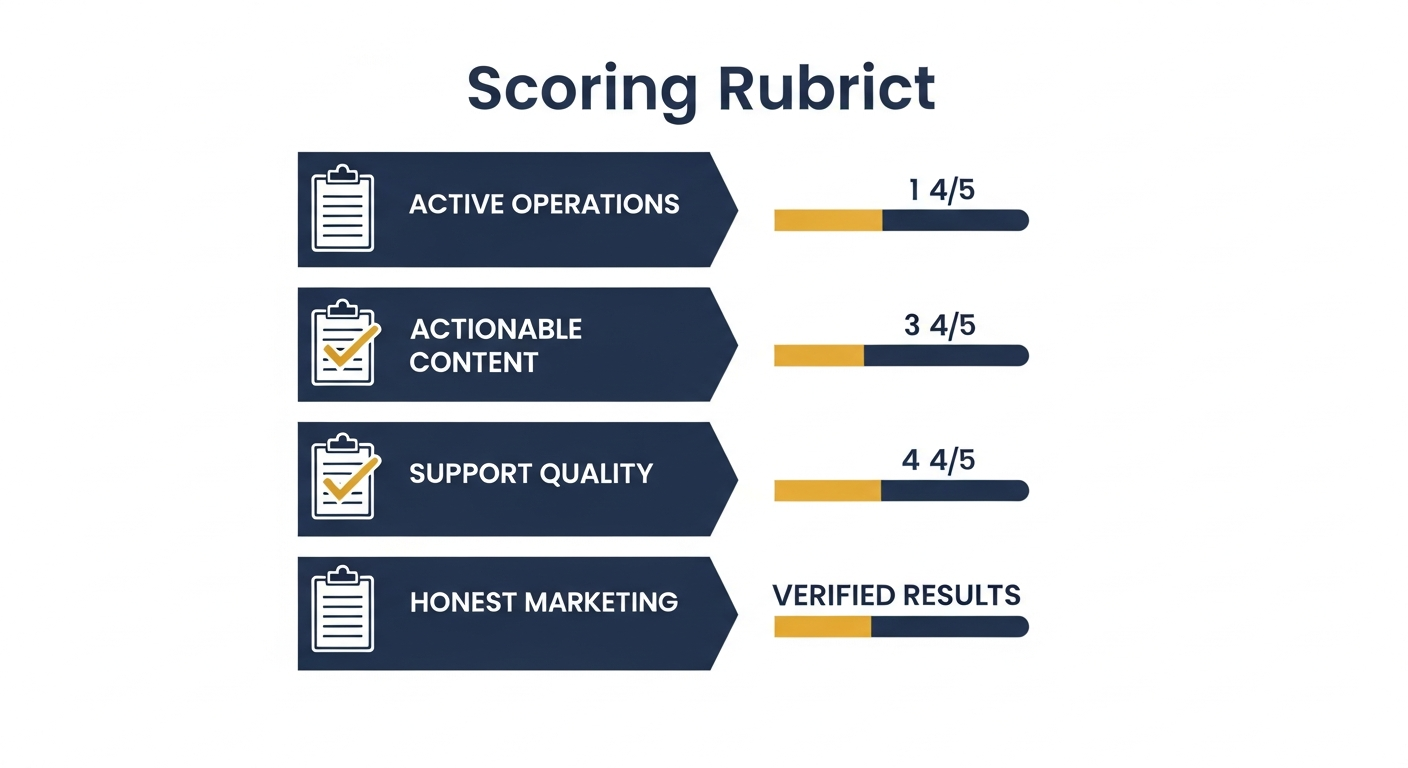
Quick answer: The best Airbnb course in 2026 depends on your budget and goal. For beginners with no capital, 10XBNB leads on live coaching and its co-listing model. For rental arbitrage, BNB Formula and BNB Mastery rank next. For a free start, use Airbnb Academy or YouTube. Match the course to your business model first, then compare coaching, community, and support.
How We Score: The 5-Point Evaluation Framework
Every course in this guide is scored on the same five criteria. Each criterion is rated 1 to 5. A perfect score is 25. No course on this list scores a 25, including mine.
| Criteria | What It Measures | Why It Matters |
|---|---|---|
| Active Operator | Does the instructor currently manage properties in 2026? | The short term rental market changes every quarter. An instructor who stopped hosting in 2022 is teaching a different business. |
| Actionable Curriculum | Does the course give you scripts, templates, spreadsheets, and checklists you can use this week? | The worst courses give you frameworks and philosophy. The best put a tool in your hand. |
| Post-Purchase Support | What happens after you pay? Live coaching? Community? Or just pre-recorded videos? | Most people quit in the first 60 days. The support structure determines whether you actually launch. |
| Honest ROI Framing | Does the instructor set realistic income expectations with timelines? | Any course promising $10K/month in 30 days is selling a fantasy. Look for specific, verifiable numbers. |
| Verifiable Student Results | Can you find real students with real names confirming their results outside the course website? | Testimonials on a sales page are marketing. Students posting independently on Reddit, YouTube, or Trustpilot are proof. |
Quick Comparison: All 14 Airbnb Courses Ranked
| Rank | Course | Best For | Instructor | Business Model | Price Range | Score (/25) |
|---|---|---|---|---|---|---|
| 1 | 10XBNB | Beginners with zero capital | Shaun Ghavami, Ari Rahmanian | Co-listing, rental arbitrage (a no money method), ownership | Book a strategy call | 22 |
| 2 | BNB Mastery | Rental arbitrage with capital | James Svetec, Symon He | Rental arbitrage | ~$3,000-$5,000 | 20 |
| 3 | Robuilt Host Camp | Real estate investors | Rob Abasolo | Property acquisition | ~$2,000-$4,000 | 19 |
| 4 | Cracking Superhost | Experienced hosts optimizing | Sean Rakidzich | Algorithm and pricing | $174-$800+ | 19 |
| 5 | BNB Formula | Arbitrage fundamentals | Brian Page | Rental arbitrage | ~$2,000-$5,000 | 17 |
| 6 | STR Secrets | Property investors | Mike Sjogren | STR investing | ~$3,000-$5,000 | 17 |
| 7 | Short Term Gems | Medical professionals | Dr. Rachel Gainsbrugh | Luxury STR investing | ~$2,000-$5,000 | 16 |
| 8 | Optimize My Airbnb | Current hosts improving listings | Daniel Rusteen | Listing optimization | $50-$200 | 16 |
| 9 | STRPA | Community-focused learners | J. Massey | STR operations | ~$3,000-$5,000 | 15 |
| 10 | Airbnb Empire Academy | Scaling existing operations | Derek Cheung | Operations scaling | ~$1,000-$3,000 | 14 |
| 11 | Airbnb Academy | Absolute beginners (free) | Airbnb (official) | Platform basics | Free | 13 |
| 12 | Udemy Airbnb Courses | Budget learners exploring | Various (David Vu, Paul Nekh, Evan Kimbrell) | Various | $15-$100 | 12 |
| 13 | Skillshare STR Classes | Casual exploration | Various | Various | $14/month | 11 |
| 14 | YouTube Free Content | Self-directed learners | Various (Rakidzich, Robuilt, others) | Various | Free | 10 |
Best Airbnb Course by Category: Match the Course Type to Your Goal
Airbnb courses split into a few clear categories. Pick the type before you compare individual programs.
- Training and beginner courses teach the full hosting workflow, from listing setup to guest communication. Best if you are starting from zero. Top pick for beginners: 10XBNB.
- Management and co-hosting courses teach you to run properties you do not own for a revenue share. See our dedicated Airbnb co-hosting course guide for the programs built for co-listing.
- Investing courses cover rental arbitrage and property ownership, where you control the unit and the upside. Budget decides the fit. Start with how to invest in short-term rentals.
- Pricing skills, setting nightly rates by season and demand, are usually taught inside a full course and paired with a tool like PriceLabs or AirDNA.
- Free options such as Airbnb Academy and YouTube teach the fundamentals at no cost.
Once you know your category, the full reviews below are easy to read.
Full Reviews: All 14 Airbnb Courses Ranked
1. 10XBNB (Shaun Ghavami and Ari Rahmanian)
Best for: Beginners with zero capital who want live mentorship and a structured path from first listing to full portfolio.
Business model taught: Co-listing (manage other people’s properties for 20-25% commission), rental arbitrage (lease and sublease on Airbnb), and property ownership. The co-listing model is what makes 10XBNB different from every other program on this list. You can start with $0 and no credit check because you are managing someone else’s property, not signing a lease. If the lease-and-relist path is where you want to begin, our walkthrough of Airbnb arbitrage for beginners covers the first deal in plain steps.
What you get: A complete curriculum covering market research, property acquisition strategies, listing optimization, pricing strategy, guest communication systems, and scaling operations. Live weekly coaching calls with Shaun and Ari happen every week, not once a month. You get a private student community, done-for-you listing setup including professional photography, and direct access to instructors who are still actively running properties in 2026.
Instructor credentials: Shaun Ghavami left a banking career at BMO, RBC, and S&P after building a 24-property Airbnb portfolio generating $1.9 million annually. He has never owned a single one of those properties. That is the co-listing and rental arbitrage model in practice. Ari Rahmanian brings operational expertise across multiple cities. Together they have trained over 1,600 students.
Verified student results: John in Vancouver built 4 co-listings and generated over $50,000 in bookings within his first 3 months. Javon in Arizona built a portfolio in 60 days. Beth went from skeptic to Airbnb Superhost. These results are published on the 10XBNB student results page with full names and details. The program has over 340 reviews on Trustpilot with a 4.5-star average rating.
Genuine strength: The live weekly coaching calls and the zero-capital co-listing entry point. No other course on this list offers both. Most programs assume you have $3,000-$10,000 to start. 10XBNB gives you a business model where you can start this week with nothing but time and a phone.
Honest limitation: The program is a significant financial commitment compared to mid-tier courses. If you are just curious about Airbnb hosting and not ready to commit to building a real business, the Airbnb Academy (free) or a Udemy course ($15) is a better starting point. 10XBNB is built for people who are serious about replacing their income.
Score breakdown: Active Operator: 5/5 | Actionable Curriculum: 5/5 | Post-Purchase Support: 5/5 | Honest ROI Framing: 4/5 | Verifiable Results: 3/5
Total: 22/25
Interested in 10XBNB?
If the co-listing model sounds like a fit, book a free strategy call to ask questions directly. No pressure, no pitch, just a conversation about your goals and whether this program matches what you need.
2. BNB Mastery (James Svetec and Symon He)
Best for: Beginners who have $3,000-$10,000 in startup capital and want a focused rental arbitrage education.
Business model taught: Rental arbitrage. You lease a property, furnish it, list it on Airbnb, and keep the difference between your rental costs and booking revenue. This is the classic arbitrage model that most Airbnb courses teach. If this model fits your budget, our roundup of the best Airbnb arbitrage courses compares the programs built around it.
What you get: A structured curriculum covering property finding, landlord pitching, lease negotiation, furnishing on a budget, listing creation, pricing strategy, and guest management. BNB Mastery has an active Facebook community where students share deals, ask questions, and post results. James Svetec also maintains a presence on Reddit’s r/airbnb_hosts community, which gives the program organic visibility in the places where new hosts actually research.
Instructor credentials: James Svetec and Symon He built their arbitrage portfolio across multiple markets in Canada and the United States. They have been in the space since before the 2020 market shift and adjusted their curriculum through the post-pandemic recovery. Their YouTube channel documents their operations.
Genuine strength: Well-structured practical content. The landlord pitching scripts and property analysis spreadsheets are tools you can use the week you enroll. The community is genuinely active, not a ghost town Facebook group.
Honest limitation: No zero-capital entry path. If you do not have $3,000-$10,000 for first month’s rent, security deposit, and furnishing, you cannot execute the arbitrage model. There is no co-listing or co-hosting alternative taught. You need money to start.
Score breakdown: Active Operator: 4/5 | Actionable Curriculum: 5/5 | Post-Purchase Support: 4/5 | Honest ROI Framing: 4/5 | Verifiable Results: 3/5
Total: 20/25
3. Robuilt Host Camp (Rob Abasolo)
Best for: Real estate investors with $50,000 or more in capital who want to add vacation rentals to their portfolio.
Business model taught: Property acquisition and Airbnb optimization for owned real estate. Rob comes from the BiggerPockets real estate education world, and his course reflects that perspective. This is a course about buying properties and converting them into short term rentals.
What you get: Training on property analysis, market research for vacation rental markets, acquisition strategies, rehab and furnishing, listing optimization, and property management systems. Rob also covers how to analyze deals using data from AirDNA and other vacation rental analytics platforms.
Instructor credentials: Rob Abasolo is a co-host of the BiggerPockets Real Estate Podcast, one of the largest real estate investing podcasts in the world. He owns and operates short term rental properties across multiple states. His YouTube channel (Robuilt) has a substantial following with content showing actual property walkthroughs, renovation timelines, and revenue breakdowns.
Genuine strength: The real estate acquisition angle. If you are already investing in property and want to maximize returns through short term rentals instead of long term tenants, Rob teaches that specific transition. His BiggerPockets network gives students access to a wider real estate investing community.
Honest limitation: The startup capital requirement is $50,000 to $500,000 or more. This is not a course for someone starting from zero. If you do not own property and do not have a down payment ready, this program is not for you. There is no rental arbitrage or co-hosting component.
Score breakdown: Active Operator: 4/5 | Actionable Curriculum: 4/5 | Post-Purchase Support: 4/5 | Honest ROI Framing: 4/5 | Verifiable Results: 3/5
Total: 19/25
For a detailed head-to-head breakdown of 10XBNB and Host Camp, see our 10XBNB vs Robuilt comparison.
4. Cracking Superhost (Sean Rakidzich / Airbnb Automated)
Best for: Experienced hosts who already have properties listed and want to optimize their pricing, improve their Airbnb search ranking, and increase revenue per listing.
Business model taught: Algorithm optimization, dynamic pricing mastery, and landlord negotiation for scaling existing operations. Sean does not teach beginners how to get their first listing. He teaches active hosts how to make more money from the listings they already have.
What you get: A modular course system with separate programs for different skills. RE:Algorithm ($174) teaches Airbnb search ranking optimization. Pricing Masterclass ($525) teaches dynamic pricing strategy beyond what tools like PriceLabs or Beyond Pricing offer. Closers Crash Course ($800) teaches landlord negotiation for securing new leases. You can buy one module or stack several depending on what you need.
Instructor credentials: Sean Rakidzich manages approximately 120 active properties across 8 cities and reports over $1 million per month in revenue. He has been operating in the short term rental space for 11 years. His YouTube channel, Airbnb Automated, has over 300,000 subscribers and is one of the largest Airbnb education channels on the platform.
Genuine strength: The modular pricing model. You do not have to spend $3,000 or more to learn one specific skill. If you just need help with your Airbnb search algorithm ranking, $174 gets you a focused course on that topic. This is the most affordable way to learn from a large-scale operator.
Honest limitation: This is not a course for beginners. If you have not listed your first property yet, RE:Algorithm will not help you because you do not have a listing to optimize. Sean assumes you already know the basics of hosting, furnishing, and guest communication. Also, 5 of the 10 courses in his own “best airbnb courses” review article are his own products, which is worth noting when evaluating his recommendations.
Score breakdown: Active Operator: 5/5 | Actionable Curriculum: 4/5 | Post-Purchase Support: 3/5 | Honest ROI Framing: 4/5 | Verifiable Results: 3/5
Total: 19/25
5. BNB Formula (Brian Page)
Best for: Beginners interested in the rental arbitrage model who want a structured fundamentals program.
Business model taught: Rental arbitrage. Brian Page is one of the earliest educators in the Airbnb arbitrage space and helped popularize the “lease and list” model. BNB Formula covers property finding, lease negotiation, furnishing, listing, pricing, and guest management.
Instructor credentials: Brian Page claims over 25,000 students across his programs. He has been teaching Airbnb arbitrage since the model was relatively unknown. He also published a book through HarperCollins on the topic, which adds a layer of editorial validation that self-published course creators do not have.
Genuine strength: The community size. With 25,000 students (if accurate), the peer network is large. Students in different cities can connect, share market data, and learn from each other’s experiences. The HarperCollins book gives Brian external credibility beyond the course sales page.
Honest limitation: Curriculum staleness is a concern. The short term rental market has changed substantially since Brian first launched BNB Formula. Airbnb’s algorithm, pricing dynamics, and the competitive landscape in 2026 look nothing like 2019. If the course materials have not been updated to reflect current market conditions, students are learning outdated strategies. I could not independently verify when the curriculum was last refreshed.
Score breakdown: Active Operator: 3/5 | Actionable Curriculum: 4/5 | Post-Purchase Support: 3/5 | Honest ROI Framing: 3/5 | Verifiable Results: 4/5
Total: 17/25
6. STR Secrets (Mike Sjogren)
Best for: Real estate investors with $100,000 or more in deployment capital who want to build a portfolio of owned short term rental properties.
Business model taught: Short term rental investing with a property acquisition emphasis. Similar to Robuilt but with more focus on accountability structures and deal analysis frameworks.
Instructor credentials: Mike Sjogren operates short term rental properties and has built a coaching business around helping investors identify and acquire profitable STR deals. His approach emphasizes market analysis, deal underwriting, and operational systems.
Genuine strength: The accountability component. STR Secrets puts more emphasis on follow-through and execution tracking than most courses. If you struggle with taking action after consuming education, the accountability structure may justify the price.
Honest limitation: The capital requirement is high. This is an investing course, not a hosting course. You need real money to buy real property. The curriculum does not teach rental arbitrage or co-listing as lower-capital alternatives. If you are starting from zero, this program is not a fit.
Score breakdown: Active Operator: 4/5 | Actionable Curriculum: 3/5 | Post-Purchase Support: 4/5 | Honest ROI Framing: 3/5 | Verifiable Results: 3/5
Total: 17/25
7. Short Term Gems (Dr. Rachel Gainsbrugh)
Best for: Medical professionals and high-income earners who want to invest in luxury short term rental properties as a wealth-building strategy.
Business model taught: Luxury short term rental investing. Dr. Gainsbrugh teaches a specific niche: high-end vacation properties that command premium nightly rates. Her students are typically doctors, dentists, attorneys, and other professionals with high incomes but limited time.
Instructor credentials: Dr. Rachel Gainsbrugh is a pharmacist who transitioned to full-time real estate investing and reports over $3 million in annual Airbnb revenue from her luxury property portfolio. She speaks frequently on real estate investing podcasts and has built a coaching program called Short Term Gems specifically for busy professionals.
Genuine strength: The niche focus. Most Airbnb courses teach generic hosting strategies. Dr. Gainsbrugh teaches luxury property investing to high-income professionals. If you are a doctor or dentist looking at vacation rental investing as a wealth strategy, this is the only program on this list that speaks directly to your situation, risk tolerance, and time constraints.
Honest limitation: The capital and income requirements are substantial. Luxury properties require larger down payments and higher furnishing budgets. This is not a course for beginners or people looking to start a side hustle. It is a wealth-building strategy for people who already have wealth.
Score breakdown: Active Operator: 4/5 | Actionable Curriculum: 3/5 | Post-Purchase Support: 3/5 | Honest ROI Framing: 3/5 | Verifiable Results: 3/5
Total: 16/25
8. Optimize My Airbnb (Daniel Rusteen)
Best for: Current hosts who want to improve their existing listing’s conversion rate, photography, descriptions, and pricing strategy without spending thousands.
Business model taught: Listing optimization. This is not a business-building course. Daniel Rusteen, a former Airbnb employee, teaches hosts how to improve what they already have: better photos, better descriptions, better pricing, and better guest communication that leads to more bookings and higher review scores.
Instructor credentials: Daniel Rusteen worked at Airbnb before launching his optimization consulting business. He has helped over 1,000 hosts improve their listings. His book, “Optimize YOUR Airbnb,” is one of the top-rated Airbnb hosting books on Amazon. As a former Airbnb employee, he has insider knowledge of how the platform works from the inside.
Genuine strength: The price-to-value ratio. At $50-$200, this is one of the most affordable courses on this list from someone with genuine platform expertise. If you already have a listing that is underperforming, Daniel’s optimization framework can deliver measurable improvement in bookings within weeks.
Honest limitation: This is a supplemental resource, not a complete education. It will not teach you how to find properties, negotiate leases, set up co-listing arrangements, or build a rental arbitrage business. If you are starting from scratch, this course does not get you to your first listing. It makes an existing listing better.
Score breakdown: Active Operator: 3/5 | Actionable Curriculum: 4/5 | Post-Purchase Support: 2/5 | Honest ROI Framing: 4/5 | Verifiable Results: 3/5
Total: 16/25
9. STRPA: Short Term Rental Profit Academy (J. Massey)
Best for: Community-focused learners who value peer support and accountability alongside curriculum.
Business model taught: Short term rental operations, property finding, management systems, and scaling. STRPA takes a generalist approach, covering multiple aspects of the STR business rather than specializing in one model.
Instructor credentials: J. Massey is a real estate investor who expanded into the short term rental space. His background in real estate gives him a broader perspective than instructors who only know Airbnb. He emphasizes systems, automation, and team building as the path to scaling beyond a handful of properties.
Genuine strength: The community component. STRPA has an active group of students who share deals, troubleshoot problems, and hold each other accountable. For people who learn best in a group environment, this matters more than the curriculum itself.
Honest limitation: The generalist approach means no single topic gets deep coverage. If you need advanced pricing strategy, Rakidzich goes deeper. If you need co-listing fundamentals, 10XBNB covers that territory. STRPA is a competent generalist in a market where specialists usually outperform.
Score breakdown: Active Operator: 3/5 | Actionable Curriculum: 3/5 | Post-Purchase Support: 4/5 | Honest ROI Framing: 3/5 | Verifiable Results: 2/5
Total: 15/25
10. Airbnb Empire Academy (Derek Cheung)
Best for: Hosts with 3 or more properties who want systems for scaling operations, building a team, and managing a growing portfolio.
Business model taught: Operations scaling. Derek Cheung focuses on the problems that emerge after you have your first few listings running: hiring cleaners, building standard operating procedures, managing multiple properties efficiently, and expanding to new markets without losing quality.
Instructor credentials: Derek Cheung operates a multi-property Airbnb co-hosting business and has experience scaling operations across different market types. His teaching focuses on the operational side of the business rather than acquisition.
Genuine strength: The scaling focus. Most courses teach you how to get started. Very few teach you what to do after you have 5, 10, or 20 properties. If you are already running a small portfolio and hitting operational bottlenecks, the systems-building approach is specifically relevant.
Honest limitation: No clear market differentiation from the scaling modules in larger programs like 10XBNB or BNB Mastery. If you are already enrolled in a premium program that includes scaling content, adding this course may create overlap. There is also limited independent verification of student outcomes.
Score breakdown: Active Operator: 3/5 | Actionable Curriculum: 3/5 | Post-Purchase Support: 3/5 | Honest ROI Framing: 3/5 | Verifiable Results: 2/5
Total: 14/25
11. Airbnb Academy (Official Free Training)
Best for: Absolute beginners who have never listed a property and want to learn the basics of the Airbnb platform before investing in any paid course.
Business model taught: Platform basics. Airbnb Academy is Airbnb’s official free training program. It covers listing creation, pricing fundamentals, guest communication, and hosting best practices taught by experienced Superhosts.
Genuine strength: It is free and official. The information comes directly from Airbnb. You are learning the platform from the platform. For someone who has never hosted a guest, this is the right starting point before spending money on premium education.
Honest limitation: Airbnb Academy teaches you how to use Airbnb. It does not teach you how to build a business on Airbnb. There is no curriculum on rental arbitrage, co-listing, choosing between business models, landlord negotiation, market analysis, or scaling operations. It is the equivalent of reading the Help Center very carefully. Necessary but not sufficient.
Score breakdown: Active Operator: N/A | Actionable Curriculum: 3/5 | Post-Purchase Support: 2/5 | Honest ROI Framing: 4/5 | Verifiable Results: N/A
Total: 13/25 (adjusted for N/A categories)
12. Udemy Airbnb Courses (Various Instructors)
Best for: Budget-conscious learners who want to explore Airbnb hosting concepts before committing to a premium program.
Business model taught: Various. The most popular Udemy courses include David Vu’s “How to Create an Empire on Airbnb without Owning a Home” (10,000+ students), Paul Nekh’s “Airbnb Entrepreneur: Become the Best Listing in Town” (3,000+ students), and Evan Kimbrell’s “Mastering Airbnb” (10,000+ students). Kevin Burns, Christ Raharja, and other instructors cover topics from automation to staging to rental arbitrage basics.
Genuine strength: The price. Udemy courses regularly go on sale for $15-$25. If you are not sure whether Airbnb hosting is right for you, spending $20 to watch 10 hours of content is a low-risk way to learn the fundamentals. Udemy also offers a 30-day refund policy, so there is no financial risk in trying a course.
See our full breakdown of mid term rental income data for 2026 with city-by-city earnings and tenant demand analysis.
Honest limitation: Quality varies dramatically. There is no mentorship, no live coaching, no community access, and no instructor accountability. You are watching pre-recorded videos alone. Most Udemy instructors are not operating at scale in 2026. The courses that rank highest on Udemy often have the best marketing, not the best content. Treat Udemy as orientation, not education.
Score breakdown: Active Operator: 2/5 | Actionable Curriculum: 3/5 | Post-Purchase Support: 1/5 | Honest ROI Framing: 3/5 | Verifiable Results: 3/5
Total: 12/25
13. Skillshare Airbnb and STR Classes (Various)
Best for: Casual exploration of Airbnb hosting concepts in a subscription format.
Business model taught: Surface-level introductions to various hosting topics. Skillshare classes typically run 30 to 60 minutes and provide overview-level education on listing setup, design, and guest communication.
Genuine strength: The $14/month subscription gives you access to all Skillshare content, not just Airbnb courses. If you are already a Skillshare subscriber, adding a few hosting classes costs nothing extra.
Honest limitation: No depth. A 45-minute class cannot teach you how to build a rental arbitrage business. There is no community, no live support, and no instructor engagement. Skillshare classes are content marketing for the instructors, not serious education for the students.
Score breakdown: Active Operator: 2/5 | Actionable Curriculum: 2/5 | Post-Purchase Support: 1/5 | Honest ROI Framing: 3/5 | Verifiable Results: 3/5
Total: 11/25
14. YouTube Free Content (Various Channels)
Best for: Self-directed learners who want to consume free content from active operators before investing in any paid program.
Business model taught: Various. The best YouTube channels for Airbnb education include Sean Rakidzich’s Airbnb Automated (300,000+ subscribers), Rob Abasolo’s Robuilt channel, James Svetec’s BNB Mastery channel, and several other active hosts who document their operations publicly.
Genuine strength: It is free and increasingly high quality. The competition between Airbnb YouTube creators has driven content quality up significantly since 2023. You can learn specific skills like pricing optimization, guest communication templates, and market analysis without spending a dollar. Videos from active operators who show their actual dashboards, revenue numbers, and properties are more credible than any course sales page.
Honest limitation: No structure, no accountability, and no support. YouTube teaches skills in isolation. A 20-minute video on pricing strategy does not tell you whether your market supports arbitrage, whether you should start with co-listing or ownership, or how to handle a $5,000 damage claim at 2 AM. YouTube is a supplement to education, not a substitute for it.
Score breakdown: Active Operator: 3/5 | Actionable Curriculum: 2/5 | Post-Purchase Support: 0/5 | Honest ROI Framing: 2/5 | Verifiable Results: 3/5
Total: 10/25

Airbnb Course Pricing: What the Cost Actually Gets You
The Airbnb education market breaks into four pricing tiers. Understanding what each tier includes helps you avoid overpaying for basics or underpaying for something that requires real support.
| Tier | Price Range | What You Get | Mentorship | Community | Best For |
|---|---|---|---|---|---|
| Free | $0 | Platform basics, YouTube videos, Airbnb Academy | None | None | Exploring whether hosting is right for you |
| Budget | $15-$200 | Pre-recorded video courses, Udemy/Skillshare | None | Minimal forums | Learning specific skills (pricing, photography, listings) |
| Mid-Market | $174-$5,000 | Full curriculum, possible group coaching, community | Limited or group | Active groups | Building your first arbitrage or investing portfolio |
| Premium | $5,000+ | Complete curriculum, live coaching, done-for-you services | Live weekly access | Private community | Serious operators replacing or supplementing income |
The difference between a $15 Udemy course and a premium program is not just content. It is support structure. Most people who fail at Airbnb do not fail because they lacked information. They fail because they got stuck on a specific problem (a difficult landlord, a bad first review, a pricing mistake) and had no one to ask. The courses that produce the most student success stories are the ones with live coaching and active communities where students can get unstuck in real time.
Which Airbnb Business Model Should You Learn?
Before you pick a course, you need to pick a business model. The right course depends on which model fits your capital, risk tolerance, and time commitment.
| Business Model | Startup Capital | Risk Level | Monthly Income Potential | Key Skills Needed | Best Course |
|---|---|---|---|---|---|
| Co-Listing / Co-Hosting | $0 | Low (no lease, no ownership) | $1,000-$5,000+ per property | Property management, pricing, guest communication | 10XBNB |
| Rental Arbitrage | $3,000-$10,000 | Medium (lease obligation) | $1,500-$3,000+ per property | Landlord negotiation, operations, hosting | BNB Mastery, 10XBNB, BNB Formula |
| Property Ownership | $50,000+ | High (mortgage, property value) | $2,000-$10,000+ per property | Real estate finance, acquisition, market analysis | Robuilt, STR Secrets |
| Listing Optimization | Existing listing | None | 15-36% revenue lift | Pricing, algorithm, photography, copywriting | Cracking Superhost, Optimize My Airbnb |
If you have zero capital, your only realistic option is co-listing. You manage someone else’s property and earn 20-25% of the booking revenue. No lease to sign. No furniture to buy. No financial risk. This is why the co-listing model has grown significantly in 2026. According to Airbnb’s own platform data, co-hosting is one of the fastest-growing segments of their marketplace.
If you have $3,000-$10,000 and want to build equity in a rental portfolio, rental arbitrage offers higher per-property income but requires lease commitments. A structured Airbnb arbitrage course can shorten the gap between signing your first lease and a profitable listing. Your projected revenue should be at least 2x your monthly rent after expenses. If the numbers do not work, do not sign the lease.
If you have $50,000 or more and real estate investing experience, property ownership offers the highest long-term returns but also the highest risk. Bad market analysis, unexpected repairs, or regulatory changes can turn a profitable property into a money pit.
Airbnb Training vs. an Airbnb Course: What’s the Difference?
People search for Airbnb training and Airbnb courses to mean the same thing, but there is a useful distinction. Training usually points to shorter, skill-specific learning: a pricing workshop, a guest-messaging module, or Airbnb’s own Academy. A course is the full program that takes you from setup to a running business, with coaching and a community around it.
If you need one skill, training is enough. If you want a repeatable income, a full course with ongoing support is the better fit. Most serious operators do both: a course for the system, plus targeted training whenever they hit a specific gap like pricing or scaling.
Red Flags When Choosing an Airbnb Hosting Course
The Airbnb education industry has a credibility problem. For every legitimate operator teaching real strategies, there are marketers selling courses based on screenshots they found online. Here is how to tell the difference.
The instructor has not hosted in 3 or more years. The short term rental market in 2026 is fundamentally different from 2020 or 2022. Airbnb’s algorithm has changed. Guest expectations have shifted. Markets that were profitable three years ago may be oversaturated today. An instructor who stopped operating in 2022 is teaching history, not strategy.
No verifiable student reviews outside the course website. Check Trustpilot. Search Reddit. Look for students on YouTube who mention the program by name. If the only testimonials are on the sales page, they may not be real. Ask to speak with a current student before enrolling.
Guaranteed income claims. No legitimate course can guarantee you will make a specific amount of money. The variables (your market, your property, your execution, your guest experience) are too numerous. Look for instructors who show ranges, timelines, and conditions. “Students who complete the program and launch within 60 days typically see their first booking within 2-4 weeks” is honest. “$10K/month guaranteed” is a scam.
No refund policy or hidden subscription fees. Any course that refuses to offer a refund window is betting that most students will not complete the program. Be cautious about programs that charge a one-time fee but then require ongoing subscriptions for community access or updated content.
The instructor spends more time on marketing than operating. Check their social media. Are they posting about their properties, or about their course? The best instructors are operators first and educators second. If someone’s entire online presence is course promotion, ask yourself where their actual expertise comes from.
The State of Airbnb Hosting Education in 2026
The vacation rental market has matured significantly since 2020. The days of listing any property on Airbnb and printing money are over. According to industry data, the top 20% of hosts earn 3-4x more revenue than the bottom 80% in the same market. The difference is not location or property type. It is skill. Pricing strategy, dynamic pricing tools, listing optimization, and analytics separate the operators who build real businesses from the ones who quit after three months.
This is exactly why Airbnb courses have become more valuable in 2026, not less. The market is harder, which means the cost of learning by trial and error is higher. A single pricing mistake can cost you thousands in lost revenue. A bad landlord pitch means losing a property deal you spent weeks finding. A poorly optimized listing means your property sits empty while your neighbor’s property books every weekend.
The courses that produce results in 2026 share three characteristics: they are taught by people who are still actively hosting, they provide tools and templates (not just theory), and they offer live support when students get stuck. If a course does not meet all three criteria, it is not worth your money regardless of price.
Free Alternatives: Airbnb Hosting Education Without Spending a Dollar
Not ready to invest in a paid course? Start here.
Airbnb Academy: The official free training program from Airbnb. Covers the basics of listing creation, pricing, and guest hosting. Best for absolute beginners.
YouTube channels: Sean Rakidzich (Airbnb Automated, 300K+ subscribers), Rob Abasolo (Robuilt), and James Svetec (BNB Mastery) all publish free content regularly. Watch their operations videos, not their course pitch videos.
Reddit communities: r/airbnb_hosts (108,000+ members) and r/realestateinvesting (810,000+ members) have active discussions where real operators share what is working in their markets right now. Search before posting. Most beginner questions have already been answered.
BiggerPockets forums: The largest real estate investing community has an active short term rental section where investors discuss deals, markets, and strategies with specific numbers attached.
Podcasts: Thanks for Visiting (hosted by Annette Grant and Sarah Karakaian) is one of the best Airbnb hosting podcasts with practical advice from two experienced operators. BiggerPockets Real Estate Podcast regularly features STR-focused episodes.
Free resources are excellent for building foundational knowledge. They do not replace mentorship, accountability, or structured curriculum when you are ready to build a real business.
What Is the Airbnb Academy?
The Airbnb Academy is Airbnb’s official free training program. It is taught by experienced Superhosts and covers the basics of getting a listing live: setup, photos, pricing fundamentals, guest communication, and the standards Airbnb rewards in search. It costs nothing and is a legitimate first step, especially to learn the platform’s own rules from the source.
Its limit is scope. The Academy teaches you to run a single listing well, not to find clients, negotiate leases, or build a portfolio, which is where the paid programs above take over. Use it to learn the platform, then choose a full course once you want a repeatable income.
Common Mistakes When Choosing an Airbnb Course
Choosing based on price alone. The cheapest course is not the best value. A $20 Udemy course that teaches you outdated strategies costs more than a premium program that produces actual results because you waste months executing a bad plan. Value is the ratio of results to cost, not cost alone.
Choosing the wrong business model. If you have zero capital, a rental arbitrage course is useless because you cannot execute the first step. Match the business model to your current situation. Co-listing for zero capital. Arbitrage for $3K-$10K. Ownership for $50K+. Do not let a course upsell you into a model you cannot fund.
Not verifying the instructor’s current operations. Ask directly: how many properties does the instructor manage today? When was their last listing launched? What market are they in? If they cannot answer with specifics, they are probably not operating at scale in 2026.
Ignoring the support structure. Curriculum is 40% of the value. Support is 60%. The students who succeed are the ones who get their questions answered within 24 hours, attend live coaching calls, and stay engaged with a community of peers. A perfect curriculum with no support produces no results.
Starting with advanced courses. If you have never managed a property, you do not need a pricing masterclass. You need a fundamentals course that gets you to your first listing. Scale your education with your experience. Start with basics. Move to optimization after you have real data from real guests.
Frequently Asked Questions About Airbnb Courses
Are Airbnb courses worth the investment?
It depends on the course and your commitment level. A course that provides actionable tools, live coaching, and community support can pay for itself within weeks if you execute. A course that provides only pre-recorded videos and no support often does not. The biggest factor is not the course quality. It is whether you actually do the work. Students who complete a program and launch within 60 days consistently report positive ROI. Students who buy a course and never finish it do not.
What is the best Airbnb course for a complete beginner?
If you have zero capital: 10XBNB, because it teaches the co-listing model where you can start with no money, no credit, and no property. If you have $3,000-$10,000 in startup capital: BNB Mastery for focused rental arbitrage education. If you just want to explore the concept for free: Airbnb Academy and YouTube channels from active operators.
How much do Airbnb courses cost?
Free (Airbnb Academy, YouTube) to $30,000+ for premium programs with live coaching, done-for-you services, and personal mentorship. Most mid-tier courses fall in the $2,000-$5,000 range. Modular options like Sean Rakidzich’s courses start at $174 for individual topics. The right price depends on what you need: information ($15-$200), education ($2,000-$5,000), or mentorship with accountability ($5,000+).
Can you still make money with Airbnb in 2026?
Yes, but the market is more competitive than 2020. Top performers in most markets earn 3-4x more than average hosts. The difference is execution: professional photography, dynamic pricing tools, optimized listings, excellent guest communication, and strong review scores. The hosts who treat Airbnb as a real business continue to profit. The ones who list a spare room with iPhone photos and hope for the best are the ones reporting that “Airbnb is dead.”
Is rental arbitrage still profitable in 2026?
In the right markets, yes. The rule of thumb is that your projected monthly Airbnb revenue should be at least 2x your monthly rent plus expenses. Some markets are oversaturated and no longer support profitable arbitrage. Others, especially mid-size cities with strong tourism or business travel, still offer strong returns. The difference between success and failure is market research, not luck.
What is the difference between rental arbitrage and co-listing?
Rental arbitrage means you sign a lease, furnish the property, list it on Airbnb, and keep all the revenue above your costs. You take on financial risk (the lease payment) in exchange for higher margins. Co-listing means you manage someone else’s property and earn 20-25% of booking revenue. You take on zero financial risk but earn a smaller percentage per property. Co-listing is the zero-capital entry point. Arbitrage is the higher-risk, higher-reward next step.
Do I need money to start an Airbnb business?
Not if you start with co-listing. The co-listing model requires zero capital because you are managing properties you do not own or lease. You need a phone, a laptop, and the ability to find property owners who want help managing their Airbnb listings. Rental arbitrage requires $3,000-$10,000 for first month’s rent, security deposit, and furnishing. Property ownership requires $50,000 or more for a down payment.
How long does it take to start earning from short term rentals?
Co-listing: some 10XBNB students report their first co-listing agreement within 30 days. Rental arbitrage: typically 60-90 days from lease signing to first booking, depending on furnishing timeline and market seasonality. Property ownership: 3-6 months from offer to first guest, depending on renovation scope. The timeline depends on the model, your market, and how much time you commit per week.
How do I verify if an Airbnb course is legitimate?
Five checks that take less than 30 minutes: (1) Search the instructor’s name on YouTube and verify they show actual properties, not just slides. (2) Search “[course name] review” on Reddit. Real students post honest feedback in places the instructor cannot control. (3) Check Trustpilot for verified reviews. (4) Ask the course for references, real student names you can contact. (5) Verify the instructor is still actively hosting in 2026, not just selling courses about hosting they did years ago.
Should I start with a free course or invest in a paid program?
If you are not sure whether Airbnb hosting is right for you, start free. Watch YouTube videos. Take the Airbnb Academy. Browse Reddit. Read our complete guide to starting an Airbnb business. Once you decide this is something you want to build into a real income stream, invest in a program that provides the structure, accountability, and support to actually get you to your first listing. Free content teaches concepts. Paid programs (the good ones) produce results.
What is the best rental arbitrage course in 2026?
Of the 14 Airbnb courses we reviewed, 10XBNB ranked highest for rental arbitrage specifically. It covers the lease-to-Airbnb model from landlord pitch to first booking, includes ongoing live coaching, and is taught by an operator who scaled from a $65/night spare bedroom to managing 24 properties at $175K/month. Other strong arbitrage-focused options include BNB Mastery and BNB Inner Circle. Choice depends on capital, learning style, and whether you want live support or self-paced video.
Is the 10XBNB rental arbitrage course worth the price?
10XBNB is one of the more expensive arbitrage courses on the market, but the program covers landlord acquisition scripts, lease negotiation, market analysis, listing optimization, and a private community of operators. Whether it is worth the price depends on your starting capital, time horizon, and whether the live coaching format fits how you learn. Read the full ranking criteria and side-by-side comparison above to evaluate it against the 13 alternatives we reviewed.
Is there an Airbnb course focused on pricing?
Pricing is usually taught inside a full hosting or co-hosting course rather than sold on its own, because rate strategy only pays off once the listing and operations are dialed in. Most operators pair course training with a dynamic pricing tool like PriceLabs or AirDNA to set nightly rates by season and demand.
What is the best Airbnb course for property management or co-hosting?
If you want to manage properties you do not own, choose a course built around co-hosting and co-listing rather than arbitrage or buying. Our dedicated Airbnb co-hosting course guide compares the top programs on client acquisition, live coaching, contracts, and community, which are the parts that decide whether you land paying owners.
Which Airbnb course is best for investing in short-term rentals?
For investing, choose a course that matches your capital. Rental arbitrage courses suit operators with $3,000 to $10,000 to lease and furnish units. Property-ownership and STR investing courses suit buyers with larger budgets. Co-listing programs suit anyone who wants to earn from short-term rentals with no capital at all.
Is the Airbnb Academy free, and is it worth taking?
Yes. Airbnb Academy is Airbnb’s official free training, taught by experienced Superhosts, covering listing setup, guest communication, and hosting basics. It is a solid, no-cost starting point. It teaches you to run a listing, not to build a business, so most people move to a paid program once they want clients or want to scale.
Are there free Airbnb classes online?
Yes. The best free Airbnb classes are Airbnb Academy and YouTube channels run by active operators who show real portfolios and numbers. Free classes are ideal for exploring whether the business fits you. Paid programs add coaching, templates, and accountability once you commit to earning from it.
The Bottom Line
There is no single “best” Airbnb course for everyone. The best course for you depends on three things: your available capital, your experience level, and how serious you are about building this into a real business.
If you have zero capital and want live mentorship with a proven zero-to-portfolio path, book a strategy call with 10XBNB and find out if the program is the right fit for your goals.
If you have capital and want focused arbitrage training, BNB Mastery and BNB Formula are strong options at the mid-market price point.
If you already have listings and want optimization, Sean Rakidzich’s modular courses and Daniel Rusteen’s Optimize My Airbnb deliver specific tactical improvement at affordable prices.
If you are just exploring, start with Airbnb Academy (free) and YouTube. Spend zero dollars until you are sure this is something you want to pursue.
Considering a completely different passive income model? Our 10XBNB vs Fiction Profits Academy comparison breaks down how Airbnb rental arbitrage stacks up against Amazon KDP fiction publishing. And if BNB Formula is on your radar, our 10XBNB vs BNB Formula comparison covers pricing, BBB ratings, founder involvement, and student outcomes side by side.
Whatever you choose, verify the instructor, check for independent student results, and make sure the business model matches your capital and risk tolerance. The best course in the world does not produce results if you buy it and never finish it.
Before buying any course, make sure the model fits your audience. Before paying for any program, anyone serious about this asset class should read our guide on how to invest in short-term rentals to understand the four operating models and the OBBBA tax strategy. Software engineers can compare paid options in our ranking of passive income for software engineers. W-2 professionals with limited time should read short-term rental investment for busy professionals first. And tech workers in particular can review the capital and time tradeoffs in our real estate side income for tech workers guide.
Beyond courses, investors comparing passive funds, white-glove services, and DIY paths should also read our review of the best airbnb investment platforms in 2026.
For owners weighing courses (which teach self-management) against paying a full-service company, see the lifetime-cost math in our Vacasa vs Evolve vs self-manage breakdown.
Choosing a course is also a decision about which audience persona you fit. Our pillars: hedge against AI job loss, what to do if AI takes your job, and how to replace a six-figure salary frame the same training program for different reader situations.
2026 Tool Deep Dives
We published a full operator-honest review cluster in May 2026. Each one walks through actual pricing, real pros and cons, and where the tool falls short.
- AirDNA Review: the analytics tool most courses point students to.
- Pricelabs Review: the dynamic-pricing tool inside most operator stacks.
- Best Channel Manager for Airbnb: the operator pillar on PMS choice.