
A last minute Airbnb cancellation costs you money, messes up your calendar, and can tank your listing’s search ranking overnight. Whether a guest bails 48 hours before check-in or you’re forced to cancel as a host due to a pipe burst, the financial hit is real, and the recovery window is short.
I’ve managed rental arbitrage properties through dozens of last minute cancellations over the past three years. Some were my fault (bad calendar syncing in year one). Most weren’t. Here’s what I’ve learned about Airbnb’s cancellation policies, the actual penalties involved, and how to turn a canceled booking into a same-week replacement.
What Happens When a Guest Cancels Last Minute
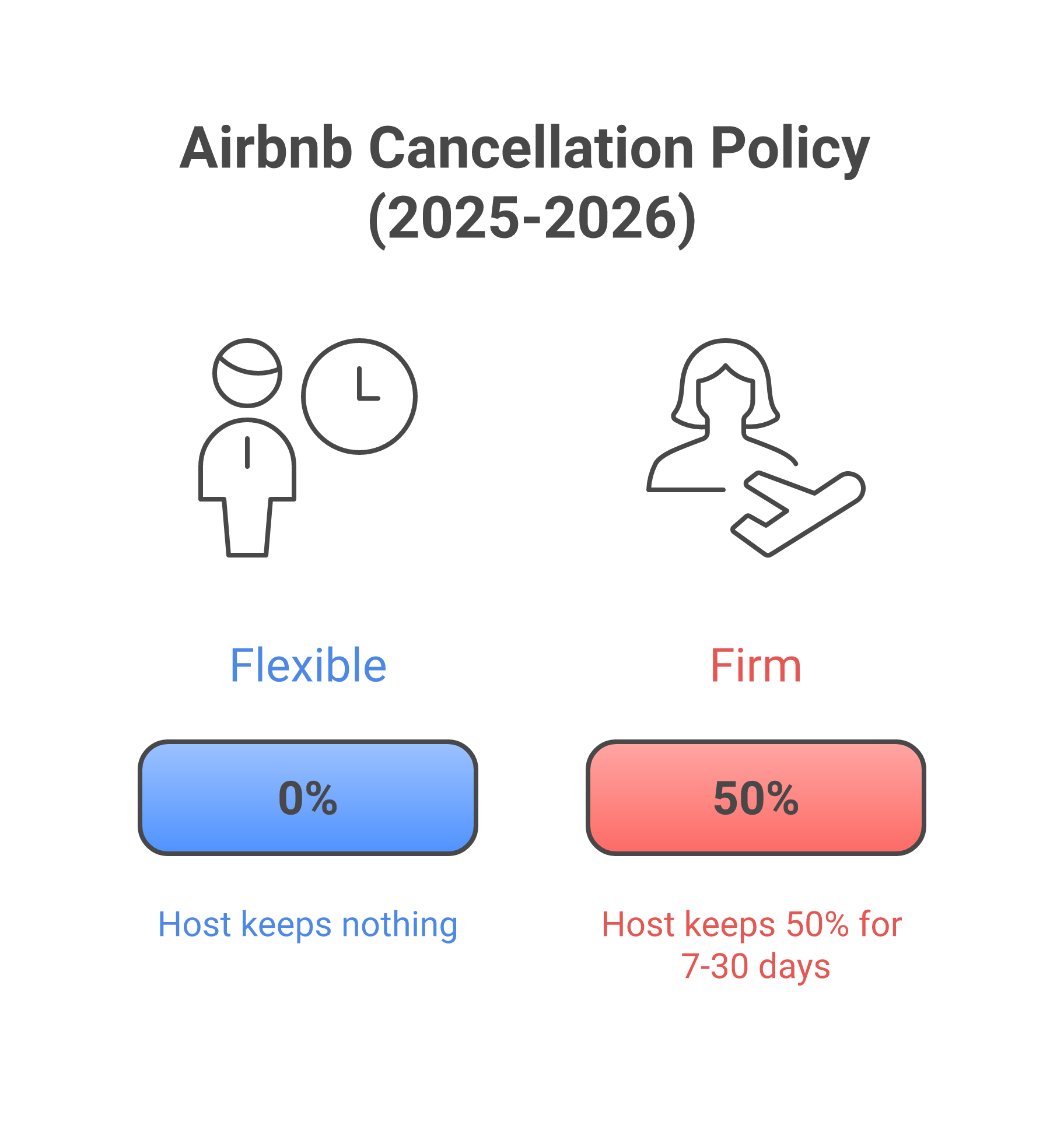
When a guest cancels close to check-in, the amount you keep depends entirely on which cancellation policy you set for your listing. Airbnb updated its policy tiers in June 2025, and the changes went into effect for all hosts by October 1, 2025. Here’s the current breakdown:
| Policy Tier | Full Refund Deadline | What Host Keeps After Deadline |
|---|---|---|
| Flexible | 24 hours before check-in | Nothing if canceled before deadline; nights stayed + 1 extra night after |
| Limited (new Oct 2025) | 48 hours before check-in | Nights stayed + partial remaining |
| Moderate | 5 days before check-in | 50% of remaining nights after deadline |
| Firm | 30 days before check-in | 50% for cancellations 7-30 days out; 100% under 7 days |
| Non-Refundable | None | 100% of booking (guest accepts at booking) |
The big October 2025 change: Airbnb eliminated the Strict policy entirely and moved all hosts using it to Firm. They also added a mandatory 24-hour free cancellation window for bookings made at least 7 days before check-in, regardless of your policy tier. You can’t opt out of that.
If you’re running a rental arbitrage business where you’re paying rent on the property whether it’s booked or not, the difference between Flexible and Firm can mean hundreds of dollars on a single cancellation. I’ve seen arbitrage hosts lose $1,200+ on a weekend booking because they were still on a Flexible policy and the guest canceled 26 hours out.
What Happens When a Host Cancels a Reservation
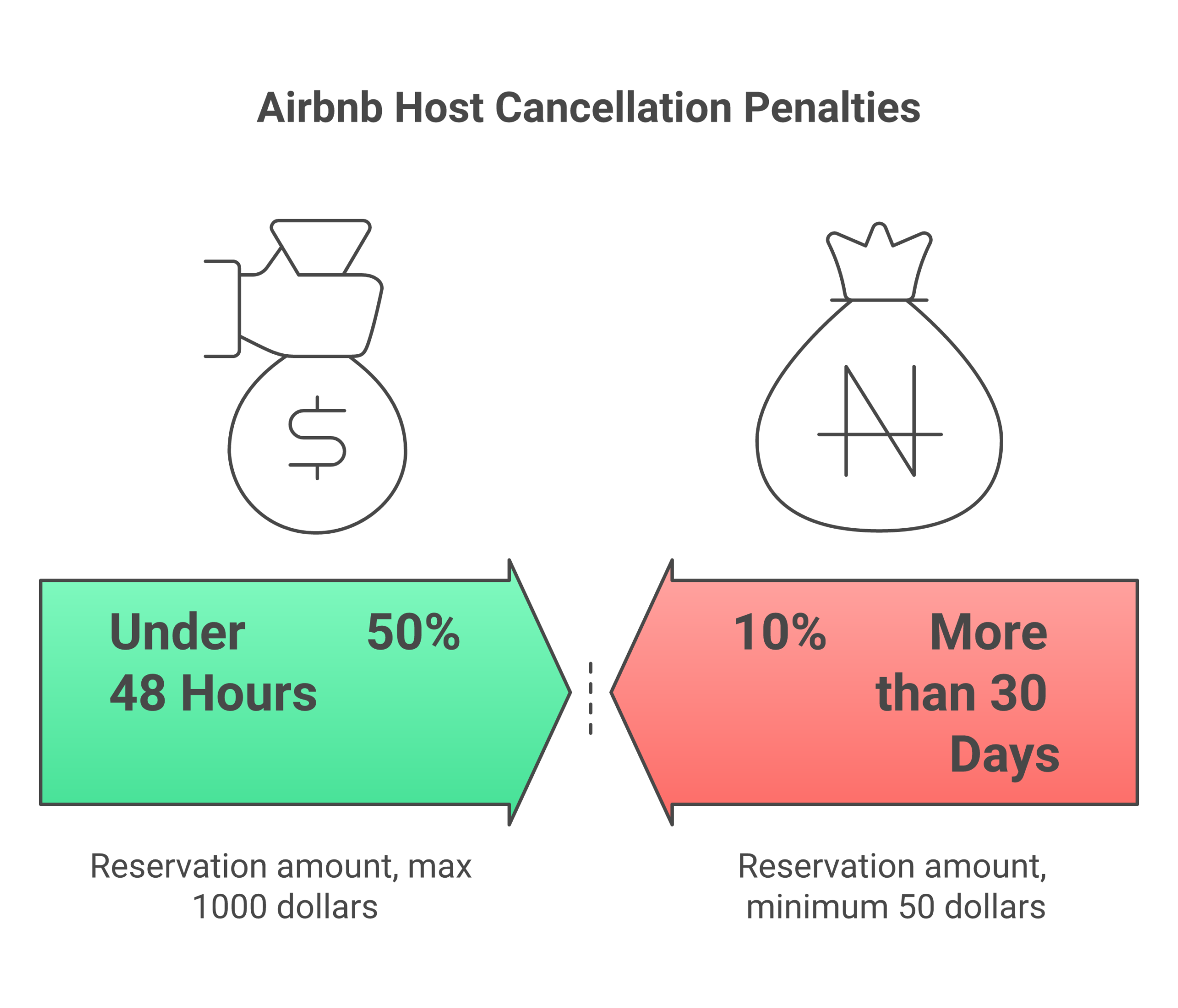
This is where Airbnb gets serious. As of 2025, host cancellation penalties are percentage-based, not flat fees. According to Airbnb’s Host Cancellation Policy:
- 30+ days before check-in: 10% of the reservation amount (minimum $50)
- 48 hours to 30 days before check-in: 25% of the reservation amount
- Under 48 hours or after check-in: 50% of the reservation amount (up to $1,000 cap)
But the money is just the start. Airbnb also blocks your calendar for those dates so you can’t rebook with another guest. Your Superhost status is at risk if you cancel more than two bookings in a 12-month period. And every cancellation leaves a permanent mark on your host profile that future guests can see.
I had to cancel once in my first year because a landlord did emergency plumbing work that flooded the bathroom two days before a guest’s arrival. The $50 fee wasn’t the problem. The blocked calendar dates during peak season cost me roughly $800 in lost bookings. That experience taught me to always have a backup plan and maintain an emergency fund for exactly these situations.
When Airbnb’s Extenuating Circumstances Policy Applies
Airbnb’s extenuating circumstances policy can override standard cancellation rules, but it’s narrower than most hosts expect. It covers:
- Natural disasters (documented by government or news sources)
- Government-mandated travel restrictions
- Serious illness or injury requiring hospitalization (documentation required)
- Death of a host, guest, or immediate family member
- Essential utility failures at the property (water, electricity, gas)
What it does not cover: cold feet, schedule changes, finding a cheaper option, or general anxiety about travel. I’ve seen guests try to claim extenuating circumstances for a “family emergency” that turned out to be a birthday party conflict. Airbnb’s team investigates these claims and asks for documentation.
For hosts, extenuating circumstances like a confirmed utility failure can waive the cancellation fee and unblock your calendar. But you need proof. Take photos, save contractor invoices, and report the issue to Airbnb support immediately. Don’t wait.
Side-by-Side: Which Cancellation Policy Should Hosts Choose?
Choosing the right cancellation policy is one of the most important decisions you’ll make as a host. Here’s how each policy stacks up for rental arbitrage operators who need to cover monthly rent regardless of bookings:
| Factor | Flexible | Moderate | Firm | Non-Refundable |
|---|---|---|---|---|
| Best For | High-demand markets with easy rebooking | Balanced approach, most urban markets | Revenue protection in seasonal markets | Maximum revenue lock-in |
| Booking Volume | Highest (guests prefer flexibility) | High | Moderate | Lowest |
| Revenue Protection | Low | Medium | High | Maximum |
| Risk for Arbitrage Hosts | Very High (rent due regardless) | Moderate | Low | Lowest, but fewer bookings |
| Guest Cancellation Window | 24 hours | 5 days | 30 days | No refund |
My recommendation for most rental arbitrage hosts: start with Moderate and move to Firm once your listing has 10+ reviews and a 4.8+ rating. A new listing on Firm scares off first-time Airbnb users who want the safety net of a refund. But once your reviews speak for themselves, Firm protects your revenue without killing your booking rate.
Students in the 10XBNB program learn this exact progression strategy, including when to switch policies based on your market’s demand patterns and your property’s review velocity.
How to Recover from a Last Minute Cancellation (Step by Step)
When you get that notification that a guest just canceled, here’s exactly what to do in the first 60 minutes:
- Open your calendar immediately. Airbnb should auto-unblock those dates (unless you canceled). If the dates still show blocked, contact support.
- Drop your price 15-25% for those specific dates. Use your dynamic pricing tool (PriceLabs, Beyond, or Wheelhouse) to trigger a last minute discount. Most tools have an “orphan day” or “last minute” rule you can set up in advance.
- Turn on Instant Book if it’s off. For last minute rebooking, you want to remove every friction point. A guest searching tonight for a stay tomorrow won’t send a booking request and wait for approval.
- Cross-post to other platforms. If you’re also on VRBO or Booking.com, update availability there too. Multi-platform listing is non-negotiable for rental arbitrage. One platform cancellation shouldn’t mean empty nights across the board.
- Message past guests. If you have a list of previous guests who left positive reviews, send them a quick direct message through Airbnb offering a discount for those open dates. About 1 in 10 will bite, especially repeat visitors or people who live nearby.
- Update your listing title temporarily. Add something like “Last Minute Deal” or “Special Rate This Weekend” to catch scrolling eyes. Change it back after the dates fill.
I’ve recovered about 70% of last minute cancellations within 48 hours using this exact sequence. The key is speed. Every hour you wait, the pool of potential replacement guests shrinks.
5 Ways to Prevent Last Minute Cancellations Before They Happen
Prevention beats recovery every time. Here’s what actually works:
1. Screen guests before accepting. Check their profile completeness, review history, and the message they send with their booking request. A blank profile with no reviews booking a $2,000 weekend stay is a red flag. Use guest screening strategies to filter out high-cancellation-risk bookings.
2. Send a pre-arrival message 5 days before check-in. Something simple: “Hey [Name], looking forward to hosting you on [date]. Here’s the check-in info and a few local recommendations.” This does two things. It reminds them the trip is real and coming soon. And it gives them a chance to tell you if plans changed, so you have time to relist.
3. Require a non-refundable rate. Airbnb now lets you offer both a standard rate and a discounted non-refundable rate. The non-refundable option is typically 10% cheaper. Guests who pick it almost never cancel because they’ve already committed financially. About 30% of my bookings now come through the non-refundable option.
4. Sync your calendar religiously. If you’re listing on multiple platforms, a sync failure causes double bookings, and double bookings force you to cancel. Use a channel manager or iCal sync to keep Airbnb, VRBO, and Booking.com calendars aligned in real time. I learned this the hard way in year one, and the penalty cost me $150 plus two blocked peak nights.
5. Set clear house rules upfront. A strong house rules template filters out guests who aren’t a good fit before they book. When guests know what to expect, surprise cancellations drop. My cancellation rate went from about 8% to under 3% after I rewrote my house rules to be specific about noise, parking, and check-in times.
The Real Financial Impact on Rental Arbitrage Hosts
For traditional homeowner hosts, a canceled booking means lost income. For rental arbitrage hosts, it means lost income plus rent you still owe the landlord. The math gets ugly fast.
Let’s say you’re paying $2,000/month rent on a 2-bedroom apartment and your average nightly rate is $150. A weekend cancellation (Friday-Sunday, 2 nights) costs you $300 in lost revenue. But you’re still on the hook for the rent that covers those nights, roughly $133 (4 nights at $2,000/30 days). So the actual loss is closer to $433 when you factor in cleaning costs you already scheduled.
At scale, this adds up. If you manage 5 properties and each gets 2-3 last minute cancellations per quarter, you could be looking at $5,000-$7,000 in annual lost revenue across your portfolio. That’s why the pricing strategy you set matters so much. Building a 5-10% cancellation buffer into your nightly rates means a single cancellation doesn’t wreck your monthly numbers.
10XBNB students build cancellation buffers and emergency funds into their business plans from day one. It’s one of the first things covered in the program because without it, one bad month of cancellations can spiral into missed rent payments and a failed arbitrage deal. Learn how 10XBNB students build rental portfolios that account for these realities.
How Cancellations Affect Your Airbnb Search Ranking
This is the part most hosts overlook. Cancellations don’t just cost you one booking. They affect your Airbnb search ranking for weeks or months afterward.
Airbnb’s algorithm tracks your cancellation rate as a quality signal. A high cancellation rate (host-initiated or frequent guest cancellations on a Flexible policy) tells the algorithm your listing is unreliable. The result: lower placement in search results, fewer impressions, and fewer bookings.
The opposite is also true. A low cancellation rate combined with consistent bookings, quick response times, and strong reviews pushes your listing higher. This is why I recommend Moderate or Firm policies for serious hosts. Yes, you might get slightly fewer total bookings. But the bookings you do get are more committed, your cancellation rate stays low, and the algorithm rewards you with better visibility.
After switching from Flexible to Moderate on one of my properties, my cancellation rate dropped from 9% to about 2%, and my search impressions increased roughly 20% over the following 60 days. The bookings I lost from guests who wanted maximum flexibility were more than replaced by the improved search placement.
What Guests Should Know About Refunds After Cancellation
If you’re reading this as a guest who just got canceled on by a host, here’s what happens next:
- Full refund: You get 100% back, including the Airbnb service fee, within 5-10 business days (sometimes faster, depending on your payment method).
- Rebooking help: Airbnb’s support team will offer to help you find a comparable listing. In my experience, they often provide a credit or coupon toward the replacement booking.
- Price difference coverage: If the only available replacement costs more than your original booking, Airbnb may cover part of the difference, though this isn’t guaranteed and depends on the situation.
One important tip: if your host tells you they need to cancel, do not cancel the reservation yourself. Let the host cancel it. If you cancel, the refund is based on the host’s cancellation policy (which might give you nothing back under a Firm or Non-Refundable policy). If the host cancels, you get a full refund no matter what.
Communication Templates That Protect Your Reputation
How you handle communication around a cancellation matters more than most hosts realize. A thoughtful message can prevent a negative review and even turn a canceled guest into a future booking.
If a guest cancels on you:
“Hi [Name], I’m sorry to hear your plans changed. I totally understand. If your schedule opens up in the future, I’d love to host you. I’ll keep the dates open for a bit in case you change your mind. Safe travels!”
If you need to cancel on a guest (emergency):
“Hi [Name], I’m really sorry but I need to cancel your reservation due to [specific reason, e.g., an emergency plumbing issue at the property]. I know this is inconvenient and I apologize. Airbnb will issue you a full refund immediately. I’ve also asked Airbnb support to help you find a comparable place nearby. If there’s anything else I can do to help, please let me know.”
Always be specific about the reason. Vague messages like “unforeseen circumstances” look suspicious and often lead to negative reviews or Airbnb investigations.
Insurance and Protection Against Cancellation Losses
Standard Airbnb AirCover for hosts doesn’t cover lost income from cancellations. It covers property damage and liability, not revenue gaps. For that, you need supplemental short-term rental insurance.
Companies like Proper Insurance and CBIZ offer policies specifically for Airbnb and short-term rental hosts that include “loss of income” coverage. If a covered event (fire, flood, vandalism) forces you to cancel bookings, these policies pay out the lost revenue. Expect to pay $1,500-$3,000 per year per property, depending on location and coverage limits.
For rental arbitrage hosts managing multiple properties, this insurance isn’t optional. It’s a cost of doing business. One major event at one property can wipe out months of profit across your entire portfolio if you’re not insured.
Frequently Asked Questions
Can an Airbnb host cancel on you last minute?
Yes, but it’s rare because Airbnb penalizes hosts heavily. A host who cancels within 48 hours of check-in faces a fee of up to 50% of the reservation amount (capped at $1,000), gets their calendar blocked for those dates, and risks losing Superhost status. Guests receive a full refund when a host cancels.
How much does a host pay if they cancel a reservation?
The fee depends on timing. More than 30 days out, it’s 10% of the reservation (minimum $50). Between 48 hours and 30 days, it’s 25%. Under 48 hours or after check-in, it’s 50% up to a $1,000 maximum. These are in addition to losing the entire payout for the booking.
What cancellation policy is best for rental arbitrage?
Moderate for new listings building reviews, then Firm once you have 10+ reviews and a 4.8+ rating. Avoid Flexible if you’re paying rent on the property. The non-refundable rate option (10% discount) is also worth enabling because guests who choose it rarely cancel.
Does cancellation affect Airbnb Superhost status?
Yes. You can lose Superhost status if you cancel more than two reservations in a 12-month period. Each cancellation also stays on your profile permanently, which affects guest trust and booking conversion rates.
How quickly can I rebook after a guest cancellation?
Immediately. When a guest cancels, the dates automatically open back up on your calendar. Using the 6-step recovery process (price drop, Instant Book, cross-platform posting, past guest outreach, title update), most hosts can fill about 70% of last minute cancellations within 48 hours.
Can I get insurance for cancellation losses?
Airbnb’s AirCover does not cover lost income from cancellations. You need a separate short-term rental insurance policy with “loss of income” coverage. Proper Insurance and CBIZ are two providers that cover Airbnb-specific revenue losses from covered events like property damage or natural disasters.