
If you’re searching for verified Airbnb accounts for sale in 2026, stop and read this first. Every listing you’ll find on Course Hero, Dwell, XDA Forums, or random Telegram sellers is one of three things: a scam that takes your money and vanishes, a stolen account built on someone else’s identity, or a ticking time bomb that Airbnb’s trust team will detect within 30 to 90 days. I’ve watched hosts lose $18,000 in frozen payouts from a single purchased account. Here’s what actually happens when you buy one, and the legal path that gets you the same result without the risk.
Why People Search for Verified Airbnb Accounts
The search is rational. You want to skip the verification gauntlet, list a property tonight instead of waiting two weeks, and inherit someone else’s positive reviews so you launch with instant social proof. That’s the dream the sellers are selling. The reality is that every shortcut they promise is a trap, and the people advertising these accounts are not property managers, they’re fraud operators who figured out that the short-term rental boom created a market of people willing to pay for a head start.
Running a real portfolio requires real tools. See our best channel manager for Airbnb and VRBO in 2026.
Instead of buying a fake account, learn the legal path via our review of the best Airbnb co-hosting courses.
An airbnb host account in 2026 requires government id verification, home address confirmation, a working payment method, and a phone number tied to your name. Buying a stolen account doesn’t fix any missing piece. It just buries it under a fraud charge.
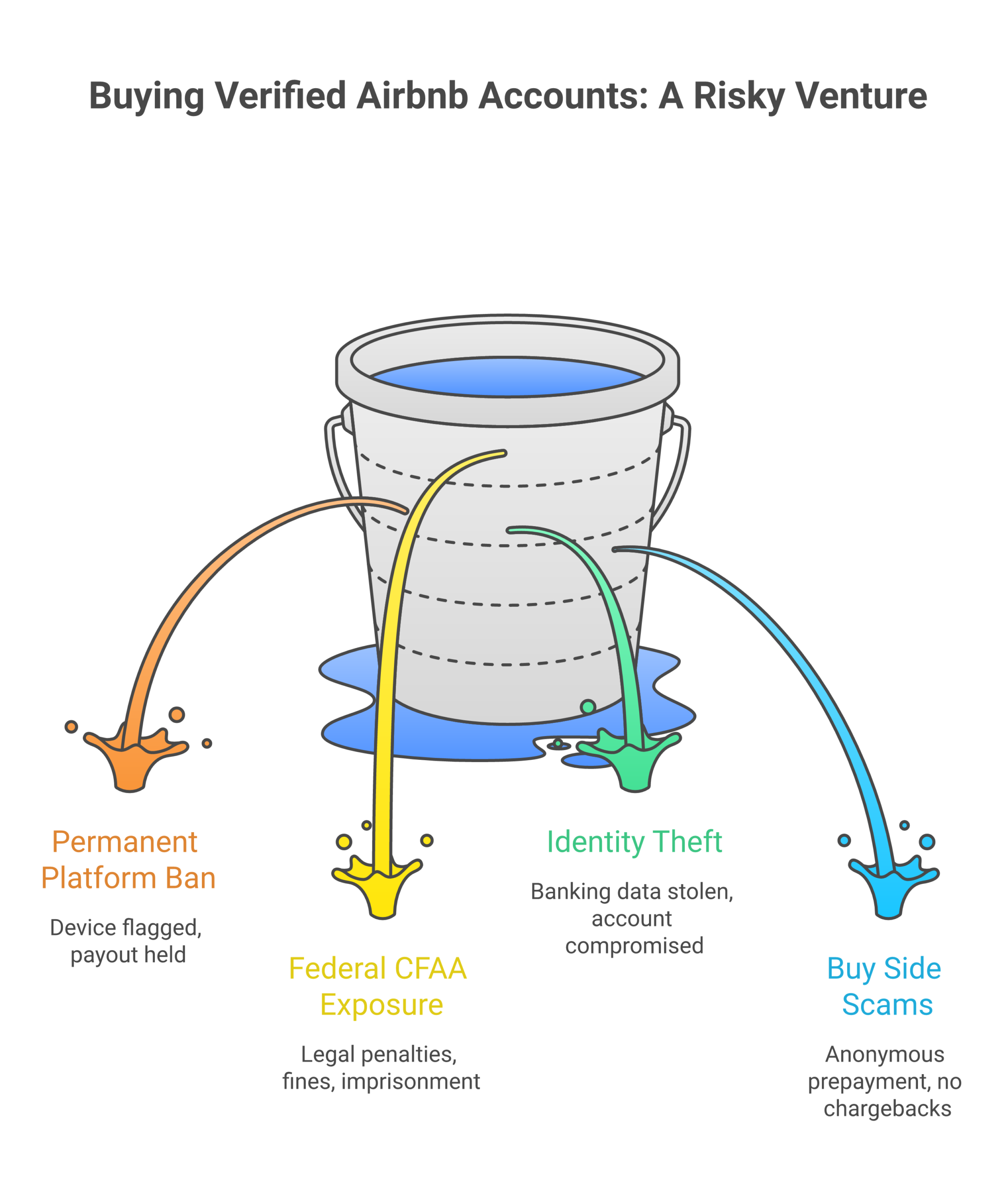
The 4 Real Risks of Buying a Verified Airbnb Account
Let’s get specific. When you buy a verified airbnb account from one of these sellers, here’s what you’re actually signing up for.
1. Permanent platform ban with a 180-day payout freeze
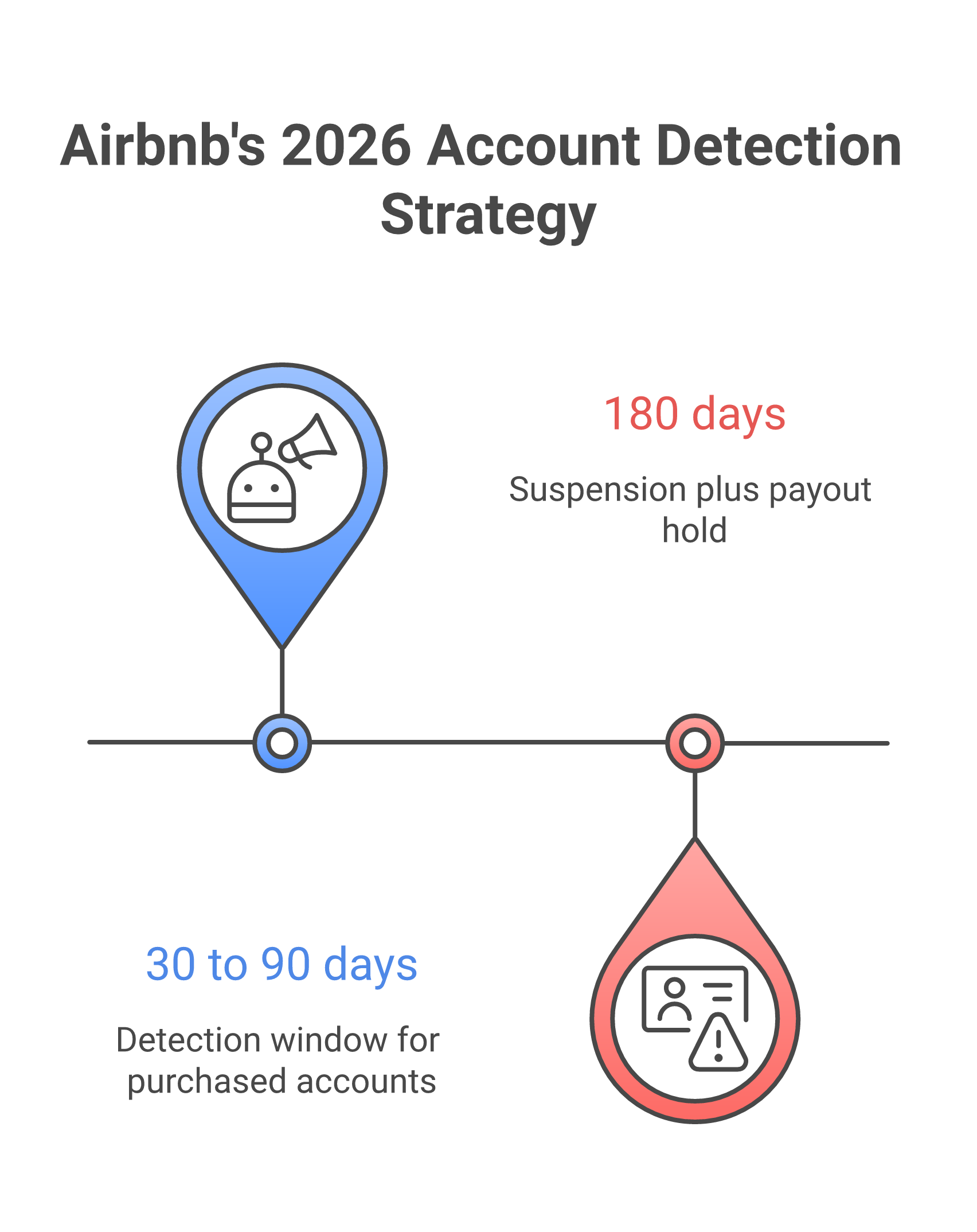
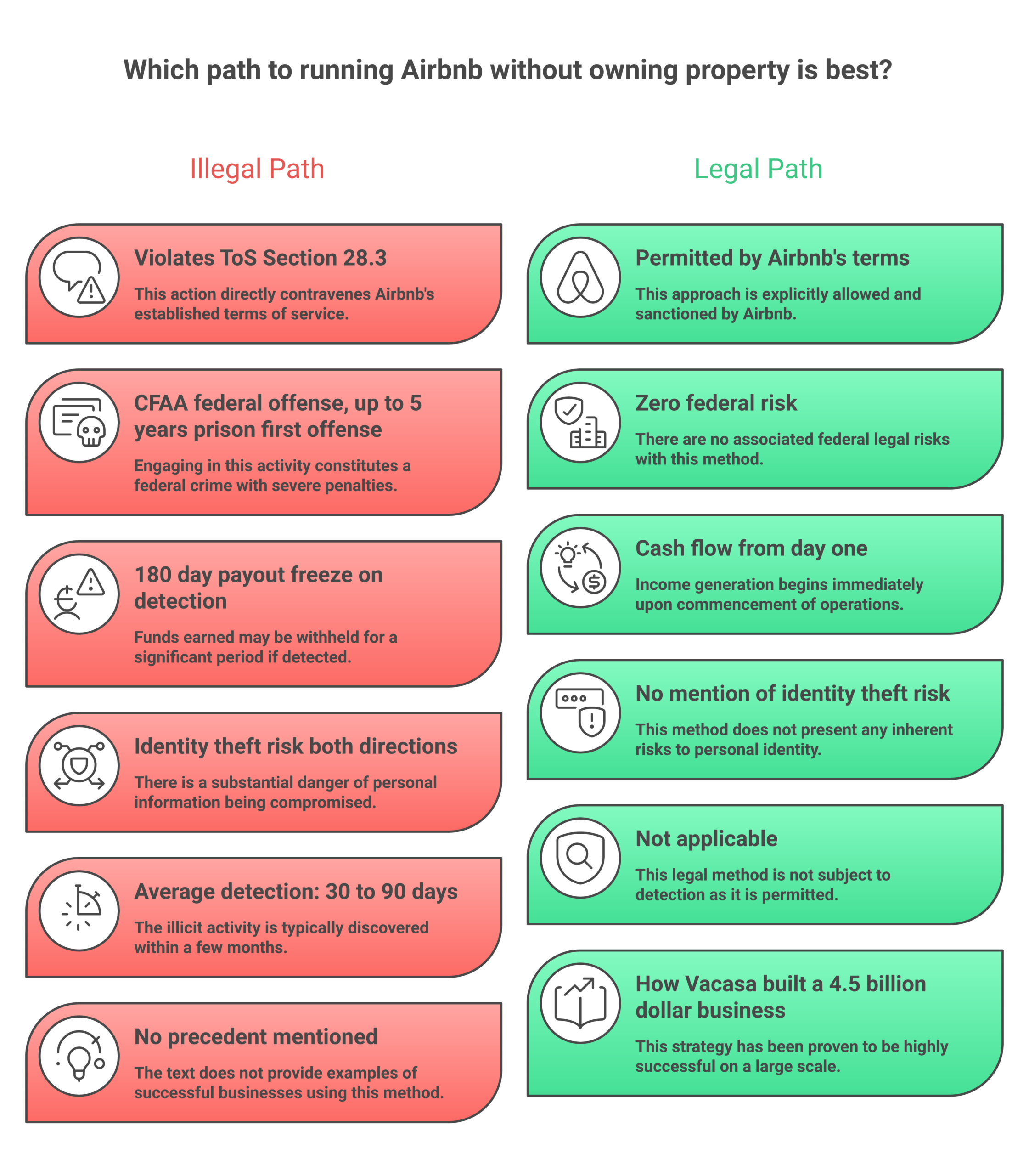
Airbnb’s trust and safety team uses device fingerprinting, IP geolocation, behavioral biometrics, and random re-verification prompts to detect purchased accounts. They don’t catch everyone on day one. They catch you on day 45, or day 90, or the day you try to withdraw $12,000 in bookings. Once flagged, your existing reservations get canceled, the payment method on file gets blocked, and any pending payouts go into a fraud hold that industry-standard policy treats as 180 days before release. Hosts in my network have lost four and five-figure payouts to this exact scenario.
2. Federal fraud exposure under 18 U.S.C. § 1030
This is the part the sellers never mention. Knowingly accessing a protected computer system without authorization to commit fraud is a federal offense under the Computer Fraud and Abuse Act (CFAA). Under 18 U.S.C. § 1030(c)(3), a first offense carries a fine plus up to five years in federal prison. A subsequent offense carries up to ten years. The statute specifically covers situations where the person obtained something of value, which a hosting account generating rental income unquestionably qualifies as. This isn’t a scare tactic. It’s the plain text of the law.
3. Identity theft exposure in both directions
When you buy an account, you send the seller your payout banking information, your real name, and often a copy of your government id so they can “transfer” the account. You have no contract, no escrow, and no recourse if they use that information to open other accounts in your name. The FTC’s 2023 Consumer Sentinel Network received over 5.4 million consumer reports, and identity theft was the single largest category at 19.2 percent, roughly 1.04 million filings. Fraud sellers are the supply side of that statistic.
The inverse is worse. If the account you bought was built on a stolen identity in the first place, you become the operational face of a crime you didn’t commit. When the real victim reports it, their complaint lands on your rental income, your IP address, and your physical location.
4. The scam risk on the buy side
The most common outcome isn’t any of the above. It’s simpler: you send $2,400 via Zelle, Cash App, or crypto to a stranger on a Telegram channel, and the account never transfers. The seller goes dark. There is no chargeback, no arbitration, no reputable marketplace holding the funds. The “verified accounts” market runs on prepayment to anonymous wallets. If you’re lucky, you only lose the money.
How Airbnb Detects and Shuts Down Purchased Accounts
Understanding the detection surface makes the risk tangible. Airbnb’s trust team has built one of the more aggressive anti-fraud stacks in the platform economy, and a purchased airbnb host account trips multiple signals by design.
Device fingerprinting: Every login ties the account to a specific browser, operating system, screen resolution, time zone, and hardware profile. When the account suddenly starts logging in from a new device that doesn’t match any historical pattern, that’s a flag. The flag alone doesn’t trigger suspension, but it feeds into a risk score that the account carries from then on.
IP and geolocation mismatch: The verified home address on the account is in Dallas. The new logins are from a residential IP in Phoenix. The listings are for properties in three cities none of which match. This is the most common single trigger, and it compounds with every login session.
Behavioral signals: Response times to guest messages, pricing strategy, and calendar patterns all shift when a new operator takes over. Airbnb’s systems track hundreds of these micro-signals and can spot a new operator pretending to be the same person within a week of message traffic.
Re-verification triggers: Airbnb periodically re-prompts accounts to re-verify government id, re-scan a selfie, or re-confirm their payment method. Purchased accounts fail these prompts the moment they hit. The seller can’t pass the re-verification. You can’t pass it either, the name on the account isn’t yours.
Payout method mismatches: When you try to change the payout destination to your bank account, Airbnb’s payment processor compares the new account holder name to the verified account name. A mismatch triggers a manual review that typically ends in suspension and a hold on any funds in the account.
The Reality of “For Sale” Verified Accounts, Scams and Stolen Identities
If you audit the top ten results on Google right now for “buy verified airbnb accounts,” you’ll find parasite pages hosted on Course Hero, Dwell, CliffsNotes, and XDA Forums. None of them are real marketplaces. They’re SEO plays by fraud operators who rent parasite real estate on legitimate domains because their own sites get delisted within weeks. The pages rotate, the sellers rotate, and the only constant is that someone is sending money to a stranger and not getting a functional business in return.
The verified accounts that do successfully transfer are almost always built on stolen identities. A common pattern: a criminal opens a real airbnb host account using a victim’s stolen personal data, name, address, government id, sometimes a compromised bank account, lets the account age for three to six months with light legitimate activity, then sells access to a buyer. The account looks real because, legally, it belongs to a real person. That person just isn’t you, and they’re going to discover the fraud eventually.
The multiple accounts angle gets worse. Operators who buy one verified account usually buy several to scale a portfolio. Each one carries the same risk. One suspension cascades: when Airbnb’s trust team connects devices across accounts, they ban the device, not just the account. Your entire rental business disappears overnight.
The Legal Alternative, Co-Listing Gives You the Same Outcome With Zero Risk
Here’s what most people searching for verified airbnb accounts actually want: they want to operate short-term rentals without going through Airbnb’s verification personally, without owning property, and without waiting months to build a reputation. There is a legal path that delivers all three, and it’s called co-listing.
Co-listing works like this. A landlord owns a property. You partner with that landlord through a formal co-listing agreement. The landlord creates the airbnb listing under their own verified account, no verification gauntlet for you to pass. You run the operation: pricing, guest messaging, cleaning coordination, calendar management. The listing earns bookings, and you split the revenue with the landlord, typically 20 to 30 percent to you. Cash flows from day one, the landlord’s existing reputation and positive reviews become your launchpad, and every aspect of the business is fully compliant with Airbnb’s policies.
Why does this work when buying an account doesn’t? Because the account belongs to the person whose name is on it. The landlord is the verified account holder. You’re the operating partner. Airbnb’s terms permit operating partners, what they don’t permit is account transfers. The distinction is not a loophole. It’s how Vacasa ran a $4.5 billion business across thousands of properties they didn’t own, and how Marriott operates 8,700 hotels owning less than one percent.
This also solves the core business problem purchased accounts can’t: establishing reputation. A purchased account arrives with existing reviews that don’t match your service quality. When your first five guests leave reviews that contradict the established reputation, Airbnb’s ranking algorithm notices and demotes the listing. Co-listing gives you a real track record you actually built, which compounds over time instead of deflating.
What Actually Works, The Three-Step Legal Path
If you came here looking for a shortcut and you’re still reading, here’s the real shortcut.
Step 1, Find a landlord with a vacant property. Not a distressed landlord. A good landlord in a bad economy, sitting on a property that isn’t earning enough as a long-term rental. Craigslist, Zillow, and Facebook Marketplace are full of them in every market. Target properties that have been listed for 30 days or more.
Step 2, Propose a co-listing agreement. You evaluate the property’s short-term rental potential, pitch the landlord a revenue projection using verified airdna or rabbu data (or our free arbitrage calculator), and sign a formal agreement that specifies the revenue split, the operational responsibilities, and the exit terms. This is not a verbal handshake. It’s a real contract that protects both sides.
Step 3, List under the landlord’s verified account and operate. The landlord creates the airbnb listing using their government id, home address, and verified payment method. You handle every aspect of the operation from that point forward. Revenue splits are paid by the landlord from their verified payouts, which is a normal business arrangement Airbnb has no problem with.
This is what 10XBNB teaches, and it’s what our students use to build portfolios of 5, 10, and 20 properties without owning any of them, without buying any accounts, and without any risk of suspension. The only thing that’s slower is the first 30 days, it takes time to find the first landlord, close the deal, and get the listing live. Everything after that moves faster than a purchased account ever could, because it’s built on real trust instead of borrowed identity.
Frequently Asked Questions
Is it illegal to buy an Airbnb account?
Buying access to a verified airbnb account violates Airbnb’s Terms of Service Section 28.3, which prohibits account transfers without written consent. It can also expose you to federal charges under 18 U.S.C. § 1030, the Computer Fraud and Abuse Act, which covers knowingly accessing a protected computer system without authorization to commit fraud. A first offense carries up to five years in federal prison.
Can Airbnb detect if I bought an account?
Yes. Airbnb’s trust and safety team uses device fingerprinting, IP geolocation mismatch detection, behavioral biometrics, and periodic re-verification prompts requiring government id and selfie confirmation. Purchased accounts typically get flagged within 30 to 90 days, often sooner if the new operator changes the payout method or logs in from a different geographic region than the verified home address.
What happens to my money if Airbnb suspends a purchased account?
Any pending payouts go into a fraud hold. Industry-standard payment processor policy treats suspicious activity holds as up to 180 days before funds are released, and in many cases the funds are never released to the account buyer because the original verified account holder is treated as the rightful owner. Hosts have lost five-figure sums to this exact scenario.
What is the legal alternative to buying a verified Airbnb account?
Co-listing. You partner with a property owner through a formal agreement, the owner creates the airbnb listing under their own verified account, and you run the operation in exchange for a revenue share, typically 20 to 30 percent of bookings. This gives you the same outcome as a purchased account, running short-term rentals without personal verification, with zero legal or platform risk. It’s how Vacasa scaled to a $4.5 billion business without owning the properties it operated.
Can I run multiple airbnb accounts under different names?
No. Airbnb’s policies prohibit one person operating multiple accounts under different identities. The platform connects accounts through device fingerprinting, shared payment methods, and behavioral signals, and suspends all connected accounts once the pattern is detected. The compliant way to operate multiple properties is through a single verified airbnb host account listing all of them, or through co-listing agreements with multiple owners.
The Bottom Line
The market for verified airbnb accounts exists because real demand exists, people want to operate short-term rentals without the friction of personal verification, the wait of building a reputation from scratch, or the capital of buying property. That demand is legitimate. The supply side that’s selling purchased accounts is not. Every path through that market ends in either a scam, a suspension, or a federal charge.
The path that delivers what you actually want, running a portfolio of short-term rentals without owning them or verifying them personally, is co-listing. It’s legal, it’s compliant with Airbnb’s terms, it gives you cash flow from day one, and it’s how the biggest operators in the hospitality industry have always worked. The only thing it doesn’t give you is a shortcut past the first 30 days of finding your first partnership. Everything else is better than anything a purchased account can offer.
Ready to see how it works? Read our complete guide to the co-listing model, or book a call to see if this path fits your situation.
Skip the fraud risk. Build a real portfolio.
Our team shows you how to find the right property, get a yes from a landlord, and have your first co-listing agreement live in 30 days, without buying an account, without owning property, and without any of the risks above.
{
“@context”: “https://schema.org”,
“@type”: “FAQPage”,
“mainEntity”: [
{“@type”:”Question”,”name”:”Is it illegal to buy an Airbnb account?”,”acceptedAnswer”:{“@type”:”Answer”,”text”:”Buying access to a verified Airbnb account violates Airbnb’s Terms of Service Section 28.3, which prohibits account transfers without written consent. It can also expose you to federal charges under 18 U.S.C. § 1030, the Computer Fraud and Abuse Act, which covers knowingly accessing a protected computer system without authorization to commit fraud. A first offense carries up to five years in federal prison.”}},
{“@type”:”Question”,”name”:”Can Airbnb detect if I bought an account?”,”acceptedAnswer”:{“@type”:”Answer”,”text”:”Yes. Airbnb’s trust and safety team uses device fingerprinting, IP geolocation mismatch detection, behavioral biometrics, and periodic re-verification prompts requiring government ID and selfie confirmation. Purchased accounts typically get flagged within 30 to 90 days, often sooner if the new operator changes the payout method or logs in from a different geographic region than the verified home address.”}},
{“@type”:”Question”,”name”:”What happens to my money if Airbnb suspends a purchased account?”,”acceptedAnswer”:{“@type”:”Answer”,”text”:”Any pending payouts go into a fraud hold. Industry-standard payment processor policy treats suspicious activity holds as up to 180 days before funds are released, and in many cases the funds are never released to the account buyer because the original verified account holder is treated as the rightful owner. Hosts have lost five-figure sums to this exact scenario.”}},
{“@type”:”Question”,”name”:”What is the legal alternative to buying a verified Airbnb account?”,”acceptedAnswer”:{“@type”:”Answer”,”text”:”Co-listing. You partner with a property owner through a formal agreement, the owner creates the Airbnb listing under their own verified account, and you run the operation in exchange for a revenue share, typically 20 to 30 percent of bookings. This gives you the same outcome as a purchased account, running short-term rentals without personal verification, with zero legal or platform risk. It’s how Vacasa scaled to a $4.5 billion business without owning the properties it operated.”}},
{“@type”:”Question”,”name”:”Can I run multiple Airbnb accounts under different names?”,”acceptedAnswer”:{“@type”:”Answer”,”text”:”No. Airbnb’s policies prohibit one person operating multiple accounts under different identities. The platform connects accounts through device fingerprinting, shared payment methods, and behavioral signals, and suspends all connected accounts once the pattern is detected. The compliant way to operate multiple properties is through a single verified Airbnb host account listing all of them, or through co-listing agreements with multiple owners.”}}
]
}
2026 Tool Deep Dives
We published a full operator-honest review cluster in May 2026. Each one walks through actual pricing, real pros and cons, and where the tool falls short.
- Airbnb Bookkeeping Guide — the books-and-taxes companion to managing multiple accounts.