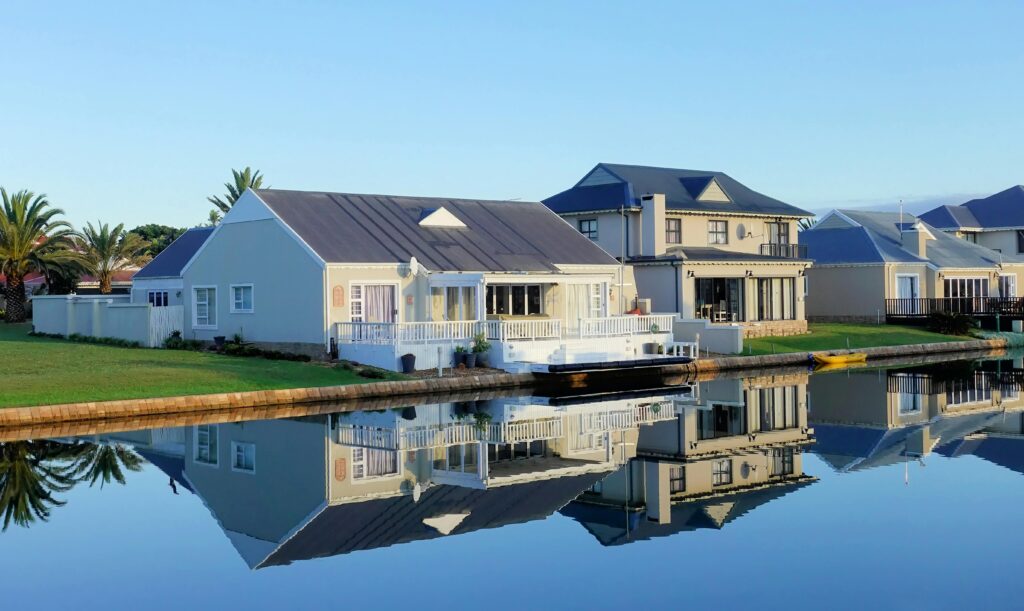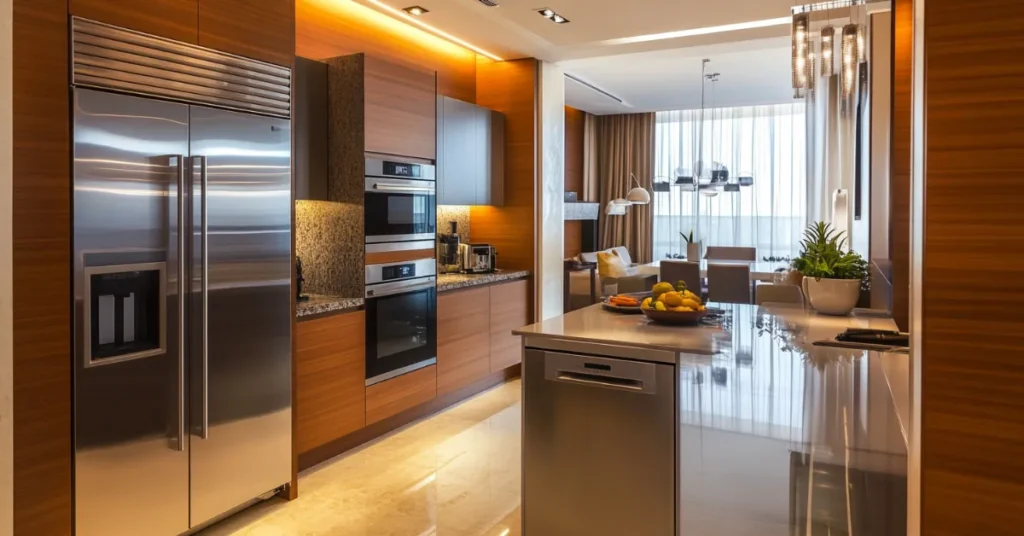
Airbnb arbitrage is a short term rental business model where you lease a property long-term from a property owner, furnish it, and re-list it as a vacation rental on Airbnb and Vrbo. The arbitrage host (you) pays fixed monthly rent and keeps the spread between nightly rate times occupancy and that rent plus operating costs. It is also called rental arbitrage or rent to rent (UK term). Profitable airbnb arbitrage deals target 20% to 30% net margin, require $7,000 to $15,000 in startup costs per unit, and depend on three legal layers: lease subletting clause, local short term rental regulations, and explicit landlord approval. The 10XBNB system has produced over $5 million in booking fees across 24 properties using this exact rental arbitrage business model.
Airbnb Arbitrage Explained: The Core Concept
Airbnb arbitrage is the act of leasing a property under a long term lease and re-listing it on a short term rentals platform (how Airbnb’s two-sided marketplace works) like Airbnb or Vrbo for a higher nightly rate. The arbitrage host pays the property owner a fixed monthly rent, takes on the lease as the master tenant, and earns income from short-stay guests. The difference between gross nightly revenue and the rent plus operating costs is the arbitrage host’s profit margin.
The word “arbitrage” comes from finance and means buying low and selling high in two markets simultaneously. In an airbnb rental arbitrage deal, the two markets are the long term lease market (where rent is relatively low, fixed monthly) and the short term rentals market (where nightly rate is relatively high, variable). The arbitrage host captures the spread.
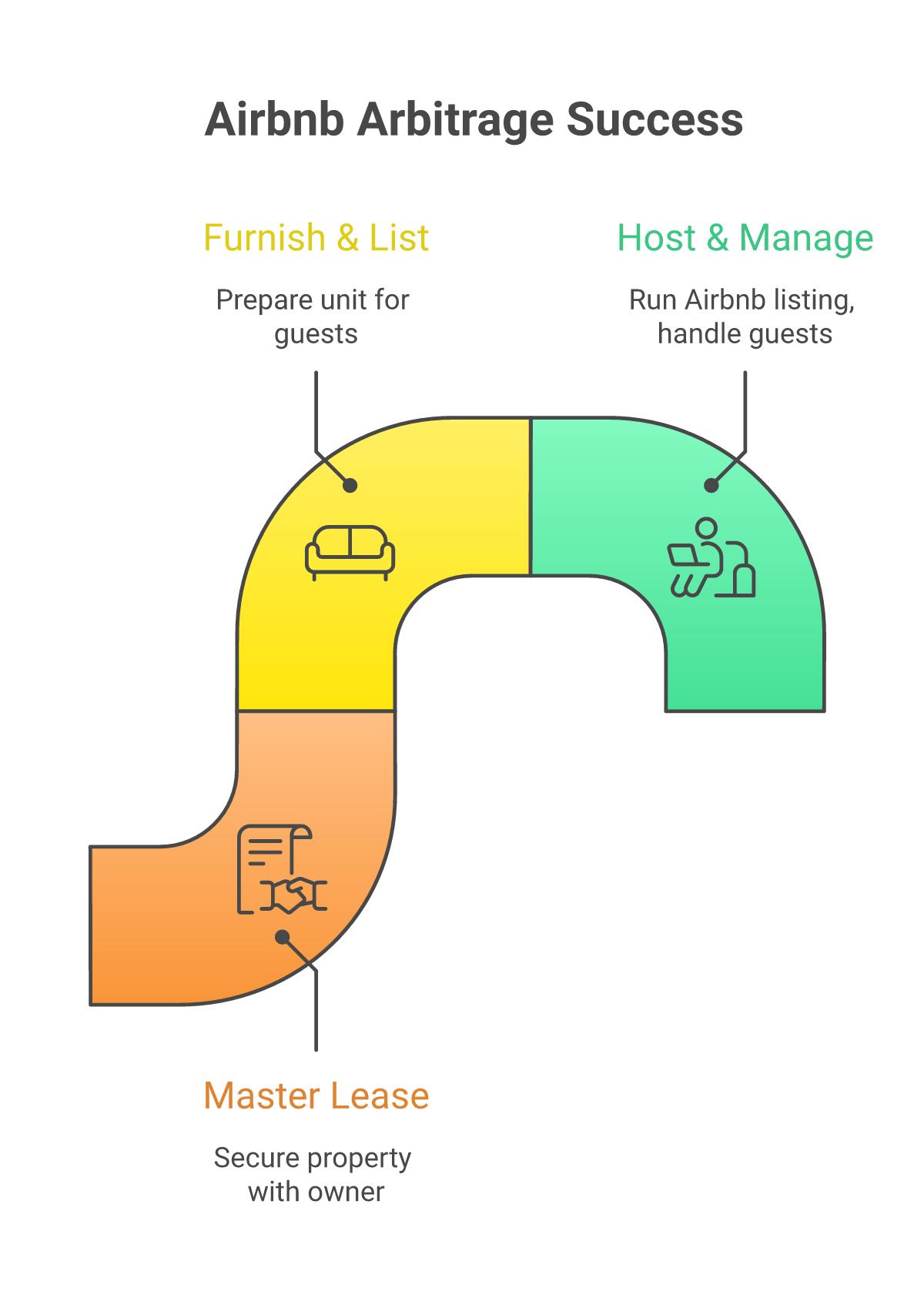
Three actors sit inside every rental arbitrage deal. The property owner (your landlord) signs the master lease and collects guaranteed rent every month. You (the arbitrage host) become the master tenant, furnish the unit, and run the airbnb listing. The short-term guest books the property through Airbnb or Vrbo for stays that typically range from 2 to 14 nights. Each actor benefits when the deal is structured correctly: the property owner gets reliable income with zero void periods, the arbitrage host generates short term rental income without property ownership, and the guest gets a furnished home for less than a hotel.
How Does Airbnb Arbitrage Work? Step-by-Step
The mechanics of airbnb arbitrage break down into six predictable steps. Most 10XBNB students complete this cycle for their first unit within 60 to 90 days.
Step 1: Market research. Pick a city or neighborhood with strong short term rentals demand. Use AirDNA Rentalizer, Rabbu, or Inside Airbnb to check average daily rate (ADR), occupancy rate, and seasonality. The math: nightly rate times occupancy should produce 2.5x to 3.5x your projected monthly rent.
Step 2: Property sourcing. Search Zillow, Realtor.com, Apartments.com, or local property management listings for long term lease properties in your target area. Filter for 1 to 2 bedroom units near tourist attractions, business districts, or hospitals (mid term rental demand from medical professionals).
Step 3: Landlord pitch. Approach property owners with a structured proposal. Lead with guaranteed rent, zero void periods, 24-month minimum lease, and weekly professional cleaning. Most successful airbnb arbitrage hosts pitch 10 to 20 property owners before getting their first yes.
Step 4: Master lease agreement. Sign a master lease agreement with explicit short term rental subletting permission. A real estate attorney should review the lease before signing ($250 to $600). Skipping this step is the most common way airbnb rental arbitrage deals collapse.
Step 5: Furnish and list. Budget $3,500 to $8,000 for furniture, kitchen, linens, and supplies on a 1-bedroom unit. Pay for professional photography ($150 to $500). Photos drive bookings more than any other listing element. List on Airbnb and Vrbo simultaneously for maximum channel coverage.
Step 6: Operate and track. Daily operations include guest communication, cleaning schedule, supplies restock, maintenance, and review management. Track gross revenue, occupancy, ADR, and net profit margin weekly. Healthy rental arbitrage units run 20% to 30% net margin. Below 15% the deal is at risk.
Is Airbnb Arbitrage Legal?
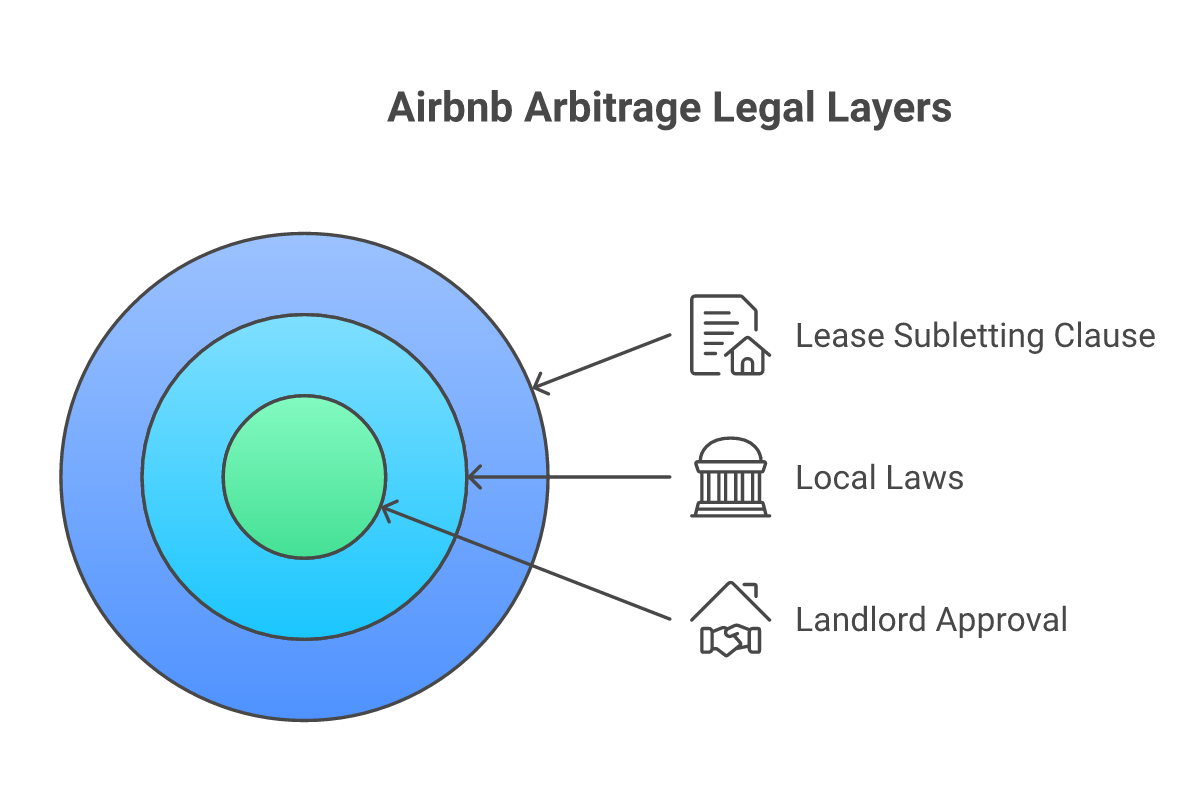
Airbnb arbitrage is legal in most U.S. cities and many international markets when three legal layers align. Miss any layer and the deal becomes a liability for both you and the property owner.
Layer 1: Lease Subletting Clause
Most standard residential leases prohibit subletting by default. To run airbnb rental arbitrage legally, you need either a lease that explicitly permits short term subletting or a master lease agreement with a short term rental addendum. The master lease structure is the cleanest approach and gives both you and the property owner legal protection.
If the property owner has a conventional mortgage (Airbnb financing options) with an owner-occupancy clause, the lender may prohibit short term rental use. Always confirm the property owner’s mortgage terms in writing before signing the master lease.
Layer 2: Local Laws and Short Term Rental Regulations
Short term rental regulations vary city by city. New York City requires hosts to be present for stays under 30 days. New Orleans charges $1,000 annually for a Commercial STR permit and has not accepted new applications since June 2023. Nashville charges $313 per year per the Metro Nashville Codes department. Some cities require nothing.
Check local regulations before signing any master lease. Some buildings and HOAs prohibit short term rental property use entirely, which kills the airbnb arbitrage deal before it starts. The lease can permit subletting on paper while the building bans Airbnb in practice.
Layer 3: Landlord Approval
The third layer is explicit written approval from the property owner. Verbal approval is not enough. The standard airbnb arbitrage landlord pitch covers four points: guaranteed rent (whether the property is booked or not), zero void periods for the property owner, full property care including weekly cleans, and a 24-month minimum lease term.
For US operators, the U.S. Small Business Administration’s business registration guide covers LLC structure formation and federal tax ID setup, both of which protect personal assets when operating a rental arbitrage business. UK operators use limited company structure registered through Companies House.
Airbnb Arbitrage vs Other Short Term Rental Business Models
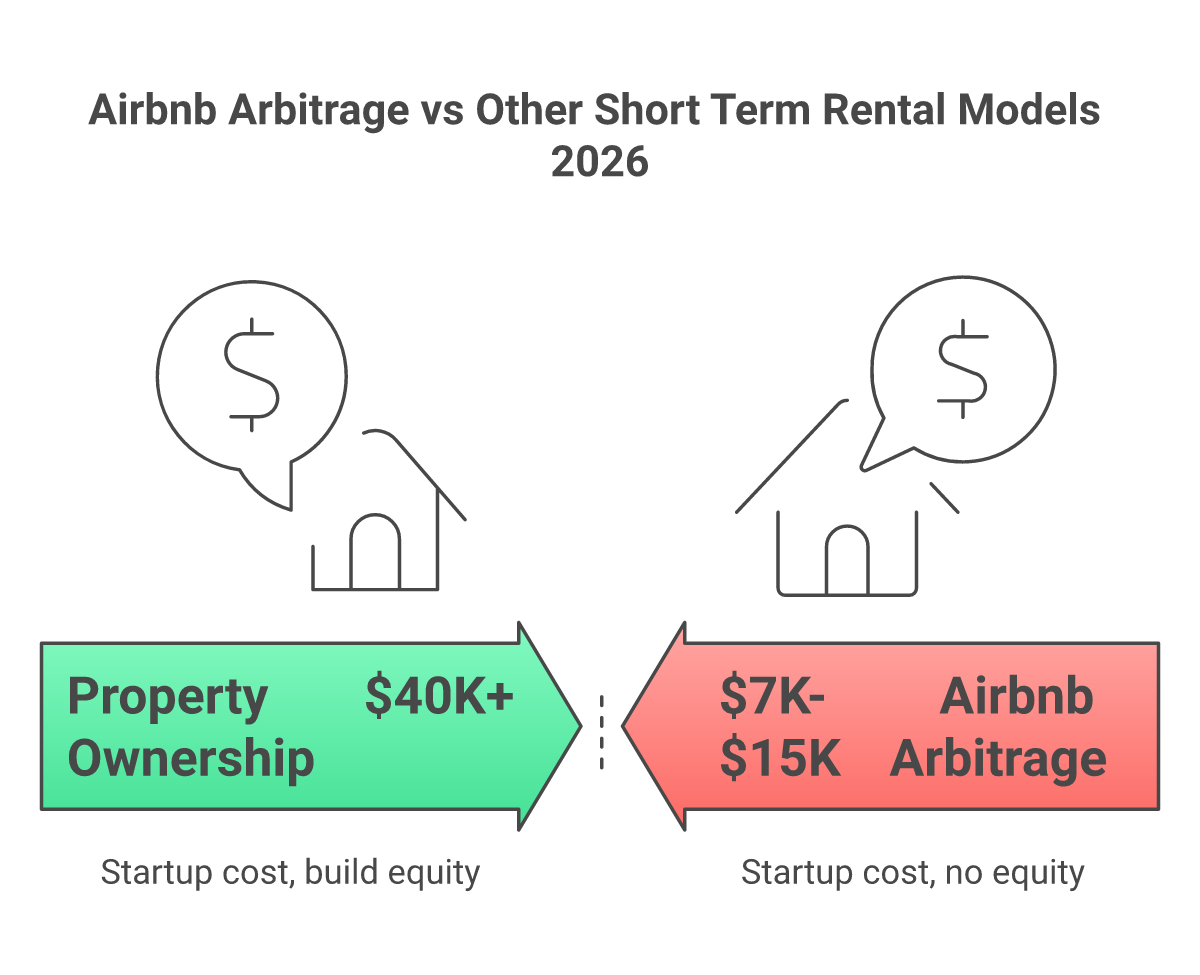
Airbnb rental arbitrage is one of three main short term rental business models. The others are property ownership and co-hosting. Each varies in startup capital, ongoing risk, and long-term equity.
| Model | Startup capital | Monthly obligation | Long-term equity |
|---|---|---|---|
| Airbnb arbitrage | $7K to $15K | Fixed monthly rent | No (cash flow only) |
| Property ownership | $40K+ | Mortgage + property tax + HOA | Yes (mortgage paydown) |
| Co-hosting | $0 to $500 | None (revenue share with owner) | No (service income) |
Airbnb arbitrage sits in the middle. Lower startup capital than property ownership, higher cash flow potential than co-hosting, but you carry the monthly rent obligation whether bookings come in or not. Most 10XBNB students start with rental arbitrage as their first unit, then add co-hosting income from owners they meet, then transition to buying property once their rental arbitrage business generates $40,000+ annual net profit.
The Pros and Cons of Airbnb Arbitrage
Pros
- Low startup capital. $7,000 to $15,000 per unit vs $40,000+ for property ownership.
- Cash flow. A profitable airbnb arbitrage unit generates $1,000 to $3,000 monthly net profit.
- Scalability. Each unit operates independently. Veteran rental arbitrage hosts often run 3 to 6 units within 18 months.
- No mortgage debt. You carry a lease obligation, not a 25-year mortgage on the property.
- Skill compounding. Each rental arbitrage unit teaches you market analysis, guest experience, and property management. These skills transfer to a buy property career later.
Cons
- Landlord dependency. If the property owner sells or doesn’t renew the lease, you lose the unit.
- Void periods eat into profit. Empty nights are pure cost. Most rental arbitrage units need 60% to 70% occupancy to break even.
- Property damage risk. AirCover covers up to $3M in damage and $1M in liability per the Airbnb AirCover help article, but it is not a substitute for proper short term rental insurance.
- Regulation risk. Cities can tighten short term rental rules overnight. Local laws are the single biggest external risk to any rental arbitrage business.
- No long-term equity. You build a business asset (the operation, the systems) but not a property ownership asset.
How to Calculate Airbnb Arbitrage Profitability
The airbnb rental arbitrage profit formula: monthly gross revenue equals average nightly rate times occupancy rate times 30 nights. Monthly net profit equals gross revenue minus monthly rent minus utilities minus cleaning minus the Airbnb host service fee (15.5% under the host-only fee model as of December 2025) minus insurance minus supplies minus maintenance reserve.
Worked example: 1-bedroom apartment in Charlotte, NC
| Line item | Monthly |
|---|---|
| Gross revenue ($165 ADR × 68% occupancy × 30) | $3,366 |
| Monthly rent to property owner | -$1,400 |
| Utilities (Wi-Fi, electric, water, gas) | -$250 |
| Cleaning (10 turns × $85) | -$850 |
| Airbnb host service fee (15.5%) | -$522 |
| Insurance + supplies + maintenance reserve | -$220 |
| Monthly net profit | $124 |
That example produces a 3.7% net margin and is a marginal deal. To hit the 20% to 30% target margin, the airbnb arbitrage unit needs higher ADR ($200+), higher occupancy (78%+), or lower monthly rent ($1,000 or below). Most profitable rental arbitrage deals require a combination of all three.
Our free Airbnb arbitrage calculator projects monthly cash flow and net margin in under 60 seconds, including sensitivity analysis for occupancy and ADR variations.
Your First 5 Steps to Start Airbnb Arbitrage
If airbnb arbitrage is the right business model for you, these are the five steps to take in order before signing any master lease.
1. Check local laws. Pull your target city’s short term rental ordinance from the city website. Confirm short term rentals are legal at the property type you want to lease.
2. Secure your finances. Plan for $9,000 to $13,000 in total startup costs (first month plus last month plus security deposit on a $1,500 unit, plus $4,500 furniture, plus $300 photos, plus $500 LLC and licenses, plus $2,000 operating reserve).
3. Pick a market. Use AirDNA or Rabbu to evaluate ADR, occupancy, and seasonality in your target city. The math: nightly rate times occupancy should produce 2.5x to 3.5x your projected monthly rent.
4. Find and pitch property owners. Search Zillow, Realtor.com, or Apartments.com. Pitch landlords with guaranteed rent and zero void periods. Expect 10 to 20 pitches before your first yes.
5. Sign the right lease. Use a master lease agreement with explicit short term rental subletting permission, reviewed by a real estate attorney. Skip this step and the airbnb arbitrage deal can collapse the moment the property owner decides to sell.
Frequently Asked Questions About Airbnb Arbitrage
Is Airbnb arbitrage profitable in 2026?
Yes, when the deal is structured correctly. A well-selected airbnb arbitrage unit generates $1,000 to $3,000 monthly net profit at a 20% to 30% net margin. The variables that drive profitability: monthly rent below 35% of projected gross revenue, occupancy 60% to 70% minimum, and operating expenses below 30% of revenue. Below 15% margin the deal is at risk.
Is Airbnb arbitrage legal in the US?
Yes, in most cities, when three legal layers align: the master lease permits subletting, local short term rental regulations allow short-stay rentals at the property, and the property owner gives explicit written approval. New York City, San Francisco, and Honolulu have stricter regimes. Nashville, Phoenix, Charlotte, and most southern and midwestern markets are friendly to rental arbitrage.
How much can you make with Airbnb arbitrage?
A profitable airbnb arbitrage unit generates $12,000 to $36,000 in annual net profit ($1,000 to $3,000 monthly). Top-quartile rental arbitrage operators in strong markets clear $40,000+ per unit per year. Most 10XBNB students operate 3 to 6 units, putting total annual rental arbitrage business income at $60,000 to $180,000+.
How much money do you need to start Airbnb arbitrage?
Plan for $7,000 to $15,000 per unit in total startup capital. The breakdown: first and last month’s rent plus security deposit on a $1,500 unit ($4,500), furniture and decor ($3,500 to $7,000), kitchen and linens ($800 to $1,500), safety equipment ($300), professional photography ($200 to $400), LLC and licenses ($300 to $800), and a 30 to 60 day operating reserve ($1,500 to $2,500).
How do I convince a landlord to allow Airbnb arbitrage?
Lead with guaranteed rent and zero void periods. Frame the deal as a corporate let or master lease arrangement, not a sub-Airbnb arrangement. Offer a 24-month minimum lease, professional weekly cleaning, no-party policy, full short term rental insurance, and a deposit equal to two months’ rent for your first unit. Bring reference letters from previous landlords if you have prior rental arbitrage units.
What are the risks of rental arbitrage?
Five main risks. Landlord dependency (if the property owner sells you lose the unit). Void periods eating into profit during slow seasons. Property damage from guest behavior. Local regulation changes that can shrink your addressable market overnight. Platform dependency on Airbnb and Vrbo policy changes. Mitigate by signing 24-month leases, carrying short term rental insurance, monitoring local regulations monthly, and cross-listing on multiple platforms.
What cities are best for Airbnb arbitrage in 2026?
Per AirDNA’s 2026 outlook and 10XBNB market data, the top US markets for airbnb arbitrage are Nashville TN, Phoenix AZ, Charlotte NC, Pigeon Forge TN, Gulf Shores AL, Asheville NC, San Antonio TX, and Jacksonville FL. The pattern: friendly short term rental regulations, ADR-to-rent ratios above 2.5x, and year-round demand from a mix of business travelers, tourists, and medical professionals.
Real-World Airbnb Arbitrage Examples
Three short term rental arbitrage scenarios illustrate how the model plays out across different markets. Each is based on a 10XBNB student case and the math reflects 2026 averages for that market.
Example 1: Single-Unit Urban Arbitrage (Charlotte, NC)
A 1-bedroom apartment in South End Charlotte at $1,650 monthly rent. ADR of $175 with 72% occupancy puts gross revenue at $3,780. Net profit after monthly rent, utilities, cleaning, Airbnb host fee, and operating expenses lands at $620, a 16.4% net margin. The arbitrage host operates this single unit as a side income stream while keeping a day job. Year-one net income: $7,440.
This is the most common entry point into rental arbitrage. Low-risk, single-unit, urban market with strong year-round short term rentals demand. The vacation rental side of the market peaks during NASCAR Bank of America 400, the CIAA tournament, and Charlotte Knights baseball season.
Example 2: Multi-Unit Vacation Rental Operator (Gulf Shores, AL)
Three 2-bedroom beach condos at $1,950 monthly rent each. Combined gross revenue across the three rental arbitrage units: $14,400 monthly during peak season (May to September), $7,200 monthly during off-season (December to February). Average annual gross revenue: $138,000 across three units. After monthly rent, cleaning, utilities, Airbnb host fee, insurance, and a maintenance reserve, the operator clears $52,000 to $61,000 annual net profit from the airbnb arbitrage business.
This vacation rental scenario uses seasonal pricing aggressively. ADR ranges from $90 in February to $295 in July. The short term rental market in Gulf Shores rewards rental arbitrage operators who carry the property through low seasons.
Example 3: Mid-Term Rental Arbitrage Pivot (Nashville, TN)
A 1-bedroom apartment near Vanderbilt University Medical Center at $1,800 monthly rent. The rental arbitrage host pivoted from short term rentals to mid-term rentals (30+ night stays) targeting travel nurses and medical professionals. ADR of $135 with 85% occupancy on 30-day stays. Gross revenue: $3,442 monthly. Net profit: $1,180, a 34% net margin.
The mid-term pivot reduced cleaning costs (one turn per month vs eight to ten for short term), reduced the platform fee burden (Airbnb host service fee applies per booking, not per night), and matched local regulations that restrict short stays. This is one of the highest-margin airbnb rental arbitrage configurations available in 2026.
Common Mistakes That Kill Rental Arbitrage Profitability
Six mistakes account for the majority of failed airbnb rental arbitrage units. Each is preventable.
1. Verbal landlord approval instead of written. A handshake deal evaporates the moment the property owner wants to sell or the building manager files a complaint. Get every approval in writing, embedded in the master lease, signed by both parties.
2. Underestimating void periods. First-month occupancy is typically 30% to 40%, not the 65% to 70% projection. Build a 60-day operating reserve into your initial investment so you can survive the slow ramp without panic.
3. Ignoring local laws. A $2,500 unlicensed short term rental fine in Edinburgh or a NYC violation notice can wipe out a year of rental arbitrage profit. Check local laws and short term rental regulations before signing the master lease, not after.
4. Mixing personal and business finances. A separate business bank account, accounting software, and LLC structure from day one. The IRS Tax Topic 415 on rental real estate covers the tax treatment of rental arbitrage income, including which operating expenses are deductible.
5. Skipping short term rental insurance. AirCover is partial coverage. A standalone short term rentals insurance policy from Proper Insurance or Slice runs $80 to $250 monthly per unit and covers loss of rental income, ordinance and law coverage, and broader liability scenarios that AirCover excludes.
6. Buying the wrong furniture. Cheap furniture breaks under guest use within 6 to 12 months. Invest in a quality mattress, a durable sofa, and commercial-grade kitchenware. Skimp on art and decor. Most successful airbnb arbitrage hosts spend $4,000 to $7,000 on furnishing a 1-bedroom unit and never regret the investment.
Scaling From One Rental Arbitrage Unit to a Business
The first airbnb arbitrage unit teaches you the operation. Units 2 through 6 build the rental arbitrage business. Most successful operators hit the 3-unit mark within 12 months of launching their first short term rental and the 6-unit mark within 24 months. The short term rental market rewards systems over hustle once you cross unit 3.
The operating model shifts as you scale. Solo rental arbitrage works for 1 to 2 units. Beyond that, you need either a virtual assistant for guest communication ($5 to $15 per hour) or a full property management platform like Hospitable or Guesty ($30 to $80 per unit per month). The transition typically happens at unit 3.
Cash flow at 3 units typically produces $3,000 to $9,000 monthly net profit. The biggest risk at 3+ units is correlated void periods. If all three rental arbitrage units sit in the same neighborhood and local short term rental demand drops (new regulation, major event cancelled, economic downturn), all three units lose revenue while monthly rent obligations stay fixed. Diversify across neighborhoods or markets by unit 4.
For the complete launch-to-scale playbook including market selection, landlord pitch scripts, and operational systems, see our 14-step Airbnb business guide and the deeper rental arbitrage startup costs breakdown.
The Bottom Line on Airbnb Arbitrage
Airbnb arbitrage is the short term rental business model that lets you generate cash flow from real estate without buying property. You lease a unit long-term from a property owner, re-list it on Airbnb and Vrbo, and keep the spread between gross nightly revenue and your fixed monthly rent plus operating costs.
The model works when three legal layers align (master lease subletting clause, local short term rental regulations, landlord approval) and when the math produces 20% to 30% net margin. Below 15% margin the deal is at risk. Above 30% you have pricing power to raise rates further.
For the full operational playbook, see our complete rental arbitrage strategy guide. To run the numbers on a specific deal before you sign any master lease, use our free Airbnb arbitrage calculator. And if you want the system that has produced over $5 million in booking fees across 24 properties without buying real estate, our 2026 Airbnb course comparison ranks every program available, including 10XBNB.