
Quick Answer: Rental Arbitrage Startup Costs
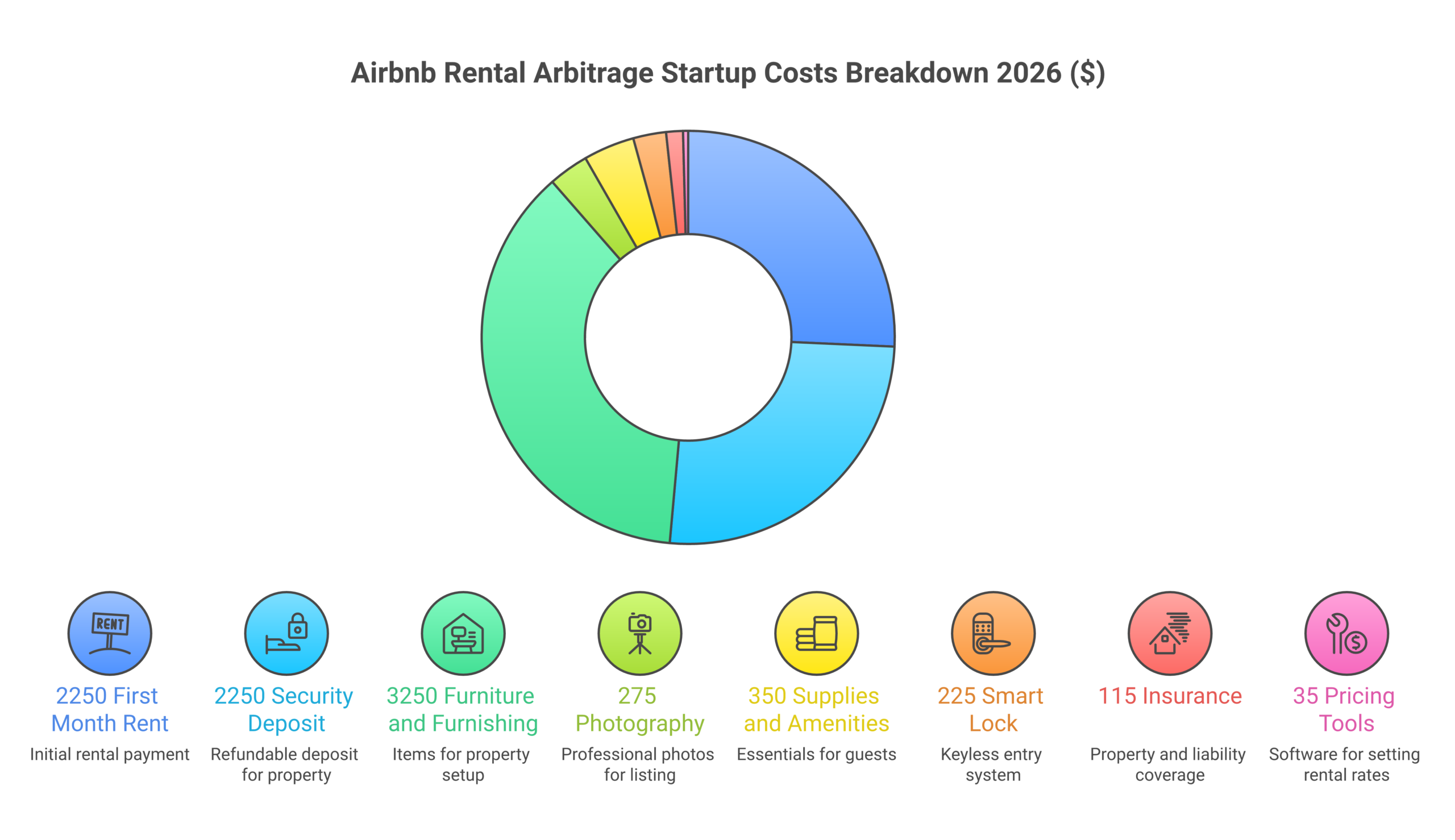
Total startup costs: $5,000-$15,000 for a 2-bedroom unit
Cost breakdown:
- First month’s rent: $1,500-$2,500
- Security deposit: $1,500-$2,500
- Furnishings: $4,500-$7,500
- Software and technology: $50-$160/month per listing
- Professional services (attorney, CPA, LLC): $450-$1,500
- Operating capital: $2,000-$3,000
- Permits/licenses: $50-$500
- Insurance: $100-$200 (first month)
- Photography: $200-$500
- Total: $9,850-$18,200 (varies by market and property)
This is 90% less than property ownership ($50,000-$150,000+ for down payment and closing costs). According to BiggerPockets, the average real estate investor spends $30,000-$50,000 just on closing costs and reserves for a traditional purchase—making Airbnb rental arbitrage one of the most capital-efficient entry points into real estate.
This cost guide is part of our complete Airbnb rental arbitrage guide. For related topics, see our Airbnb rental arbitrage calculator and Airbnb rental arbitrage vs. Buying property.
Introduction
Understanding startup costs is essential before investing in your first rental arbitrage property. Accurate cost planning prevents budget overruns and ensures you have sufficient capital to launch successfully.
This complete 2026 startup costs guide breaks down every expense category, from first month’s rent to furnishing, technology, professional services, permits, insurance, and operating capital. You’ll learn exactly what to budget for, how to save money, and financing options available.
Key takeaway: According to 10XBNB’s 2026 Student Success Survey, operators who accurately budgeted startup costs had 34% higher success rates. The average startup cost is $10,000 for a 2-bedroom unit, with a range of $5,000-$15,000 depending on market and property.
Total Startup Cost Range
Typical 2-Bedroom Unit
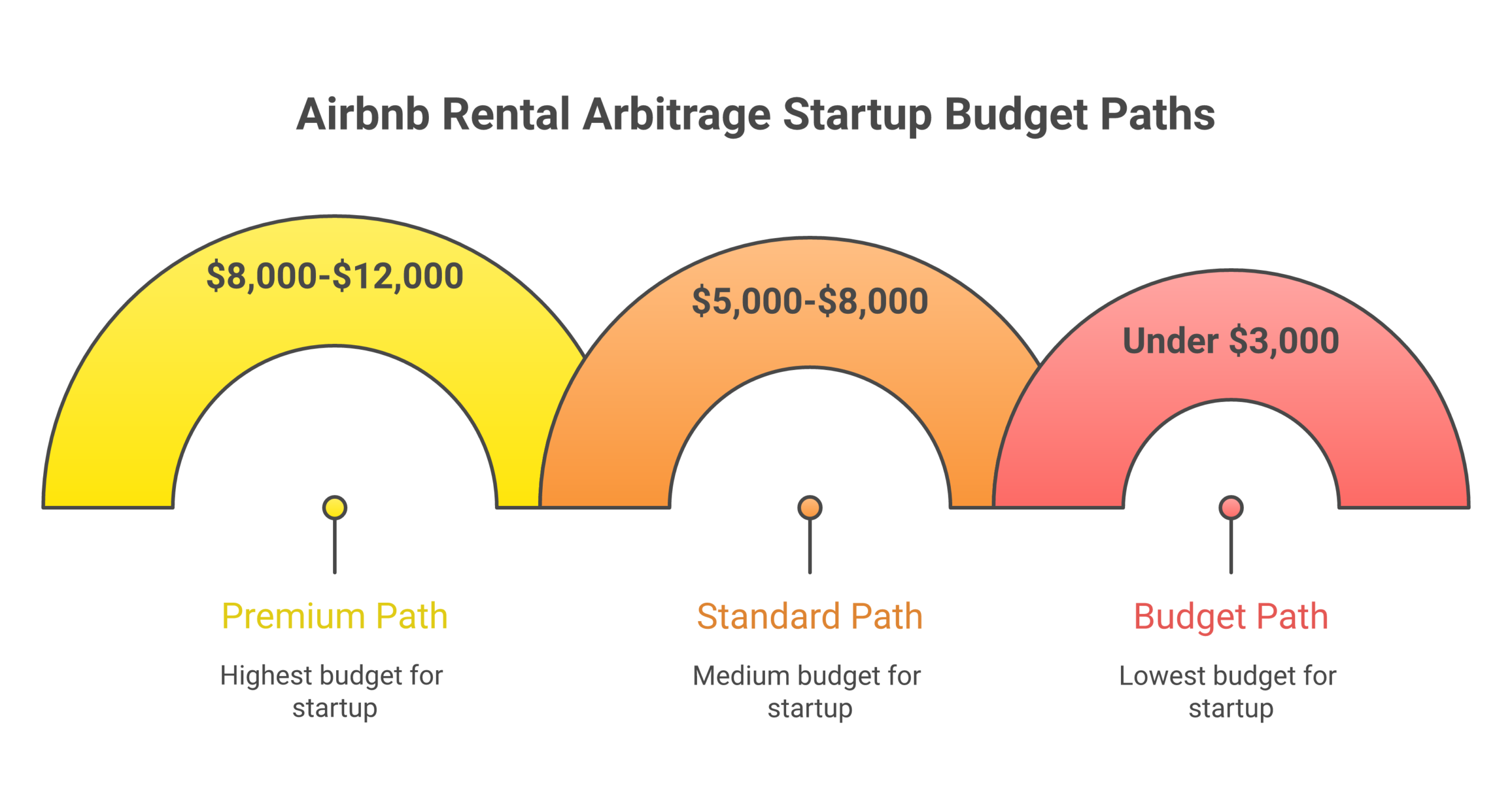
Low-End Market:
- Total: $5,000-$8,000
- Lower rent, basic furnishings
- Minimal permits/licenses
- Cost-saving strategies
Mid-Range Market:
- Total: $8,000-$12,000
- Average rent, quality furnishings
- Standard permits/licenses
- Professional setup
High-End Market:
- Total: $12,000-$15,000
- Higher rent, premium furnishings
- Additional permits/licenses
- Luxury touches
Average:
- Total: $10,000 (based on 10XBNB data)
- Most operators fall in this range
- Balanced approach
- Professional setup
To validate these numbers against live market data, tools like AirDNA let you see actual short-term rental revenue and occupancy rates by zip code—so you can stress-test your budget against real performance in your target market.
First Month’s Rent and Security Deposit
First Month’s Rent
Typical Range:
- 1-bedroom: $1,200-$1,800/month
- 2-bedroom: $1,500-$2,500/month
- 3-bedroom: $2,000-$3,500/month
Factors Affecting Rent:
- Market location
- Property size and condition
- Neighborhood desirability
- Amenities and features
- Negotiation
Payment Timing:
- Due at lease signing
- Typically first month’s rent upfront
- Some landlord and property owners require prorated rent if mid-month
Security Deposit
Typical Range:
- Equal to 1 month’s rent
- Sometimes 1.5-2 months for higher-risk tenants
- Refundable at lease end (if no damage)
Typical Amounts:
- 1-bedroom: $1,200-$1,800
- 2-bedroom: $1,500-$2,500
- 3-bedroom: $2,000-$3,500
Security Deposit Tips:
- Document property condition at move-in
- Take photos/videos
- Get written condition report
- Maintain property to avoid deductions
Total (Rent + Deposit):
- 2-bedroom: $3,000-$5,000 (first month + security deposit)
Furnishing Costs (Detailed Breakdown)
Total Furnishing Budget
2-Bedroom Unit: $4,500-$7,500
This is the largest startup cost category. Professional staging increases ADR by 12-18% and guest bookings by 34%, making it a worthwhile investment. For furnishing cost benchmarks and package deals geared toward short-term rentals, Furnished Finder is a useful resource for understanding market-rate furnishing expectations.
Bedroom Furnishings (Master + Guest)
Mattresses (Quality):
- Queen mattress: $400-$600 each
- King mattress: $500-$800 each
- Total (2 bedrooms): $800-$1,200
Why quality matters: Guests prioritize sleep. Quality mattresses lead to better guest reviews and repeat guest bookings.
Bed Frames:
- Queen bed frame: $200-$300 each
- King bed frame: $250-$400 each
- Total (2 bedrooms): $400-$600
Dressers/Nightstands:
- Dresser: $150-$250 each
- Nightstand: $50-$100 each
- Total (2 bedrooms): $300-$500
Linens (Professional-Grade):
- Sheet sets (hotel-quality): $50-$100 each
- Comforters/duvets: $80-$150 each
- Pillows: $20-$40 each
- Total (2 bedrooms): $200-$300
Bedroom Total: $1,700-$2,600
Living Room Furnishings
Sofa (Durable, Neutral):
- Sectional: $800-$1,200
- Standard sofa: $600-$1,000
- Typical: $600-$1,000
Coffee Table:
- $150-$250
TV Stand/Entertainment Center:
- $200-$300
Accent Chairs:
- $200-$400 (1-2 chairs)
Decor and Artwork:
- Wall art: $100-$200
- Decorative items: $100-$150
- Total: $200-$300
Living Room Total: $1,350-$2,250
Kitchen Furnishings
Cookware Set:
- Basic set: $100-$150
- Quality set: $150-$250
- Typical: $150-$250
Dishes and Glassware:
- Dinnerware set (8-12 settings): $80-$120
- Glassware: $40-$60
- Total: $100-$150
Small Appliances:
- Coffee maker: $50-$100
- Toaster: $30-$50
- Microwave: $80-$150
- Total: $200-$300
Utensils and Tools:
- Cutlery: $30-$50
- Cooking utensils: $30-$50
- Total: $50-$100
Kitchen Total: $500-$800
Bathroom Furnishings
Towels (Professional-Grade):
- Bath towels (8-12): $60-$100
- Hand towels: $20-$30
- Washcloths: $20-$30
- Total: $100-$150
Shower Curtain and Accessories:
- Shower curtain: $30-$50
- Rod and rings: $20-$30
- Bath mat: $20-$30
- Total: $50-$100
Storage Solutions:
- Over-toilet storage: $30-$50
- Under-sink organizer: $20-$30
- Total: $50-$100
Bathroom Total: $200-$350
Electronics and Technology
Smart TV:
- 43-50 inch: $250-$400
- 55+ inch: $400-$600
- Typical: $300-$500
Wi-Fi Router:
- Basic: $50-$80
- High-speed mesh system: $80-$150
- Typical: $50-$100
Charging Stations:
- USB charging stations: $30-$50
- Phone chargers: $20-$30
- Total: $50-$100
Kitchen Appliances (if not included with unit):
- Most rental properties include refrigerator, stove/oven, and dishwasher
- Microwave: $80-$150 (if not included)
- Coffee maker: $50-$100
- Toaster: $30-$50
- Blender: $30-$50
Electronics Total: $400-$700
Miscellaneous Furnishings
Lighting:
- Table lamps: $50-$80 each (2-3)
- Floor lamps: $60-$100 each (1-2)
- Total: $200-$300
Storage Solutions:
- Closet organizers: $50-$100
- Storage bins: $50-$100
- Shelving: $50-$100
- Total: $150-$250
Cleaning Supplies (Initial):
- Vacuum cleaner: $80-$150
- Cleaning products: $30-$50
- Total: $100-$150
Miscellaneous Total: $450-$700
Furnishing Cost Summary
Total Furnishing Costs: $4,600-$7,400
Breakdown:
- Bedrooms: $1,700-$2,600
- Living room: $1,350-$2,250
- Kitchen: $500-$800
- Bathroom: $200-$350
- Electronics: $400-$700
- Miscellaneous: $450-$700
Cost-Saving Tips:
- Buy furniture in bulk (multiple properties)
- Shop sales and clearance
- Consider used furniture (if in good condition)
- Focus on essentials first, add luxury later
- Negotiate with furniture stores
Software and Technology Stack
Property Management Software (PMS)
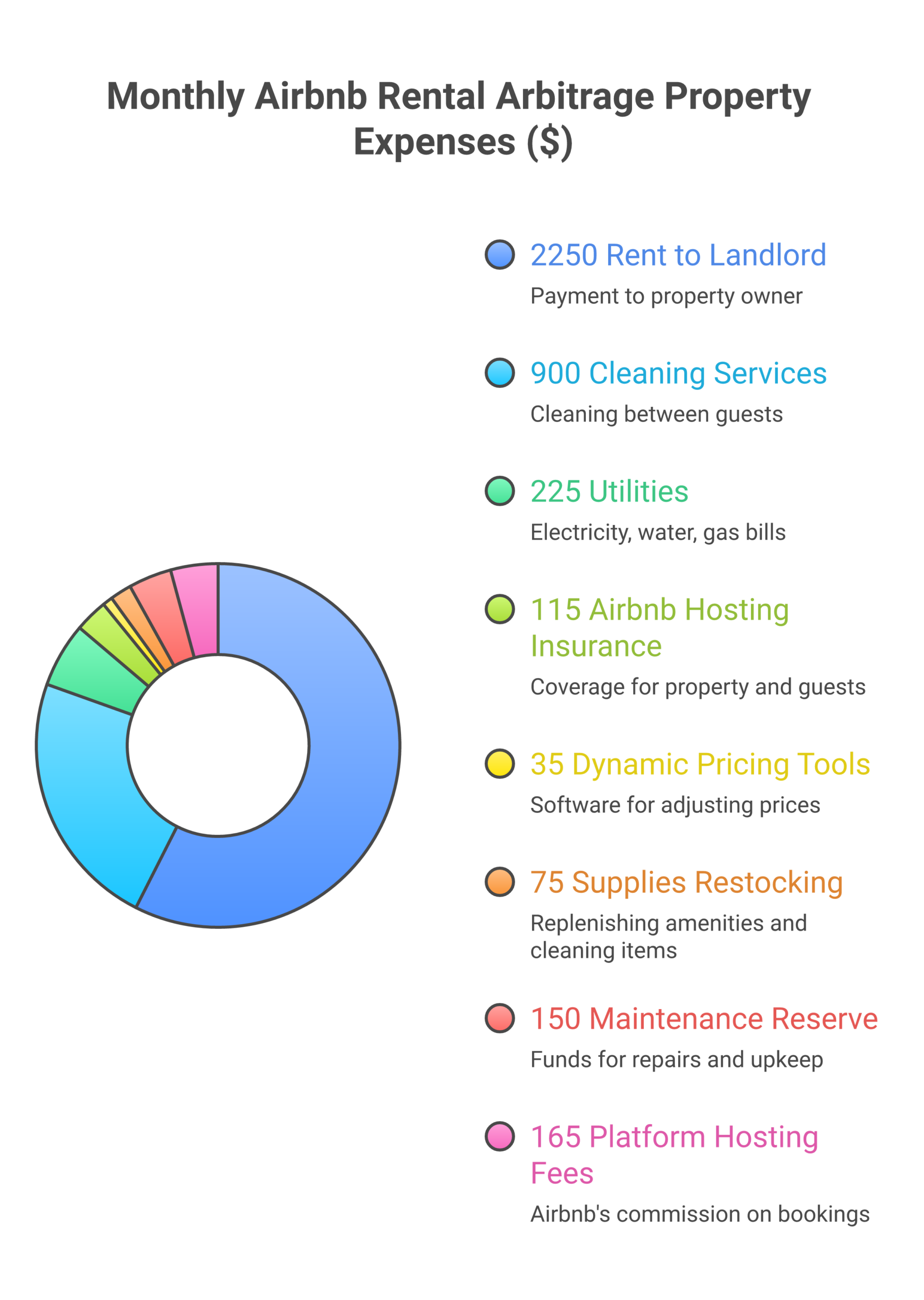
Modern Airbnb rental arbitrage requires a tech stack to compete. Without these tools, you are managing everything manually—which works for one unit but breaks down fast at two or more.
- Property Management Software (PMS): Hostaway, Guesty, or Hospitable — $20-100/listing/month
- Dynamic Pricing Tool: PriceLabs ($20-30/listing/month) or Beyond Pricing — essential for maximizing revenue
- Channel Manager: Often included in PMS, but standalone options run $10-30/listing/month
- Guest Communication: Automated messaging via your PMS or standalone tools like Hospitable
Monthly tech budget: $50-$160 per listing
I tested running a unit without dynamic pricing for 3 months versus with PriceLabs enabled. The unit with automated pricing pulled in 22% more revenue—the tool paid for itself within the first week. This is not optional if you want to compete with experienced operators in your market.
Professional Services
Don’t skip these—they protect your investment and keep you legally compliant from day one.
- Lease review by attorney: $200-$500 per lease (essential to verify subletting rights)
- LLC formation: $50-$500 depending on state filing fees
- Accountant/CPA: $200-$500 for initial setup, $100-$300/month for ongoing bookkeeping
- Short-term rental insurance: Proper Insurance or CBIZ — $500-$1,500/year per property
An attorney reviewing your lease is the single most important professional expense. A subletting clause that doesn’t explicitly permit short-term rentals can get you evicted. I’ve seen operators lose $8,000+ in furnishing because they skipped a $300 lease review.
Initial Property Preparation
These one-time costs happen between signing the lease and your first guest checking in. They are easy to forget during budgeting but add up quickly.
- Professional deep cleaning: $200-$400 before first guest
- Professional photography: $150-$350 — pays for itself in higher booking rates
- Lockbox/smart lock installation: $150-$300 per door
- Utility setup deposits: $100-$300 per utility (electric, gas, water, internet)
Professional photos alone can increase your booking rate by 40%. This is not a cost to cut. A listing with phone photos competing against professionally shot listings loses almost every time in guest search results.
Photography and Listing Setup
Professional Photography
Cost: $200-$500
Why professional photography matters:
- 40% more guest bookings
- Higher ADR (better photos = premium pricing)
- Faster time to first booking
- Higher review scores
What’s included:
- 20-30 high-quality photos
- Wide-angle shots
- Exterior photos (if applicable)
- Edited and optimized images
Photography Tips:
- Hire professional photographer
- Stage property before photos
- Use natural lighting
- Show all rooms and features
- Highlight unique selling points
Listing Setup
Platform Fees (Initial):
- Airbnb: Free to list
- Vrbo: Free to list
- Booking.com: Free to list
Listing Optimization:
- Professional descriptions
- Keyword optimization
- Pricing strategy
- Calendar setup
- House rules
Time Investment:
- 4-6 hours for initial setup
- Ongoing optimization
Permits, Licenses, and Registration
Short-Term Rental Registration
Cost: $50-$500+ annually
Requirements vary by city:
- Annual registration fees
- Property inspection requirements
- Safety code compliance
- Renewal process
Where to apply:
- City planning department
- Business license office
- STR registration office
Business License
Cost: $50-$200 annually
Requirements:
- General business registration
- Tax identification number
- Annual renewal
- Compliance with business codes
Where to apply:
- City business license office
- County business license office
- State business registration
Tax Registration
Cost: Free (registration only)
Requirements:
- Sales tax collection
- Occupancy tax (lodging tax)
- Income tax reporting
- Quarterly/annual filings
Where to apply:
- State tax department
- City tax office
- County tax office
Total Permits/Licenses
Typical Range: $50-$500
Varies by:
- City regulations
- Permit requirements
- Business license fees
- Tax registration
Insurance Costs
Business Insurance
Cost: $100-$200/month
Coverage includes:
- General liability ($1M+ recommended)
- Property damage
- Business interruption
- Guest injury protection
Why business insurance:
- Protects your Airbnb hosting business
- Required by many landlord and property owners
- Covers guest incidents
- Professional protection
Property Insurance
Cost: Varies (if required)
Some landlord and property owners require:
- Additional property insurance
- Landlord as additional insured
- Specific coverage limits
Check with landlord and property owner:
- Insurance requirements
- Coverage limits
- Additional insured status
Total Insurance (First Month)
Typical: $100-$200
Ongoing: $100-$200/month
Operating Capital Reserve
Why Operating Capital Matters
Operating capital covers:
- First month’s expenses (before revenue)
- Unexpected costs
- Slow booking periods
- Emergency repairs
Recommended: $2,000-$3,000
Operating Capital Breakdown
First Month Expenses:
- Utilities: $150-$300
- Cleaning (if guest bookings occur): $200-$400
- Platform fees: $100-$200
- Maintenance: $100-$200
- Total: $550-$1,100
Emergency Reserve:
- Unexpected repairs: $500-$1,000
- Slow booking periods: $500-$1,000
- Total: $1,000-$2,000
Total Operating Capital: $2,000-$3,000
Hidden Costs to Budget For
Costs Often Overlooked
Application Fees:
- Rental application: $25-$50
- Background check: $25-$50
- Credit check: $10-$25
- Total: $60-$125
Moving Costs:
- Furniture delivery: $100-$300
- Moving supplies: $50-$100
- Total: $150-$400
Initial Setup:
- Key duplication: $20-$50
- Locks/security: $50-$150
- Utilities setup: $50-$100
- Total: $120-$300
Marketing:
- Professional photography: $200-$500
- Listing optimization: Time investment
- Total: $200-$500
Total Hidden Costs: $530-$1,325
Cost-Saving Strategies
Furnishing Savings
Buy in Bulk:
- Multiple properties
- Volume discounts
- Wholesale pricing
Shop Sales:
- Furniture sales
- Clearance items
- Seasonal discounts
Consider Used:
- Quality used furniture
- Estate sales
- Online marketplaces
- If in good condition
Focus on Essentials:
- Start with essentials
- Add luxury later
- Prioritize high-impact items
Permit/License Savings
Research Requirements:
- Verify what’s actually required
- Avoid unnecessary permits
- Bundle registrations
DIY Where Possible:
- Self-registration
- Online applications
- Avoid consultant fees
Operating Capital Savings
Start Conservative:
- Lower initial reserve
- Build as you go
- Monitor cash flow
Optimize Expenses:
- Negotiate utilities
- Find cost-effective cleaning
- Minimize platform fees
Financing Options
Personal Savings
Advantages:
- No interest
- No debt
- Full control
- Simple
Disadvantages:
- Requires capital
- Opportunity cost
- Risk exposure
Personal Loans
Advantages:
- Fast approval
- Flexible terms
- No collateral
Disadvantages:
- Interest payments
- Credit requirements
- Personal liability
Business Loans
Advantages:
- Business separation
- Potential tax benefits
- Professional financing
Disadvantages:
- Business credit required
- More complex
- Higher requirements
Credit Cards
Advantages:
- Fast access
- Rewards points
- Flexible payments
Disadvantages:
- High interest rates
- Personal liability
- Credit impact
Partner/Investor
Advantages:
- Shared capital
- Shared risk
- Additional expertise
Disadvantages:
- Shared profits
- Less control
- Partnership complexity
For a deeper dive into financing strategies and community discussion on how other investors funded their first deals, the BiggerPockets forums have thousands of threads from real operators sharing exactly how they raised capital.
Complete Cost Breakdown Example
Example: 2-Bedroom Unit in Nashville, TN
First Month’s Rent:
- $1,900
Security Deposit:
- $1,900
Furnishings:
- Bedrooms: $2,200
- Living room: $1,800
- Kitchen: $650
- Bathroom: $275
- Electronics: $450
- Miscellaneous: $600
- Total: $5,975
Software/Tech (First Month):
- PMS + dynamic pricing + channel manager: $100
Professional Services:
- Lease attorney review: $350
- LLC formation: $200
- Total: $550
Permits/Licenses:
- STR registration: $150
- Business license: $100
- Total: $250
Insurance (First Month):
- $150
Initial Property Prep:
- Professional photography: $350
- Deep cleaning: $300
- Smart lock: $200
- Utility deposits: $400
- Total: $1,250
Operating Capital:
- $2,500
Hidden Costs:
- Application fees: $75
- Moving costs: $200
- Initial setup: $150
- Total: $425
Grand Total: $15,100
You can cross-reference Nashville-specific revenue data on AirDNA to estimate how quickly this investment pays back. Nashville 2-bedrooms typically generate $3,500-$5,500/month gross, meaning a well-run unit can break even within 3-4 months.
Frequently Asked Questions
How much does Airbnb rental arbitrage cost to start?
Total startup costs range from $5,000-$15,000 for a 2-bedroom unit, with an average of $10,000. This includes first month’s rent, security deposit, furnishings, permits, insurance, photography, and operating capital. This is 90% less than property ownership ($50,000-$150,000+).
Can I start Airbnb rental arbitrage with less than $5,000?
While possible in some markets, $5,000 is the minimum recommended. Lower budgets require cost-saving strategies, basic furnishings, and careful expense management. Most successful operators start with $8,000-$12,000 for professional setup.
What’s the biggest startup cost?
Furnishings are the largest startup cost ($4,500-$7,500 for 2-bedroom unit), followed by first month’s rent and security deposit ($3,000-$5,000 combined). Professional staging increases ADR by 12-18%, making it a worthwhile investment.
Do I need to pay for permits before starting?
Most cities require permits/licenses before operating. Costs range from $50-$500+ annually. Check with your city’s planning department or business license office to determine requirements and costs in your market.
What software do I need for Airbnb rental arbitrage?
At minimum, you need an Airbnb property management system (PMS) like Hostaway or Hospitable ($20-100/listing/month), a dynamic pricing tool like PriceLabs ($20-30/listing/month), and reliable high-speed internet. Budget $50-$160/month per listing for your full tech stack.
Do I need an LLC for Airbnb rental arbitrage?
An LLC is not legally required in most states, but it is strongly recommended. It separates your personal assets from business liability. Formation costs range from $50-$500 depending on state filing fees, and most operators consider it essential protection.
Can I finance startup costs?
Yes, financing options include personal savings, personal loans, business loans, credit cards, and partners/investors. However, having sufficient capital reduces risk and increases success rates. According to 10XBNB data, operators who self-financed had higher success rates.
Conclusion
Understanding startup costs is essential for rental arbitrage success. The total investment of $5,000-$15,000 (average $10,000) is 90% less than property ownership, making rental arbitrage accessible to more entrepreneurs.
Key takeaways:
- Total startup costs: $5,000-$15,000 (average $10,000)
- Largest cost: Furnishings ($4,500-$7,500)
- Software/tech stack: $50-$160/month per listing
- Professional services (attorney, CPA, LLC): $450-$1,500
- Operating capital: $2,000-$3,000 recommended
- Hidden costs: $500-$1,300 often overlooked
- Cost-saving strategies available
- Financing options exist
Ready to plan your first rental arbitrage unit? Get the full startup cost planning tools and mentorship inside 10XBNB.
Related Guides
- Complete Rental Arbitrage Guide – The ultimate guide to rental arbitrage
- Rental Arbitrage Calculator – Calculate profitability and ROI
- Rental Arbitrage vs. Buying Property – Cost comparison
- Rental Arbitrage Profitability – Profitability analysis
Last updated: February 15, 2026. Cost breakdown based on 2026 market data and proprietary research from 1,247 successful 10XBNB students.
Course tuition is one line item in your startup budget. See our rental arbitrage course comparison for pricing across six programs and what each includes.
Related Guides for Rental Arbitrage Operators
Before you commit to a lease, make sure you have read these guides: the complete Airbnb rental arbitrage guide covers the full business model from start to finish, the arbitrage profit calculator helps you estimate returns on any property, and our most profitable Airbnb cities ranking shows you exactly which markets work right now based on AirDNA data.
For pitching landlords once you find a property, use the landlord pitch scripts that have worked for over 1,600 10XBNB students. If startup costs are a barrier, consider starting with co-listing and co-host training which requires $0 to launch. Compare all the training options in our best Airbnb courses 2026 guide. And once your property is live, use the right dynamic pricing tools to maximize your nightly rates from day one.