
I’ve spent the last 7 years in the short term rental industry. I manage 24 Airbnb properties that generated $1.9 million last year by owning zero properties. Before that I spent 12 years in banking at BMO, RBC, and Standard and Poor’s. And in that time I’ve watched dozens of Airbnb courses come and go – some run by legitimate operators, some run by marketers who’ve never hosted a single guest in their lives.
So when people ask me which is the best Airbnb course to take in 2026, I don’t give them the answer they expect. Because the right course depends entirely on where you’re starting from, how much capital you have, and what kind of Airbnb business you actually want to build.
I reviewed 12 programs for this guide. I scored each course on instructor credentials, curriculum content, student results, price, the level of ongoing support, and whether the instructor is actively running short term rentals right now – not just teaching about them from experiences they had 5 years ago.
Full disclosure: 10XBNB is on this list. It’s my program. I’m going to review it the same way I review the others and you can decide for yourself whether that’s a conflict or an advantage. I think having an active host and operator who actually knows what goes on behind the scenes of these courses giving you honest reviews is more valuable than a blogger who’s never managed a property in their life writing a “best of” list. Am I right?
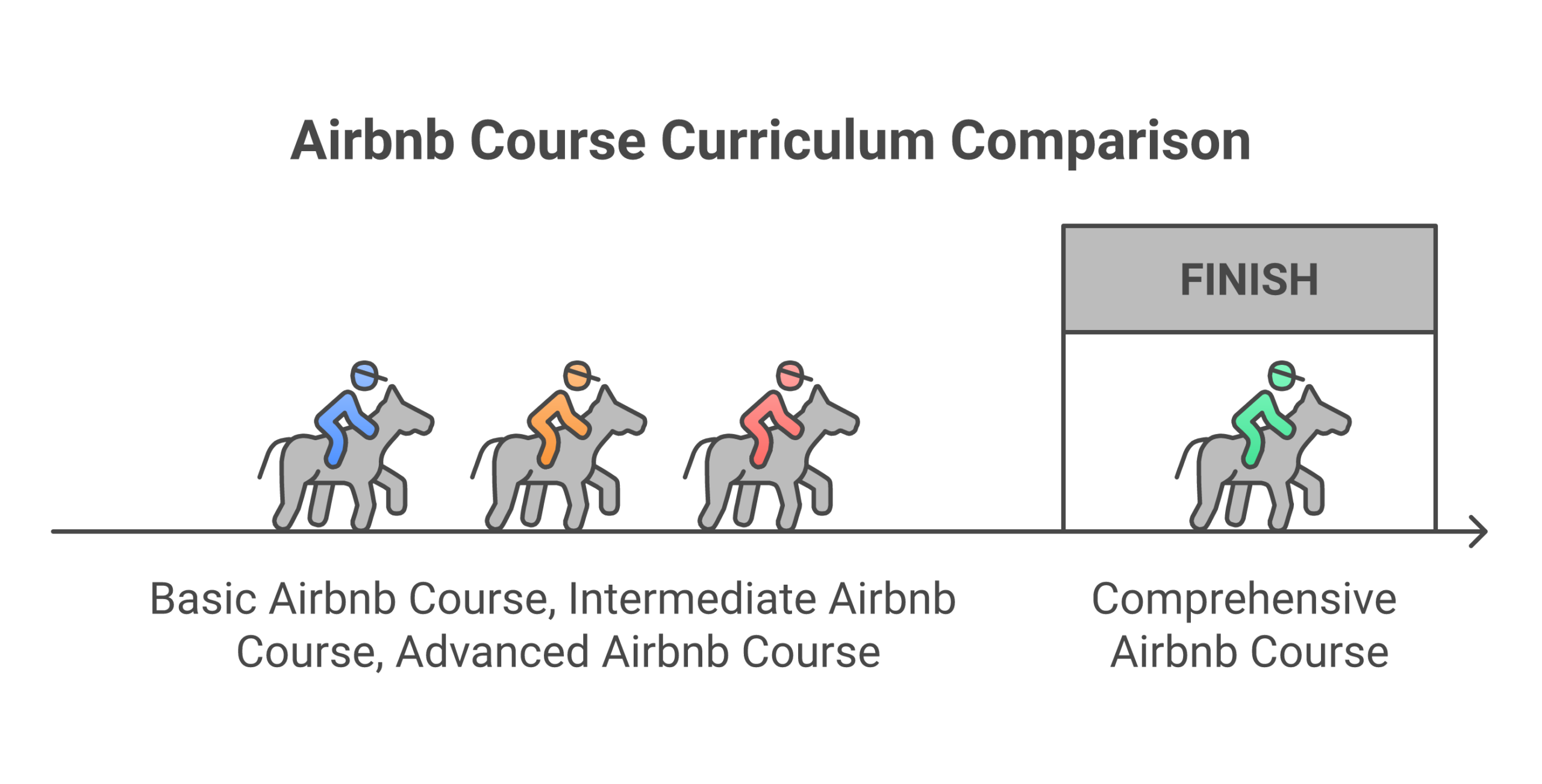
The Best Airbnb Courses in 2026: Quick Comparison
| Course | Instructor | Price | Focus | Level | Best For |
|---|---|---|---|---|---|
| 10XBNB | Shaun Ghavami + Ari Rahmanian | $7K – $30K | Co-listing + rental arbitrage + ownership | Beginner to advanced | Zero capital starts, live mentorship |
| BNB Mastery | James Svetec + Symon He | ~$3K – $5K | Rental arbitrage | Beginner | Arbitrage-focused beginners with capital |
| Robuilt Host Camp | Rob Abasolo | ~$2K – $4K | Property acquisition + Airbnb hosting | Intermediate | Hosts who want to purchase real estate |
| Cracking Superhost | Sean Rakidzich | $174 – $800+ | Algorithm, pricing, negotiation | Intermediate to advanced | Existing hosts wanting to optimize bookings |
| BNB Formula | Brian Page | ~$2K – $5K | Rental arbitrage basics | Beginner | Structured arbitrage education |
| STR Secrets | Mike Sjogren | ~$3K – $5K | Short term rental investing | Intermediate | Funded real estate investors |
| Optimize My Airbnb | Daniel Rusteen | $50 – $200 | Listing optimization | All levels | Hosts wanting better listing conversions |
| STRPA | J. Massey | ~$3K – $5K | STR profit strategies | Intermediate | Operators wanting community support |
| Airbnb Empire Academy | Derek Cheung | ~$1K – $3K | Scaling Airbnb business | Intermediate | Hosts wanting to scale operations |
| Airbnb Academy | Airbnb (official) | Free | Airbnb hosting basics | Beginner | Brand new hosts learning the basics |
| Udemy Airbnb Courses | Various instructors | $15 – $100 | Various vacation rental topics | Beginner | Budget learners, no commitment |
| Skillshare Classes | Various instructors | $14/month | Hosting basics and marketing | Beginner | Casual learners exploring the industry |
What Makes a Great Airbnb Hosting Instructor in 2026
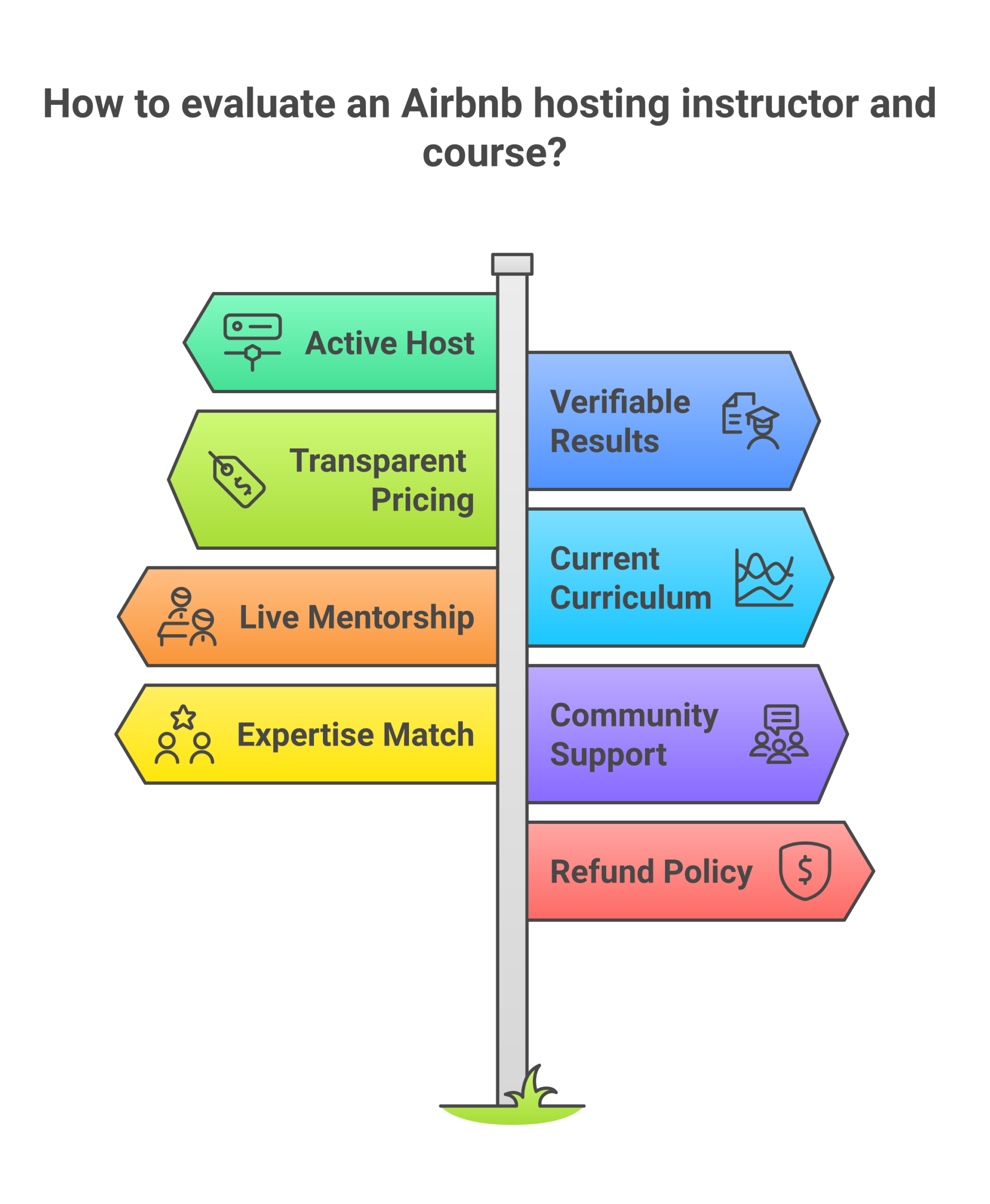
Before I get into individual course reviews, let me tell you what I look for in any instructor teaching short term rentals because this matters more than the curriculum itself. A great instructor with a decent course will always beat a mediocre expert instructor a mediocre instructor with a great course.
They currently manage properties and host guests on a daily basis. Not managed them 5 years ago. Currently. Active operators. The short term rental industry changes every quarter with new regulations, algorithm updates, market trends, and guest expectations. An instructor who stopped hosting in 2022 is providing education based on outdated experiences. Both Rakidzich (100+ active properties) and I (24 active co-listings) are still in the game day in and day out. That level of hands-on experience matters when you’re trying to learn skills that actually work in today’s market.
They have verifiable student results. Any instructor can claim their students find success and make profits. The question is whether you can check those claims. Look for named students with specific results and reviews you can cross-reference on Reddit or Trustpilot. In our case you can look up testimonials and reviews from over 1,600 students who’ve gone through the 10XBNB program. Shaun has been featured in Inc. Magazine for his zero-capital co-listing approach to Airbnb hosting.
They teach a specific model, not everything. The best experts in any industry master one approach. Rakidzich teaches pricing strategy and Airbnb automated optimization at an advanced level. I teach the co-listing to rental arbitrage to property ownership progression. Brian Page covers arbitrage basics. When an instructor claims to teach everything about the Airbnb business, that usually means the content doesn’t go deep enough on anything to actually unlock real results.
They offer live support, not just pre-recorded content. In 2026 you can find free Airbnb hosting education all over YouTube and Reddit. What you’re paying for with a premium course is access to the instructor, a community of learners, accountability, and mentorship. If a course gives you nothing but videos and takes your money without providing ongoing support, you’re overpaying for resources you could find for free.
They’re transparent about pricing and what the cost includes. Every course on this list has a different price point and pricing model. Some charge a flat fee, some charge per module, some take a percentage. A trustworthy instructor tells you exactly what you’re paying for and what level of access that purchase gets you. No hidden upsells, no bait and switch on pricing.
Full Reviews: All 12 Airbnb Courses Ranked
1. 10XBNB – Shaun Ghavami and Ari Rahmanian (Airbnb Co-Listing and Rental Arbitrage)
This is my course so I’ll be direct about what it covers and what it costs. 10XBNB teaches three income models: co-listing where you manage other people’s properties for a 20-25% management fee, rental arbitrage where you lease properties and list them as short term rentals on Airbnb and VRBO, and property acquisition for hosts who want to build a real estate portfolio over time.
The big differentiator is that we start every beginner by providing a path with co-listing because it requires $0 to launch. You don’t sign a lease, you’re not owning anything, you don’t purchase anything, you don’t take on financial risk. You learn the Airbnb business by managing properties for owners who need help getting more bookings and higher revenue from their vacation rentals. Once you’ve built cash flow and mastered the basics of hosting, pricing, guest communication, and property management, you use that income to fund your first rental arbitrage unit.
The program includes live weekly coaching calls with me and Ari where students can ask questions in real time. There’s a private community of active hosts and operators sharing results, reviews, and experiences. Qualified students also get access to done-for-you listing creation services including professional photography, optimized descriptions, and automated pricing setup using tools like PriceLabs.
The price is the price is $7,000 for the DIY package, $10,000 for Done-With-You VIP coaching, and $30,000 for the Done-For-You Diamond package. That cost is the highest on this list and I won’t pretend it’s cheap. But the live mentorship, the community, and the certification path from co-listing through arbitrage to ownership is something no other Airbnb course provides at this level.
Over 1,600 students have completed the program. John in Vancouver landed 4 co-listing properties and generated $50,000 in bookings within 3 months. Javon in Arizona started from zero experience and built a portfolio of co-listed properties within his first 60 days. Not every student hits those numbers – some take longer to find their first property and some don’t follow through at all. That’s the honest truth.
Best for: Beginners who want to build an Airbnb business with zero capital upfront, operators who want live access to an active instructor, and anyone who wants a structured path from co-listing to rental arbitrage to property ownership.
2. BNB Mastery – James Svetec and Symon He (Rental Arbitrage Focus)
BNB Mastery is probably the most well-known rental arbitrage course in the industry and these instructors have built strong education around the model. James and Symon teach you how to find properties, pitch landlords, furnish units, create optimized listings, manage guests, and scale your short term rental and vacation rental business. The curriculum covers marketing your services to property owners and automate key operations to free up your day.
What I like: the content is well-structured and practical at a beginner level. Their community is active on Facebook and Reddit and students seem genuinely supportive of each other. The program includes resources for finding properties, negotiating with landlords, and setting up your first listing. These instructors clearly have real experiences in the rental arbitrage game.
What I think it’s missing: co-listing. If you don’t have $3,000 to $10,000 to fund your first arbitrage unit, BNB Mastery doesn’t give you a zero-capital entry point. They teach rental arbitrage as the starting point which means you need money upfront to purchase furniture, pay deposits, and cover first month’s rent. For students who want to learn the Airbnb business before taking on that financial risk, there’s no co host path. That’s why I built the co-listing model inside 10XBNB – to give beginners a way to master the skills, build profits, and stay ahead of the learning curve before putting real money on the line.
Price is approximately $3,000 to $5,000. Solid education for rental arbitrage specifically. At that price level, just know what it does and doesn’t cover.
3. Robuilt Host Camp – Rob Abasolo (Property Acquisition and Airbnb Hosting)
Rob Abasolo comes from the BiggerPockets real estate education world and his course reflects that. Robuilt teaches you how to find, purchase, and set up properties as short term rentals. The curriculum covers real estate investing, property analysis, furnishing, listing optimization, and managing guests at an intermediate to advanced level.
If you’ve got capital to invest in real estate and you want to build a vacation rental portfolio, Rob provides strong education on the acquisition side. His content includes market analysis and tips for finding the best opportunities, financing strategies, and how to run the numbers and understand the economics on a potential property before you purchase it.
The issue for most people reading this page is that buying property requires $50,000 to $500,000+ in capital. That’s a completely different game than someone who wants to start a short term rental and vacation rental business with limited funds. Rob’s an excellent instructor who covers the skills and tools needed to succeed as a host for funded investors but this isn’t a path for a new host for a beginner starting from scratch with no money to invest.
Price is priced at approximately $2,000 to $4,000.
4. Cracking Superhost – Sean Rakidzich (Airbnb Automated Optimization and Pricing)
I’m going to be honest about a competitor here because I think it matters for you to hear. Sean Rakidzich runs over 100 active properties across 8 cities and generates over $1 million a month in short term and vacation rental revenue. Those are real operator numbers and his level of hosting experience in the industry is legitimate.
Rakidzich’s program is modular. You can purchase individual courses starting at $174 for RE:Algorithm (which covers how the Airbnb search algorithm ranks listings and how to optimize for more bookings) up to $800 for the Closers Crash Course on landlord negotiation skills. His Pricing Masterclass at $525 covers dynamic pricing, pricing tools, and vacation rental revenue management at an advanced techniques level that most other courses don’t touch. He also teaches Big Data analysis for market research which helps operators find profitable markets and stay ahead of market trends.
Where Rakidzich differs from 10XBNB: his courses assume you’re already in the game at some level. He’s teaching you to optimize and scale an existing Airbnb host business, not build one from zero. If you’re a beginner with no properties and no experience, his courses are going to feel like a higher level than where ahead of where you are. But the modular pricing model is smart – you’re not committing $7,000 upfront. You purchase one course at a time, learn those skills, and check whether his teaching style works for you.
Best for: Existing hosts and hosts and operators who want to master pricing strategy, optimize their listings for the algorithm, and learn advanced techniques for scaling. Not a beginner course.
5. BNB Formula – Brian Page (Rental Arbitrage Basics)
BNB Formula was one of the earlier Airbnb courses to gain traction in the education space. This instructor teaches rental arbitrage fundamentals – how to find properties, negotiate with landlords, furnish units, create listings, and manage the day-to-day operations of hosting short term rentals on Airbnb.
My concern is freshness. The short term rental landscape has changed dramatically since this course first launched. Regulations have tightened in dozens of cities, competition among hosts has increased significantly, marketing strategies have evolved, and the tools operators use to automate and optimize their business are completely different now. I haven’t seen clear evidence that the host curriculum content has been updated to reflect the current market in 2026 which is a real issue for students paying thousands of dollars to learn skills and strategies that may no longer produce results.
Price is priced at approximately $2,000 to $5,000. If you can verify the content covers current market trends and regulations, it could be a decent option for beginners. Just check the pricing and curriculum before you purchase.
6. STR Secrets – Mike Sjogren (Short Term Rental Investing)
This instructor focuses on short term rental and vacation rental investing at a level that assumes you have significant capital. The curriculum covers property acquisition, market analysis using big data tools, financing strategies, and how to build a profitable vacation rental portfolio as a real estate investor.
Similar to Robuilt, STR Secrets is a course designed for people who can deploy $100,000+ into real estate. The education is thorough and Mike’s background in the industry gives him credibility as an instructor. But if you’re looking to start an Airbnb business without owning or purchasing property, this isn’t the right program for your situation.
Price is approximately $3,000 to $5,000.
7. Optimize My Airbnb – Daniel Rusteen (Listing Optimization)
Daniel Rusteen is a former Airbnb employee who now provides education on listing optimization. His courses are incredibly affordable at $50 to $200 and they focus specifically on making your listing convert better – professional photography, description writing, pricing basics, guest communication templates, and marketing your property to get more bookings.
This is not a business-building course. It won’t teach you how to find properties, manage a portfolio, or run short term rental operations and vacation rentals management at scale. But if you already host on Airbnb and your listing is underperforming, Daniel’s content on optimization and marketing is practical and the price point makes it accessible to any host at any level. I’d actually recommend his resources as a supplement to whatever primary course you choose.
8. STRPA – J. Massey (Short Term Rental Profit Academy)
This program covers the fundamentals of building profitable short term rentals – finding properties, operations, property management, scaling, and creating systems that automate your day-to-day tasks. The community component is where a lot of the value lives – active hosts sharing experiences, reviews of different markets, and providing accountability to keep you in the game.
The curriculum is competent across the basics without being exceptional in any single area. The instructor has experience across multiple real estate strategies which gives the education a broader perspective but less depth on any one model. Price is approximately $3,000 to $5,000.
9. Airbnb Empire Academy – Derek Cheung (Scaling Your Airbnb Business)
This course sits in the mid-tier price range and covers scaling an existing hosting operation. The content includes property management systems, guest communication, marketing, pricing strategy, and how to build a vacation rental team as you take on more listings.
The issue I have is that this course doesn’t have a clear differentiator in the industry. It doesn’t specialize in co-listing like 10XBNB, doesn’t go as deep on pricing and the algorithm as Rakidzich does with his Airbnb automated courses, and doesn’t focus on property acquisition like Robuilt. When a course tries to cover everything at a general level, the education typically doesn’t go deep enough in any one area to actually unlock the results and profits that students are looking for.
Price is approximately $1,000 to $3,000.
10. Airbnb Academy (Official Free Training)
Airbnb’s own training platform is completely free and it covers the basics of hosting on their platform. You’ll learn how to create your first listing, set a price, communicate with guests, handle check-in and check-out, and manage reviews and bookings. The content is produced by Airbnb’s own team and the education quality is solid for what it is.
If you’ve never used Airbnb before, start here. It costs nothing, it teaches the fundamentals, and you can learn at your own pace. But Airbnb Academy won’t teach you how to build a business. Airbnb’s goal is to get more hosts on their platform providing more listings for guests to find. At zero price they’re not in the business of teaching you rental arbitrage, co-listing, property management at scale, or advanced marketing and pricing techniques. For that level of education you need a third-party course taught by an active operator in the industry.
11. Udemy Airbnb Courses (Various Instructors)
Udemy has dozens of courses on Airbnb hosting, short term rentals, vacation rentals management, vacation rentals marketing, and rental arbitrage. Prices range from $15 to $100 when they run sales which is basically always. Quality varies wildly. Some courses are taught by instructors at a fraction of the price of premium programs, while others are legitimate hosts with real experiences in the industry. Others are from instructors who watched a few YouTube videos and decided to teach a course on their website without ever actually managing a property or hosting guests themselves.
The upside: extremely low cost and zero commitment. The downside: no mentorship, no community, no live access to the instructor, and no way to verify whether the person teaching actually has the skills and results they claim. Udemy courses can be useful free or low-cost resources for learning the basics and deciding if the short term rental and vacation rental business is something you want to pursue and opportunities to explore before making a bigger investment in education.
12. Skillshare Airbnb Classes (Various Instructors)
Skillshare is even more surface-level than Udemy. At $14 per month you get access to short classes on Airbnb hosting basics, vacation rental marketing, and listing optimization. These are 30 to 60 minute overviews, not the kind of complete education that builds real skills or creates certification-level knowledge.
Good for someone who wants to explore what Airbnb hosting involves before purchasing a paid course. Not a substitute for real training from an active industry expert.
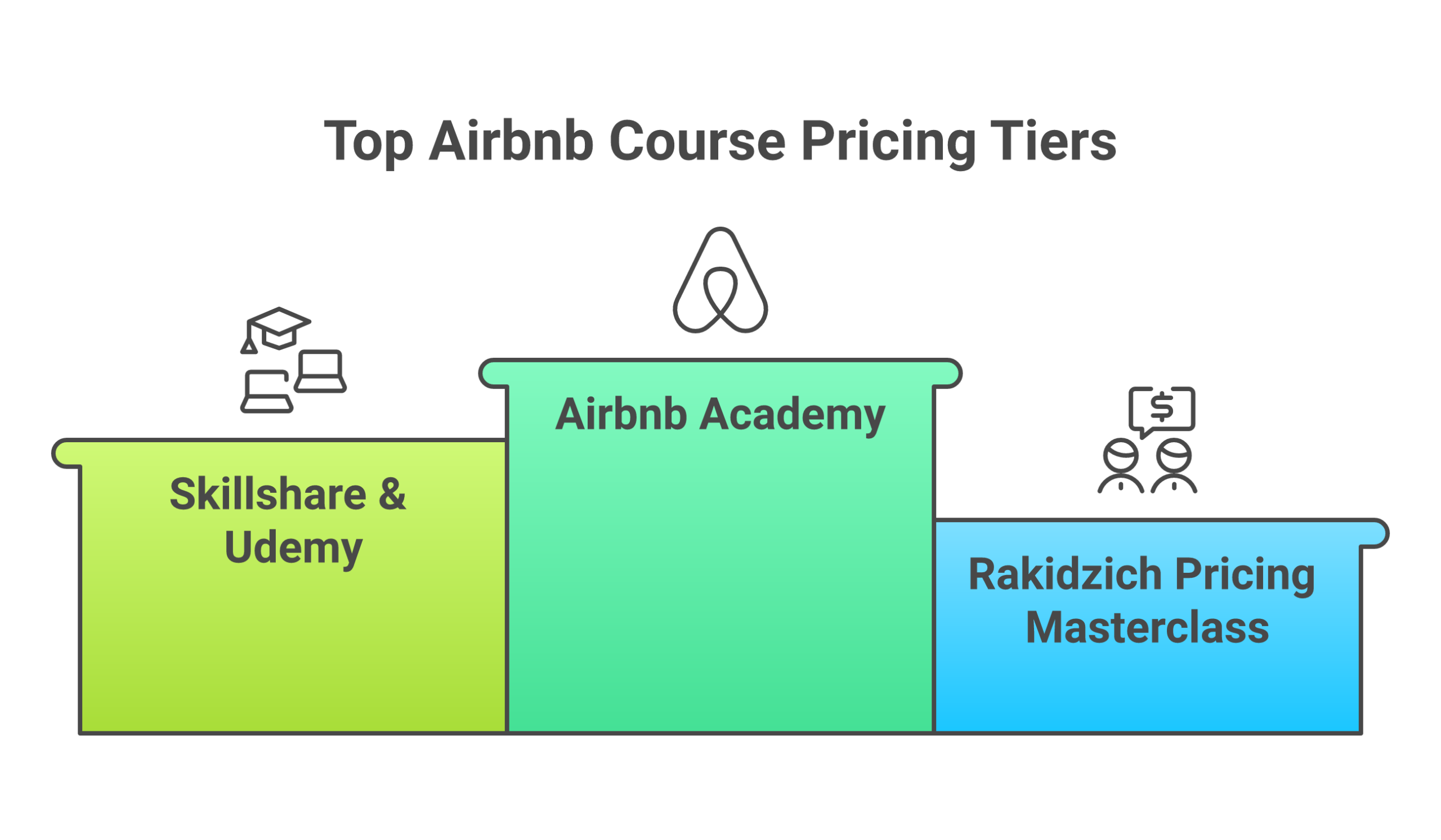
Airbnb Course Pricing Breakdown: What the Cost Actually Gets You
The price range across these 12 courses goes from completely free to $30,000. And honestly the price tag alone doesn’t tell you much about the quality of education or the level of instructor access you’re getting. I’ve seen $200 courses with better content than $5,000 ones. So let me break down what each pricing tier actually delivers.
Free to $200 (Airbnb Academy, Udemy, Skillshare, Optimize My Airbnb): Pre-recorded video content with no mentorship, no community, and no live access to the instructor. The instructor probably doesn’t know you exist. Good for learning basics and deciding if short term rental hosting is a game you want to play. These resources won’t build you a business but they’ll give you the education to decide if you want to invest more.
$174 to $800 (Rakidzich’s modular courses): Focused tactical training from an active operator who manages 100+ properties. Each course covers one specific topic at an advanced techniques level – algorithm optimization, pricing strategy with big data analysis, or landlord negotiation skills. The value is that you only pay for what you need. If you’re already a host just looking to master dynamic pricing and automate your revenue management, you don’t need to purchase a $5,000 complete program.
$2,000 to $5,000 (BNB Mastery, BNB Formula, STRPA, STR Secrets, Empire Academy): Full curriculum covering market research, property acquisition or leasing, furnishing, listing creation, pricing, guest communication, marketing, and some level of community. This is the price point where most Airbnb courses in the industry land. Quality and pricing varies significantly in this tier so look at instructor credentials, how current the content is, whether the instructor is still active in the short term rental business including vacation rentals including vacation rentals, and what reviews from past students and hosts say on Reddit and Trustpilot.
$7,000 to $30,000 (10XBNB): Premium pricing that includes live weekly coaching directly with the instructor, done-for-you listing services, a certification and education path, and the most hands-on mentorship in the Airbnb education industry. At this cost you’re purchasing direct access to experts who are actively running a portfolio and making money in the current market. Whether that level of access justifies 3 to 10 times the price of a mid-tier course depends on how much value you place on having an experienced host guide you through building your business day by day rather than just providing you with just pre-recorded content and leaving you to figure it out on your own.
Here’s my honest take on the cost of Airbnb courses: the price matters way less than what you do after you purchase. A $3,000 course that teaches you to find your first rental arbitrage property generating $2,000 a month in profits pays for itself in under 2 months. A $7,000 course that helps you learn the co-listing model and land 5 properties earning $1,500 each in management fees pays for itself in about a month. The education delivers ROI at every price point IF you actually do the work, take action, and apply what you learn.
The students who waste money on courses are the ones who purchase the program, watch a few videos, and never take the first step as a host. That’s true whether they paid $200 or $30,000.
How to Run Short Term Rentals: Choosing the Right Course Path
Different courses teach different business models. Before you purchase anything at any price point you need to know which path fits your situation because taking the wrong course wastes your time, money, and months of momentum.
| Path | Startup Cost | Risk Level | Monthly Profits Potential | Skills You’ll Learn | Best Course For This |
|---|---|---|---|---|---|
| Airbnb Co-Listing (Co Host Model) | $0 | Low | $1,000 – $5,000+ per property | Property management, guest communication, pricing, marketing, listing optimization | 10XBNB |
| Rental Arbitrage | $3,000 – $10,000 | Medium (lease obligation) | $1,500 – $3,000+ per property | Market analysis, landlord negotiation, furnishing, operations, Airbnb hosting at scale | BNB Mastery or 10XBNB |
| Property Ownership | $50,000+ | High (mortgage, vacancy) | $2,000 – $10,000+ per property | Real estate investing, financing, acquisition, vacation rental management | Robuilt or STR Secrets |
| Optimization Only | Already hosting | None | 15-36% revenue increase | Pricing, algorithm, listing optimization, marketing, automate operations | Rakidzich or Optimize My Airbnb |
Most people I talk to don’t have $50,000 sitting around to purchase rental property. And a lot of them are nervous about signing a lease for rental arbitrage when they’ve never managed a vacation rental listing or hosted vacation rentals guests, hosted a guest, or handled a booking in their lives. That’s exactly why I built the co-listing training inside 10XBNB. It gives every beginner a way to learn the entire Airbnb and vacation rental business, build profits and a portfolio of managed properties, and master the skills of hosting guests, managing properties, and running vacation rental operations before taking on any financial risk.
If you want to go deeper on which model fits your situation, I wrote a full breakdown on co-listing vs rental arbitrage with real numbers and experiences from students who’ve done both.
Red Flags When Choosing an Airbnb Course
After being active in this industry since 2017 and watching the Airbnb and vacation rental education space evolve, here’s what to watch for before you purchase any course or program:
The instructor isn’t actively managing properties. If someone is teaching Airbnb hosting and short term rental strategies but hasn’t personally hosted a guest or taken bookings a guest or managed a listing in 3+ years, their curriculum content is outdated. The market changes constantly. New regulations, algorithm updates, pricing dynamics, guest expectations, travel patterns, and marketing strategies all shift every few months. Find an instructor who’s still in the game on a daily basis.
No verifiable student results or reviews. Anyone can claim their students build successful vacation rental businesses and unlock six figure profits. Look for named students with specific results you can check. Search for the course on Reddit, Trustpilot, and Google reviews. If the only reviews come from the course’s own marketing materials and website materials and you can’t find independent discussions, that’s a red flag.
Guaranteed income claims at any level. Nobody can guarantee you’ll make $10,000 a month from short term rentals. Results depend on your market, your effort, the properties you find, how well you optimize your listings, and your level of commitment to the operations. I can show you students who’ve generated $50,000 in bookings in 3 months and students who struggled for 6 months before getting any traction as a host. Both are real experiences and honest instructors acknowledge both sides.
No refund policy and no ongoing support. Paying thousands for pre-recorded video content with no mentorship, no community, and no live access to experts is a bad deal in 2026. You’re paying for education that gives you access to people, systems, and accountability – not just information you could find for free on YouTube.
The State of the Airbnb Business in 2026: Why Certification and Training Matters Now
Three years ago you could create a listing on Airbnb, set a reasonable price, and make money without much strategy. That era is over. The market has matured and the game has changed completely.
There are more hosts competing for bookings than ever before. More cities have implemented regulations that operators need to navigate. Guests have higher expectations for their stay. And the tools available to automate, optimize, and scale a vacation rental business are more sophisticated than anything that existed even 2 years ago.
The operators who are thriving in 2026 are the ones who treat this like a real business. Professional photography, dynamic pricing tools, optimized listings, strong guest communication, proactive property management, and marketing that actually drives bookings and builds revenue. AirDNA data shows that top-performing listings (top 25%) earn 3 to 4 times more profits per available night than bottom-performing listings in the same market. The difference isn’t location or property quality. It’s the education, skills, and level of execution the host brings to their operations.
That’s why taking time to learn from an active instructor who’s achieved real results matters more now than it did in 2020. The gap between a trained operator and a winging-it host is wider than ever. And the cost of figuring it out on your own through trial and error – bad pricing for months, mediocre listings that don’t get bookings, guests who leave negative reviews because you didn’t master the basics – is often higher than the price of a good course with fair pricing.
I learned that the hard way myself. I spent my first year on Airbnb making every mistake possible because I didn’t have anyone providing me education or mentorship. That’s literally why I created 10XBNB and why I still show up to live coaching calls every week. So other people don’t have to waste a year and thousands of dollars in lost revenue that better hosting skills would have prevented figuring out what I could teach them in a few days of focused host training.
Free Alternatives and Resources for Airbnb Hosting Education
Not everyone can afford the price of or wants to purchase a paid Airbnb course. I get that. Here are free resources that can help you learn the basics and build a foundation before investing in more advanced education:
Airbnb Academy: Official free training covering hosting basics, listing creation, pricing fundamentals, and guest management. Start here if you’ve never used the platform.
YouTube: Rakidzich’s channel has excellent free content on pricing and the algorithm. Our 10XBNB channel covers co-listing, rental arbitrage, and building an Airbnb business from scratch. Rob Abasolo’s channel covers real estate investing with short term rentals. There’s more free Airbnb education on YouTube in English than you could consume in a year.
Reddit communities: r/airbnb_hosts and r/realestateinvesting have active discussions where hosts and operators share experiences, reviews of tools and courses, market data, and honest takes on what’s working and what’s not in the industry.
Airbnb Resource Center: Free guides and articles from Airbnb on every aspect of hosting from your first listing to managing a property management business.
The limitation of free content is that it’s scattered across hundreds of sources with no structure, no accountability, and no expert giving you feedback on what you’re doing wrong. A paid course provides a curriculum, a community, and an instructor who can tell you where you’re making mistakes before those mistakes cost you money and time. But if budget or price is the barrier, start with the free resources and build your way up by taking small steps each day toward growth.
Common Mistakes When Choosing Online Courses for Your Airbnb Business
After helping over 1,600 individuals launch their short term rental businesses, I’ve seen the same common mistakes repeat themselves. New hosts get interested in entering the vacation rental industry, read a few articles and forums online, and then either purchase the cheapest course they can find or go with whoever has the best marketing on their website. Neither approach makes sense if your goals are to build wealth and achieve financial independence through hosting.
The biggest mistake is not taking the time to evaluate whether the instructor’s expertise matches your experience level. A beginner who wants to learn the basics of hosting guests and creating their first listing has completely different needs than an experienced host who wants to master advanced techniques, automate their operations, and expand into new markets. Buying the wrong course for your level wastes time, money, and momentum.
Another thing I see constantly is people entering the industry without understanding the law in their local market. Short term rental regulations vary by city and sometimes by neighborhood. Some participants in our program have had to adapt their entire business model after discovering their city requires specific permits, limits the number of days they can host guests, or restricts vacation rentals in certain zones. Read up on local law and regulations before you purchase any course or sign any agreement. This is difficult to recover from if you get it wrong.
Here’s one more thing that’s easy to overlook: not all courses give you lifetime access to their material. Some programs charge you once and you can revisit the content whenever you need it. Others operate on a subscription schedule where your access expires after a set number of months. Before you make a purchase, check whether the course includes lifetime access or if there are ongoing fees. With market trends changing as rapidly as they do in this industry, being able to come back and review updated material and new insights is invaluable.
I’d also recommend checking whether the program has an active community where members collaborate and share experiences. Peer support from other hosts and operators who are going through the same challenges you are is often where the real learning happens. The best Airbnb courses combine curated education from experts with a community of participants who hold each other accountable and meet regularly to discuss what’s working in their markets.
If you’re ready to evaluate your options and identify which course aligns with your goals, budget, and experience level, the comparison table above is a good place to start. And if you’re interested in the co-listing model specifically – which lets you start with zero capital while gaining essential skills in hosting, property management, and the vacation rental business – I’d encourage you to read more about our co host training program and how it’s helped individuals at every level build profitable Airbnb businesses.
Frequently Asked Questions About Airbnb Courses
Are Airbnb courses worth the cost?
Depends on the course and your commitment level. A $174 Rakidzich course on pricing that helps you optimize your listings and earn more bookings from day one pays for itself within a week. A $7,000 10XBNB program that helps you learn the co-listing model and find your first client generating $1,500 a month in management fees pays for itself in under 5 months. Education delivers ROI at every price point if you actually take action and apply what you learn to build your short term rental business.
What is the best Airbnb course for a beginner?
For a beginner with limited capital who wants to learn step by step: 10XBNB because it starts with co-listing which requires $0 to launch. For beginners with $5,000+ to invest in rental arbitrage: BNB Mastery provides solid education. For beginners who just want to learn the basics for free: Airbnb Academy.
How much do Airbnb courses cost?
The range is wide. Free (Airbnb Academy) to $30,000 (10XBNB Diamond package). Most mid-tier programs in the industry cost between $2,000 and $5,000 and cover the basics of hosting, property management, and short term rental operations. Rakidzich’s modular approach lets you purchase individual courses starting at $174.
Can you still make profits with Airbnb in 2026?
Yes but the industry requires more skills, better tools, and stronger marketing than it did 3 years ago. The hosts who treat short term rentals like a real business are making more profits than ever. The hosts who create a listing and hope for bookings without any strategy, pricing optimization, or guest experience focus are getting filtered out of the market.
Is rental arbitrage still profitable?
In the right markets, absolutely. The key is running the numbers before you sign a lease. If projected Airbnb revenue is at least 2x your monthly rent after accounting for all costs, the math works. I go deep on this in the complete rental arbitrage guide with real cost breakdowns and student experiences.
What’s the difference between rental arbitrage and co host co-listing?
Rental arbitrage: you sign a lease, pay rent, furnish the property, manage everything, and keep all profits after expenses. The risk is that you owe rent whether guests book or not. Co-listing: you manage someone else’s property for a 20-25% management fee. Zero capital required, zero financial risk. You earn less per property but you can start today with no money. Full breakdown on the co-listing vs arbitrage comparison page.
Do I need money to start an Airbnb business?
Not if you start with co-listing. That’s the entire point of the model I teach at 10XBNB. You manage other people’s vacation rental properties and earn a commission on every booking. Zero cost to start. If you want to do rental arbitrage, plan on $3,000 to $10,000 for your first property. If you want to purchase real estate, you’re looking at $50,000+ minimum.
How long does it take to start earning from short term rentals?
With co-listing, some of our students find their first client and land their first property within 30 days. With rental arbitrage, expect 60 to 90 days from lease signing to first guest booking. Either path requires real work and dedication. This isn’t a passive income button you push on day one. It’s a real business that takes time to build, but the results compound as you scale and master the operations.