
What Makes a Great Airbnb Co-Hosting Course
An airbnb co-hosting course should do one thing well: get you managing properties and earning revenue within 90 days. Not fill your head with theory. Not sell you on a dream with zero follow-through.
I’ve reviewed dozens of co-hosting training programs since 2020. Most fall into one of two categories: cheap courses that teach surface-level basics you could find on YouTube, or expensive programs that promise the world but leave you without ongoing support after you pay.
The best co-hosting courses share five traits:
- A curriculum built by someone who still actively manages short-term rental properties (not someone who quit hosting to sell courses)
- Live coaching access, not just pre-recorded videos
- A co-hosting contract template and legal framework
- A community of active co-hosts for deal flow and troubleshooting
- Verified student results with specific numbers, not vague testimonials
This guide breaks down the top airbnb co-hosting courses available in 2026, scores each course on these five criteria, and explains why the co-listing business model (a specific type of co-hosting) has become the preferred path for new operators building a short-term rental management business.
Co-Hosting vs. Co-Listing: What’s the Difference?
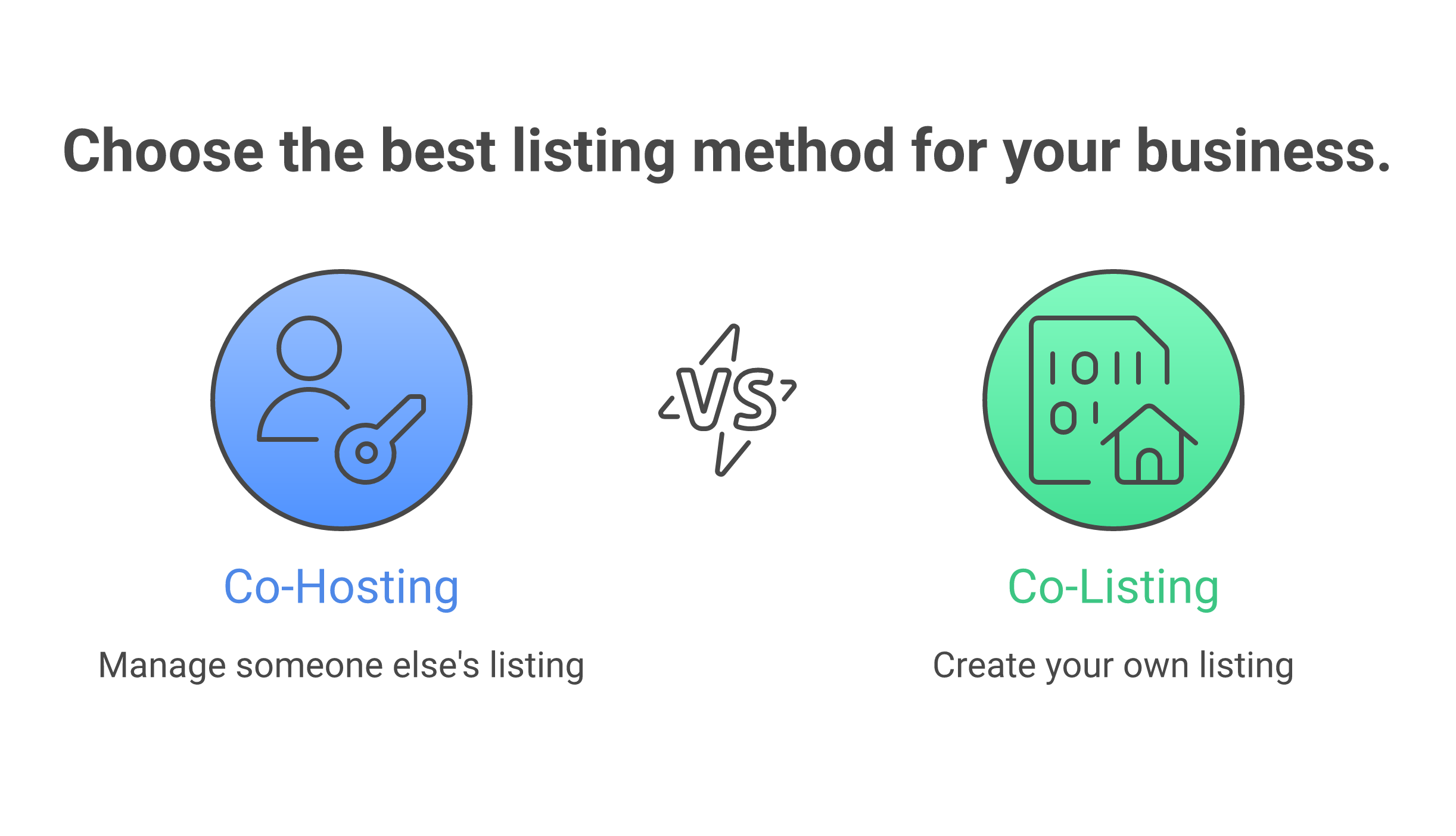
Before comparing courses, you need to understand the two main approaches to managing other people’s Airbnb properties. The distinction matters because it determines your earning potential, your level of control, and which course is actually worth your time. See our guide on the real pros and cons of co-listing.
Traditional co-hosting means a property owner adds you as a co-host on their existing listing. You help with guest communication, cleaning coordination, pricing adjustments, and check-in logistics. The owner keeps the listing in their name. You typically earn 10-20% of booking revenue.
Co-listing takes this further. With a co-listing arrangement, you create and control the listing under your own Airbnb account. The property owner signs an co-hosting agreement granting you management rights. You handle everything: listing creation, professional photography, pricing strategy, guest screening, maintenance coordination, and owner reporting. Co-listers typically earn 15-30% of revenue because they take on full operational responsibility.
Why does this matter when choosing a course? Programs that teach co-listing prepare you to run a standalone business. Programs that only teach basic co-hosting prepare you for a side gig. Both are valid paths, but the earning potential and skill development differ significantly.
Here’s a practical example. Say you co-host a property that earns $4,000/month in bookings. As a traditional co-host at 15%, you earn $600/month. As a co-lister at 25% (because you handle everything including listing optimization and pricing), you earn $1,000/month. But the real difference goes deeper: you also optimized the listing to earn $4,000 instead of the owner’s original $2,800. The owner is happier, you earn more, and the guest experience is better because a professional runs the entire operation.
Top 6 Airbnb Co-Hosting Courses Compared (2026)
I evaluated each program based on five criteria, scored 1-5:
- Curriculum Depth: Does it cover client acquisition, operations, pricing, legal, and scaling?
- Coaching Access: Live calls, 1-on-1 mentorship, or just pre-recorded content?
- Community Quality: Active members who share deals and help troubleshoot?
- Verified Results: Can students prove their income and property counts?
- Value for Investment: Does the price match what you receive?
1. 10XBNB Co-Listing Program
Instructor: Shaun Ghavami
Format: Online modules + live coaching 5x per week + 1-on-1 mentorship
Price: Book a strategy call for current program options
Shaun Ghavami built 10XBNB after generating over $5 million in booking fees across a portfolio of 155+ properties. He holds a finance degree from UBC Sauder School of Business, worked at BMO and RBC before going full-time into short-term rentals, and has maintained Airbnb Superhost status with 1,000+ five-star reviews.
The program teaches his proprietary co-listing method, where students build their own Airbnb business by managing properties for owners without purchasing real estate. Unlike basic co-hosting training that covers guest messaging and check-ins, 10XBNB’s curriculum walks through the full lifecycle: identifying target markets, pitching property owners, structuring agreements, creating optimized listings, implementing pricing strategies, and building systems that scale beyond 10 properties.
What separates this program from others is the coaching frequency. Live group coaching runs five days per week, and students also get 1-on-1 mentorship sessions. Most competing courses offer one or two coaching calls per week at best. The student community includes 1,600+ members, and 73% of active students report becoming profitable within their first 90 days.
The curriculum also covers rental arbitrage for students who want to expand beyond co-listing into leasing properties directly.
| Criteria | Score (1-5) |
|---|---|
| Curriculum Depth | 5 |
| Coaching Access | 5 |
| Community Quality | 5 |
| Verified Results | 5 |
| Value for Investment | 4 |
| Total | 24/25 |
Want to See If Co-Hosting Is Right for You?
Co-hosting lets you build income without buying property. Students in the 10XBNB program go from zero to their first managed listing in 30 to 60 days. A free strategy call can help you figure out if this model fits your situation.
2. BNB Mastery Program (James Svetec)
Instructor: James Svetec
Format: 6-week online course + twice-weekly Q&A calls + Facebook community
Price: $1,997 (or 5 installments of $597)
James Svetec co-authored Airbnb for Dummies and managed 40 Toronto properties within 12 months of starting. The BNB Mastery Program spans 41 modules across 16+ hours of video content, organized into seven weeks covering foundations, client conversion, client attraction, performance optimization, and automation.
The program includes twice-weekly Q&A coaching calls and a Facebook community. Student enrollment sits at around 700 members across 10+ countries. BNB Mastery reports $5 million in annual bookings across their student portfolio.
The 14-day money-back guarantee gives you enough time to evaluate the content before committing fully. The price point is accessible compared to premium programs, though the coaching access (twice weekly vs. daily) and community size (700 vs. 1,600+) are smaller.
One limitation: the program focuses on co-hosting fundamentals. It does not teach the co-listing model specifically, which means students typically earn lower commission rates (10-15% vs. 15-30%) and have less control over listings.
| Criteria | Score (1-5) |
|---|---|
| Curriculum Depth | 4 |
| Coaching Access | 3 |
| Community Quality | 3 |
| Verified Results | 3 |
| Value for Investment | 4 |
| Total | 17/25 |
3. The Cohost Accelerator (Lauren Meeks)
Instructor: Lauren Meeks
Format: Self-paced modules + 2 free coaching calls + checklists and templates
Price: Not publicly listed (apply for access)
Lauren Meeks has hosted hundreds of reservations and thousands of guests. She authored a book on Airbnb hosting, gave a TEDx Talk, and appeared on the Short-Term Rentals Success Stories podcast. The Cohost Accelerator covers client conversation scripts, co-hosting contracts, property automation tools, direct booking website setup, remote property management, and guest screening.
The two included coaching calls are scheduled on demand, which is a nice touch for personalized guidance. A 30-day money-back guarantee is available, though you must complete the first four modules and show proof of effort to qualify.
The program is best suited for someone who wants a structured introduction to co-hosting with hands-on templates. The limited coaching access (two calls total, not ongoing) makes it less ideal for someone who needs continued mentorship as they scale.
| Criteria | Score (1-5) |
|---|---|
| Curriculum Depth | 3 |
| Coaching Access | 2 |
| Community Quality | 2 |
| Verified Results | 2 |
| Value for Investment | 3 |
| Total | 12/25 |
4. BNB Formula (Brian Page)
Instructor: Brian Page, widely credited as the first person to popularize rental arbitrage education online
Format: Online course with community access
Price: $2,997
BNB Formula has enrolled 25,000+ students, making it one of the largest short-term rental education programs by enrollment count. The program focuses primarily on rental arbitrage rather than co-hosting specifically, but includes modules on property management and working with property owners.
The large student community can be an advantage for networking and deal flow. However, the sheer size means coaching attention per student is limited. The curriculum leans heavily toward arbitrage (signing leases on properties and subletting on Airbnb) rather than the co-hosting or co-listing model.
At $2,997, you’re paying a premium for a program that doesn’t specialize in co-hosting. If arbitrage is your primary goal, this is a strong option. If co-hosting is your focus, the curriculum won’t go deep enough on client acquisition, co-hosting agreements, and property owner relationship management.
| Criteria | Score (1-5) |
|---|---|
| Curriculum Depth | 3 |
| Coaching Access | 2 |
| Community Quality | 4 |
| Verified Results | 3 |
| Value for Investment | 3 |
| Total | 15/25 |
5. Udemy Airbnb Co-Hosting Courses
Instructors: Various (Christ Raharja and others)
Format: Pre-recorded video, self-paced
Price: $14.99 – $49.99 (frequent sales)
Udemy, the online learning marketplace with 73 million+ registered users, hosts several airbnb co-hosting courses at budget price points. The most relevant is Christ Raharja’s “Airbnb Hosting, Rental Arbitrage, Co-host, and Home Staging” course, rated 4.3/5 with 2,900+ students and 2.5 hours of video content. It covers Airbnb platform basics, co-hosting contracts, property management software, and AI-assisted listing tools like ReStage AI and Listing AI. Other Udemy instructors in this space include David Vu (17,000+ students), Evan Kimbrell (12,800+ students, former #1 ranked host in San Francisco), and Paul Nekh, who teaches both hosting and automation courses. Skillshare also hosts airbnb co-hosting courses, though with fewer options than Udemy.
At under $50, these courses are fine for absolute beginners who want to learn vocabulary and basic processes before committing to a premium program. The trade-offs are significant: no live coaching, no community, no mentorship, and no accountability. The content is often 1-2 years behind current market conditions.
I recommend Udemy courses as a starting point, not a destination. Use them to decide if co-hosting interests you, then invest in a program with real coaching and community support.
| Criteria | Score (1-5) |
|---|---|
| Curriculum Depth | 2 |
| Coaching Access | 1 |
| Community Quality | 1 |
| Verified Results | 1 |
| Value for Investment | 3 |
| Total | 8/25 |
6. Airbnb Academy (Free)
Instructor: Airbnb’s hosting team + experienced Superhosts
Format: Online modules, community forums
Price: Free
Airbnb launched their Academy program in the US in 2021. It pairs new hosts with experienced Superhosts who share practical hosting knowledge. The curriculum covers listing optimization, guest communication, pricing basics, and Airbnb platform tools. In late 2024, Airbnb also launched the Co-Host Network, a separate feature that connects property owners with verified local co-hosts through the Airbnb platform. The Co-Host Network is not a course, but it creates a marketplace for co-hosting services and may reduce the need for cold outreach in markets where the feature is active.
The program is excellent for property owners who want to host their own property better. It does not teach co-hosting as a business model. There’s no instruction on client acquisition, co-hosting contracts, revenue sharing structures, or scaling a property management portfolio.
Use Airbnb Academy to learn the platform itself, then pair that knowledge with a co-hosting-specific training program.
| Criteria | Score (1-5) |
|---|---|
| Curriculum Depth | 2 |
| Coaching Access | 1 |
| Community Quality | 2 |
| Verified Results | 1 |
| Value for Investment | 4 |
| Total | 10/25 |
Other Programs Worth Knowing About
Beyond the six courses above, a few other programs and instructors appear frequently in co-hosting course searches. Sean Rakidzich, the host behind the Airbnb Automated YouTube channel (300,000+ subscribers), sells several courses including Cracking Superhost and RE:Algorithm. His courses focus on Airbnb search ranking optimization and property operations rather than co-hosting specifically. Mike Sjogren’s STR Secrets program emphasizes community accountability and group coaching, with an active podcast. Bailey Kramer offers a free Airbnb Co-Hosting Mini Course on YouTube (44 videos) that covers getting your first co-hosting clients with no prior experience.
None of these programs scored as well as the top six on our co-hosting-specific criteria, but they offer solid education on adjacent topics like Airbnb algorithm optimization, dynamic pricing strategy, and general short-term rental business operations.
Side-by-Side Comparison: All 6 Programs
| Program | Price | Coaching | Community Size | Focus | Score |
|---|---|---|---|---|---|
| 10XBNB | Book a call | 5x/week live + 1-on-1 | 1,600+ | Co-listing | 24/25 |
| BNB Mastery | $1,997 | 2x/week Q&A | 700+ | Co-hosting | 17/25 |
| BNB Formula | $2,997 | Limited | 25,000+ | Arbitrage | 15/25 |
| Cohost Accelerator | Apply | 2 calls total | Unknown | Co-hosting | 12/25 |
| Airbnb Academy | Free | None | Large | Self-hosting | 10/25 |
| Udemy Courses | $15-$50 | None | None | Basics | 8/25 |
What to Look for in a Co-Hosting Course (Buying Guide)
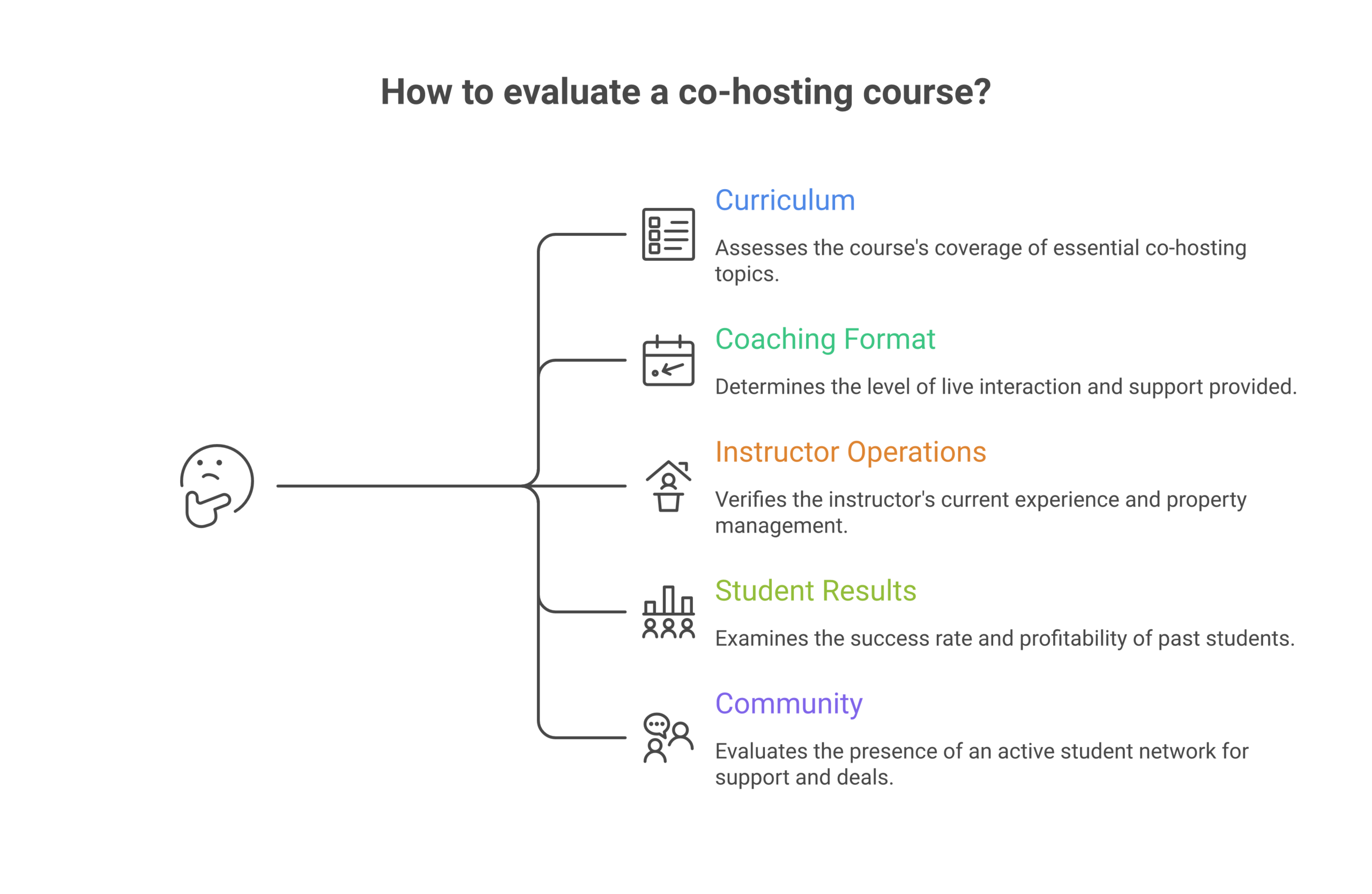
Before you invest in any co-hosting training, run every program through these seven filters.
1. Does the Instructor Still Actively Manage Properties?
This is the single most important question. The short-term rental market changes constantly. Airbnb’s algorithm, pricing dynamics, guest expectations, and local regulations shift every quarter. An instructor who stopped actively hosting two or three years ago is teaching outdated strategies.
Ask directly: how many properties do you currently manage? If the answer is zero, that’s a red flag. Shaun Ghavami at 10XBNB actively manages 155+ properties and generates over $1 million per month in booking revenue across his portfolio. James Svetec at BNB Mastery actively manages properties in Toronto and co-authored Airbnb for Dummies. Sean Rakidzich manages 120+ active properties with 11 years of experience. All three pass this test because their income depends on operational performance, not just course sales.
2. Is Coaching Live and Ongoing?
Pre-recorded videos have their place, but co-hosting is a relationship business. You’ll face situations that no video can prepare you for: a property owner who wants to change terms mid-contract, a guest who causes damage, a market downturn that cuts bookings by 30%. Live coaching gives you real-time answers from someone who’s dealt with the exact same problem.
Two coaching calls per week is the minimum standard for a premium program. Five per week, like 10XBNB offers, gives you daily access to guidance during the critical first 90 days when most new co-hosts make their biggest mistakes.
3. Are Student Results Verified?
Testimonials are easy to fake. Look for programs that share specific numbers: how many properties their students manage, their monthly revenue, their timeline to profitability. Generic quotes like “this course changed my life” mean nothing without data behind them.
10XBNB reports 73% of active students become profitable within 90 days. BNB Mastery cites $5 million in aggregate annual bookings across students. These are measurable claims you can evaluate.
4. Does the Course Include Legal Templates?
A co-hosting business runs on contracts. You need a solid co-hosting agreement template that protects both you and the property owner. Look for programs that include at least a base contract, an LLC formation guide, and insurance recommendations.
5. Is There a Community With Active Deal Flow?
The best co-hosting courses build communities where students share leads, refer properties to each other, and collaborate across markets. A community of 1,600+ active co-hosts (like 10XBNB’s) creates real business opportunities beyond the curriculum itself.
6. Does the Course Teach Client Acquisition?
Many co-hosting courses spend 90% of their time on operations (how to manage a listing) and 10% on client acquisition (how to find property owners who need help). This ratio should be closer to 50/50. Finding clients is the hardest part of the co-hosting business, especially in your first six months.
7. What’s the Refund Policy?
Programs that stand behind their content offer clear refund windows. BNB Mastery offers 14 days. Cohost Accelerator offers 30 days with effort requirements. If a program has no refund policy at all, ask why.
Why Co-Listing Outperforms Basic Co-Hosting
From our experience working with 1,600+ students, the co-listing approach consistently produces better results than traditional co-hosting for three reasons.
Higher Revenue Per Property
Co-listers control the listing. That means they set the pricing, write the description, choose the photos, and optimize for Airbnb’s search algorithm. This control typically translates to 20-40% higher nightly rates compared to listings managed by owners who add a co-host as a helper. Higher nightly rates mean higher commissions, even at the same percentage split.
Stronger Retention With Property Owners
When you manage the entire guest experience as a co-lister, property owners see clear ROI from day one. You handle everything, and they receive monthly checks. The relationship is simple: you produce results, they keep renewing the agreement. Traditional co-hosts who only handle messaging and check-ins are easier to replace because their value is less visible.
Scalable Systems
Co-listers build their own operational systems: standard operating procedures for cleaning, automated guest messaging, dynamic pricing tools, and maintenance request workflows. These systems scale across 5, 10, or 50 properties without a proportional increase in your time investment. Basic co-hosts adapt to each owner’s existing systems, which means every new property feels like starting over.
10XBNB Deep Dive: The Co-Listing Method
Since 10XBNB scored highest in our evaluation, here’s a closer look at what the program actually teaches and how it’s structured.
Shaun Ghavami’s Background
Shaun studied finance at UBC’s Sauder School of Business and started his career in banking at BMO and RBC. He transitioned to short-term rentals and built a portfolio that now spans 155+ properties, generating over $5 million in booking fees. He holds Airbnb Superhost status with 1,000+ five-star reviews across his listings.
He co-founded 10XBNB with Ari Rahmanian, and together they manage what they describe as a $100M+ property portfolio through co-listing agreements with property owners.
The Co-Listing Curriculum
The program covers six core phases:
- Market Analysis: Identifying profitable Airbnb cities and neighborhoods with high demand, low competition, and property owners who are underperforming on the platform.
- Client Acquisition: Outreach scripts, pitch frameworks, and follow-up systems for approaching property owners. This phase includes cold outreach, warm referrals, and partnership strategies with real estate agents and property managers.
- Agreement Structuring: Building a co-listing contract that protects your business while giving property owners confidence. Covers revenue splits, liability, insurance, termination clauses, and performance guarantees.
- Listing Optimization: Creating listings that rank in Airbnb search. Photography standards, title formulas, description copywriting, amenity highlighting, and pricing strategy fundamentals.
- Operations at Scale: Guest communication templates, cleaning coordination systems, maintenance protocols, dynamic pricing implementation, and owner reporting dashboards. This phase builds the systems that let you manage 20+ properties without burning out.
- Growth and Team Building: Hiring your first virtual assistant, training cleaners, building referral networks, and transitioning from operator to business owner.
Coaching Structure
The live coaching schedule runs five days per week, which is more frequent than any competing co-hosting course I’ve evaluated. Sessions cover real student scenarios: reviewing pitches, analyzing markets, troubleshooting guest issues, and celebrating wins. The 1-on-1 mentorship adds another layer where students get personalized strategy sessions for their specific market and situation.
Student Community
With 1,600+ members, the 10XBNB community functions as a real business network. Students share leads across markets, refer property owners to each other, and collaborate on larger portfolios. Several students have formed local partnerships where one person handles operations and another handles client acquisition.
Results by the Numbers
According to 10XBNB’s published data:
- 73% of active students report profitability within 90 days
- Students collectively manage thousands of properties across North America
- Average co-listing revenue ranges from $500-$2,000 per property per month, depending on market and property type
- The program has trained 1,600+ students since launch
How to Start a Co-Hosting Business (With or Without a Course)
A co-hosting course accelerates your learning curve by 3-6 months, based on what I’ve seen across 1,600+ students. But whether you invest in a training program or bootstrap your co-hosting business yourself, the steps are the same. The course compresses the timeline, gives you proven scripts and templates, and reduces the costly mistakes that eat into your revenue during the first year.
Step 1: Choose Your Market
Pick a city or region where short-term rentals are legal and demand outstrips supply. Use AirDNA, the short-term rental data analytics platform, or Mashvisor to analyze average daily rates, occupancy rates, and revenue per available listing. Markets with 65%+ occupancy rates and $150+ average daily rates typically work best for co-hosting. Cross-reference your findings with local Airbnb supply counts and seasonal booking patterns before committing to a market.
Step 2: Learn the Local Regulations
Short-term rental regulations vary by city. Some require business licenses, others require permits for each property, and some ban non-owner-occupied rentals entirely. Check your city’s short-term rental ordinances before investing time or money into building a local co-hosting business.
Step 3: Build Your Pitch
Property owners need to understand three things: what you do, why they should trust you, and what it costs them. Your pitch should quantify the revenue gap between their current performance and what a professional co-lister can deliver. If a listing currently earns $2,000/month and you can show a path to $3,200/month, the 20% management fee ($640) is offset by the $1,200 revenue increase.
Step 4: Sign Your First Agreement
Use a proper co-host contract that outlines responsibilities, revenue split, termination terms, and insurance requirements. Never manage a property on a handshake deal.
Step 5: Deliver Results Fast
Your first 30 days with a new property set the tone for the entire relationship. Optimize the listing immediately: professional photos, competitive pricing, and a 5-star guest experience from booking one. Property owners decide within the first month whether they made the right choice.
Step 6: Scale Systematically
After your first 3-5 properties, document your processes. Build checklists for onboarding new properties, guest communication templates, and cleaning inspection standards. These systems become your competitive advantage as you grow toward 10, 20, or 50 properties.
Most co-hosts hit a wall at 5-8 properties because they’re doing everything themselves. The successful ones hire a virtual assistant at property 5, a cleaning coordinator at property 10, and a local operations manager at property 20. Your job shifts from doing the work to building the system that does the work.
Common Mistakes New Co-Hosts Make
After working with 1,600+ students, these are the patterns I see most often in the first six months.
Underpricing to Win Clients
New co-hosts often offer rock-bottom management fees (5-10%) to attract their first property owners. This creates two problems: you earn too little to sustain the business, and you set a pricing precedent that’s hard to raise later. Start at 15-20% and demonstrate the value through results.
Skipping the Contract
Verbal agreements fall apart the moment something goes wrong, and something always goes wrong. A guest breaks a $3,000 TV. A neighbor files a noise complaint. The property owner wants to sell. Without a written agreement, you have zero protection. Use a proper co-hosting agreement from day one.
Choosing the Wrong Market
Not every city works for co-hosting. Markets with strict regulations, low tourist demand, or saturated supply can make it nearly impossible to build a profitable portfolio. Do your research before committing to a market. Look at occupancy rates, regulatory environment, average daily rates, and the number of new listings entering the market each month.
Trying to Do Everything Yourself
The fastest path to burnout is managing 10+ properties with no team. Start building your support system early: a reliable cleaning crew, a handyman on call, and eventually a virtual assistant for guest messaging. The co-hosting business model works because it’s scalable, but only if you build systems instead of doing everything manually.
Ignoring Guest Reviews
Your Airbnb review score directly affects your search ranking, pricing power, and property owner retention. One bad review can cost thousands in lost bookings. Prioritize the guest experience above everything else, and respond to every review (positive or negative) within 24 hours.
Not Having a Niche
The co-hosts who scale fastest specialize. Pick a property type (luxury, pet-friendly, family, business travel) or a market segment (beachfront, downtown, suburban) and become known for it. When you pitch a property owner with “I specialize in downtown condos and my other downtown listings average 78% occupancy,” that’s far more convincing than “I manage all types of properties everywhere.”
Pricing Too Low During Off-Season
New co-hosts panic during slow months and slash rates to fill calendars. This trains the Airbnb search algorithm to show your listing to budget travelers and hurts your average nightly rate long-term. Instead, use dynamic pricing tools like PriceLabs (the revenue optimization platform used by 100,000+ listings), Beyond Pricing, or Wheelhouse to set data-driven rates. Pair pricing tools with a property management platform like Guesty or Hospitable for automated guest messaging and multi-channel distribution across Airbnb, VRBO, and Booking.com. Maintain minimum rate floors, and focus on extended stays during shoulder seasons. A property booked at $120/night for 20 nights generates more than one booked at $80/night for 25 nights, and the lower-rate listing attracts higher-maintenance guests.
Red Flags When Evaluating a Co-Hosting Course
Not every course is worth your money. Here are warning signs I’ve seen after reviewing dozens of programs.
- No verifiable instructor track record: If the instructor can’t point to a specific number of properties they currently manage, walk away. Teaching co-hosting without doing co-hosting is like learning surgery from someone who watched YouTube videos.
- Income claims without methodology: “Students earn $10,000/month” means nothing without context. How many properties? What market? What timeframe? Legitimate programs break down the math: 8 properties at $3,500 average monthly bookings at 20% management fee = $5,600/month.
- No community or coaching access: Pre-recorded videos alone are not a course. They’re a product. Real co-hosting training requires live interaction because every market is different, every property owner negotiation is unique, and you need real-time feedback on your pitch and approach.
- Pressure to enroll immediately: “The price goes up tomorrow” is a sales tactic, not a business practice. Good programs don’t need high-pressure enrollment because their results speak for themselves.
- No refund policy: If a program won’t let you try it and get your money back within 14-30 days, they either don’t believe in their content or they’ve had too many refund requests. Either way, that’s information.
Frequently Asked Questions About Airbnb Co-Hosting Courses
How much does an airbnb co-hosting course cost?
Prices range from free (Airbnb Academy) to $14.99-$49.99 (Udemy) to $1,997-$2,997 (BNB Mastery, BNB Formula) to premium programs with live coaching and mentorship. The cost typically reflects the depth of instruction, coaching access, and ongoing support. Budget courses teach basics. Premium programs include live coaching, community access, legal templates, and personalized mentorship.
Can I start co-hosting with no money?
Yes. Co-hosting requires no property ownership and no lease signing. You bring management skills and time, the property owner provides the asset. Your startup costs are limited to a co-hosting course (optional), business registration ($50-$200 depending on your state), and professional photography for your first listing ($150-$300). Total initial investment can be under $500 if you use a budget course.
How much can I earn as an Airbnb co-host?
Earnings depend on your market, number of properties, and commission structure. A single property earning $3,000/month in bookings at a 20% management fee generates $600/month for the co-host. Most full-time co-hosts manage 5-15 properties, putting monthly income between $3,000 and $12,000. Top operators managing 30+ properties earn $20,000 or more per month.
What’s the difference between co-hosting and property management?
The terms overlap significantly. Co-hosting specifically refers to managing properties listed on Airbnb and similar short-term rental platforms. Property management is broader and can include long-term rentals, commercial properties, and vacation rentals. Most co-hosting courses focus exclusively on the Airbnb ecosystem and short-term rental strategies.
Do I need a license to be a co-host?
Requirements vary by location. Some cities require a business license and short-term rental permit. Others have no specific licensing requirements for co-hosts. A few states require a real estate or property management license for anyone managing properties professionally. Check your local regulations before starting, and get legal advice for your specific situation.
How long does it take to get your first co-hosting client?
Students in structured programs like 10XBNB and BNB Mastery typically land their first client within 30-60 days of starting outreach. Self-taught co-hosts without a program often take 3-6 months because they spend more time figuring out their pitch, contract, and approach through trial and error.
Is co-hosting better than rental arbitrage?
They’re different risk profiles. Rental arbitrage requires signing leases, paying monthly rent, and furnishing properties, with typical startup costs of $3,000-$10,000 per property. Co-hosting requires no upfront capital beyond your time and course investment. Arbitrage offers higher per-property profit potential but carries more financial risk. Co-hosting is lower risk and easier to scale from zero, which is why many beginners start with co-hosting and add arbitrage properties later. See our guide on what co-listing actually means on Airbnb. See our guide on how co-listing compares to rental arbitrage.
What should a co-hosting agreement include?
Every co-hosting agreement should cover: parties involved, property address, management responsibilities, revenue split percentage, payment schedule, insurance requirements, liability allocation, termination notice period (typically 30-60 days), performance benchmarks, and dispute resolution process. Never manage a property without a written, signed agreement.
Still Comparing Co-Hosting Programs?
The best way to decide is to talk to someone who has done it. Book a free call to ask questions and get honest answers about co-hosting, your market, and whether this business model fits your goals.
Which Co-Hosting Course Should You Choose?
Your best option depends on your budget, learning style, and goals.
If you want the most coaching and fastest results: 10XBNB’s co-listing program provides the highest coaching frequency (5x/week), 1-on-1 mentorship, and the largest active student community. The 73% profitability rate within 90 days is the strongest verified outcome of any co-hosting training. Book a strategy call to learn about current program options.
If you want a solid program at a mid-range price: BNB Mastery at $1,997 offers a proven curriculum and twice-weekly coaching. The 14-day refund policy reduces your risk, and the program teaches strong co-hosting fundamentals.
If you’re on a tight budget but serious about co-hosting: BNB Mastery at $1,997 with the installment plan ($597/month) offers solid training at an accessible price point. You’ll get weekly coaching and a growing community.
If you’re testing the waters: Start with Airbnb Academy (free) or a Udemy course ($15-$50) to learn platform basics. Once you decide co-hosting is your path, invest in a program with live coaching and community support.
One final note: the best co-hosting course is the one you actually complete and implement. I’ve seen students from every program on this list build successful businesses. The common thread among winners isn’t which course they chose. It’s that they followed through, did the outreach, signed their first property, and delivered results. The course gives you the roadmap. You still have to drive.
For a broader look at all short-term rental education programs, including courses on rental arbitrage, Airbnb pricing strategy, and property acquisition, read our complete guide to the best Airbnb courses in 2026.
Comparing Airbnb co-hosting to a completely different passive income model? Read our 10XBNB vs Fiction Profits Academy breakdown to see how rental arbitrage compares to Amazon KDP fiction publishing.
Looking for 1-on-1 mentorship rather than a course? See our complete comparison of the best Airbnb mentorship programs in 2026.