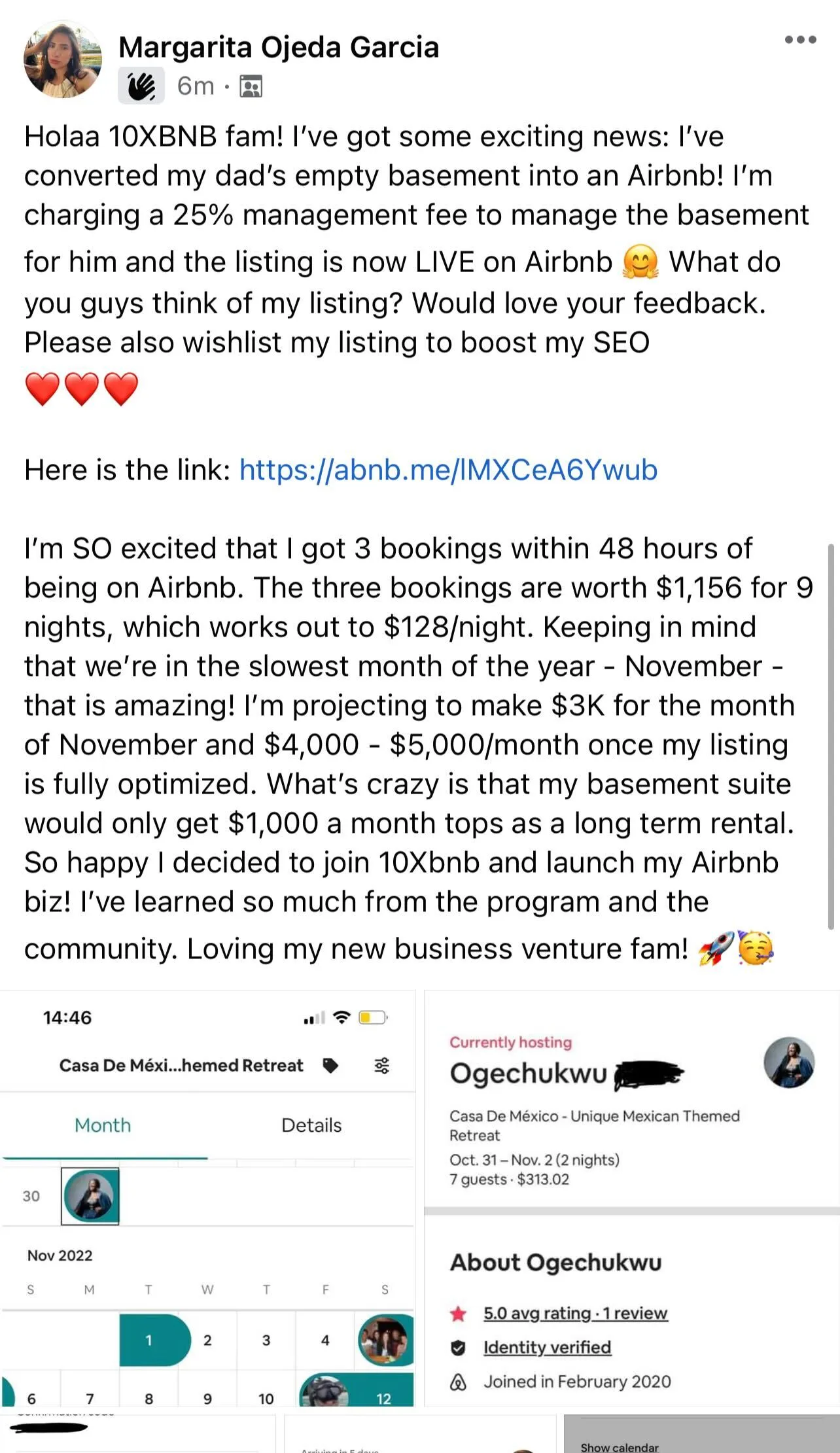
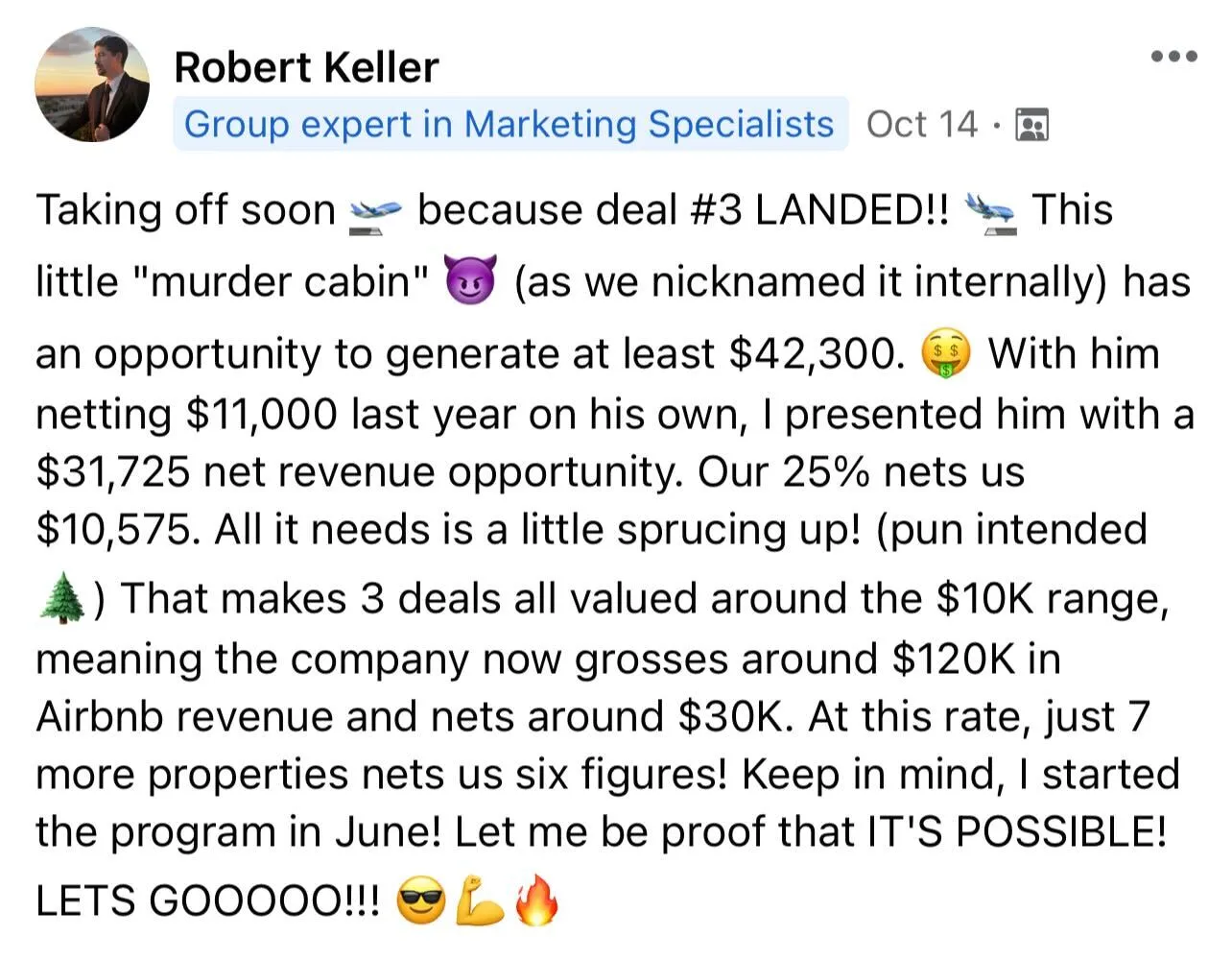
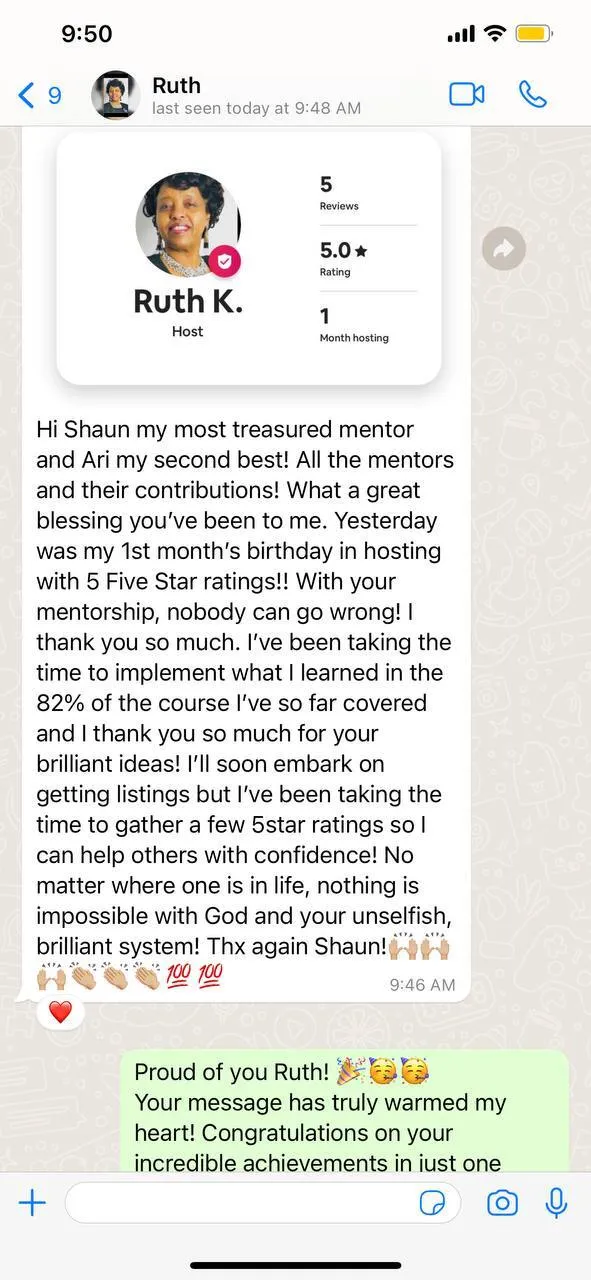
Searching for honest 10XBNB reviews is frustrating. Most review sites either sell you the program or trash it without evidence. Neither helps you make a real decision.
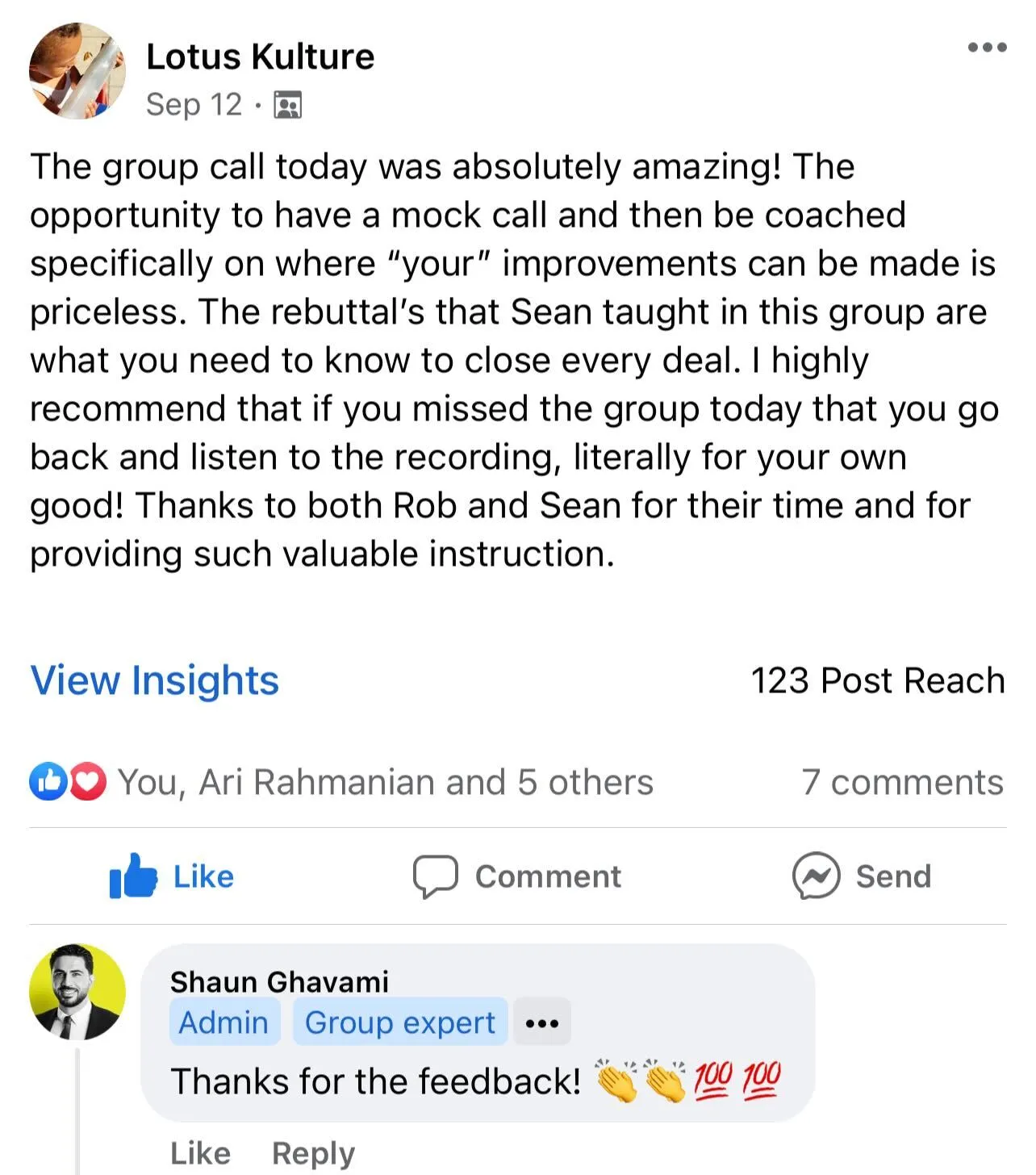
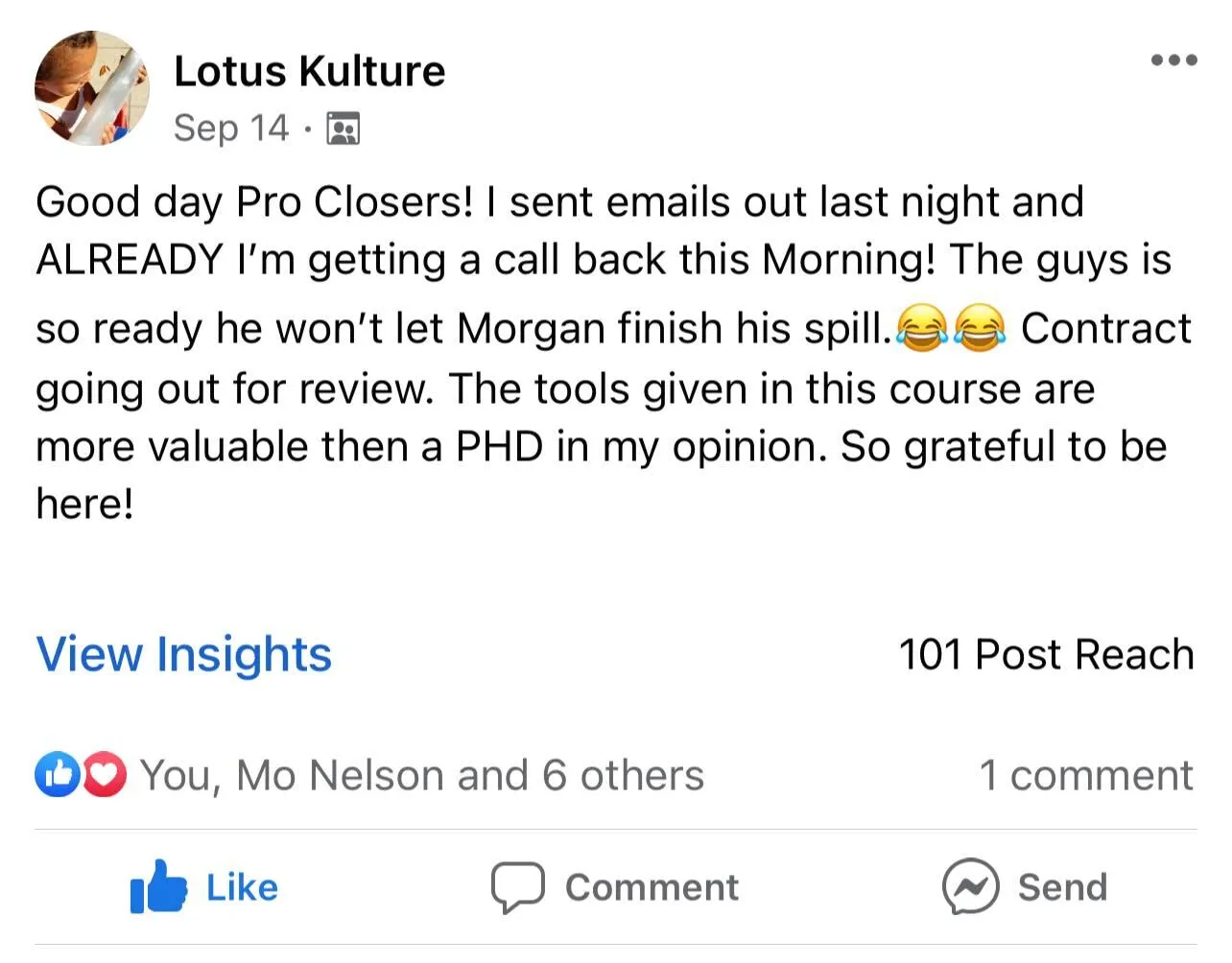
This page is different. We compiled actual revenue data, timelines, and outcomes from documented student interviews conducted during live coaching calls. These are not cherry-picked testimonials. They are recorded conversations where students shared their numbers on camera with other community members present.
Every student referenced below has been anonymized. No names, no addresses, no identifying details. What remains are the raw numbers and verifiable business metrics that matter when you are evaluating whether a program like 10XBNB delivers real results.
What Is 10XBNB?
10XBNB is a short-term rental education program founded by Shaun Ghavami, who built a portfolio managing over $100 million in vacation rental properties and generated more than $5 million in booking fees through his company. The program teaches three primary business models:
- Co-hosting/co-listing -- managing other people's Airbnb properties for a percentage-based management fee (typically 15-25%)
- Rental arbitrage -- leasing a property long-term and subletting it as a short-term rental on Airbnb and VRBO
- Property ownership -- purchasing properties specifically for short-term rental income
The program recommends a staged approach: start with co-hosting to learn the business with zero financial risk, transition to rental arbitrage for higher returns, then use accumulated capital and experience to acquire property.
Students receive access to coaching calls, prospecting scripts, data analysis tools (BNB Analyzer reports), pricing strategy training, and a community with structured partnership opportunities.
Revenue Milestones: What Students Actually Earn
The most common question about any training program is simple: does it work? Below are documented revenue figures from recorded student interviews, organized by business model and experience level.
Co-Hosting and Co-Listing Revenue
Co-hosting is the lowest-risk entry point into the short-term rental business. You manage someone else's property, handle guest communications, optimize listings, and earn a percentage of each booking. No lease payments. No furniture costs. No financial risk beyond your time investment. Here is what actual students reported:
| Student Profile | Market | Properties | Monthly Revenue to Owner | Management Fee | Monthly Gross to Student |
| Former corporate executive, 20 years in finance | Colorado mountain/college towns | 2 co-listings | $7,000 (Property 1), $6,000 (Property 2) | 20% | ~$2,600 |
| Marketing professional, Midwest | Texas and Florida | 2 co-hosting listings | $4,400+ mortgage covered (Property 1) | 25% | ~$1,100+ per property |
| Mid-career professional, Gulf Coast | Texas | 10 managed properties | $3,000+/month per property (up from $1,500) | 20% | ~$6,000+ across portfolio |
The former corporate executive's results are particularly instructive. This student evaluated 12 different short-term rental training programs before choosing 10XBNB. Their first property -- a five-bedroom in a college town -- generates $600-$900 per night during regular seasons and spikes to $1,500 per night during graduation weekends, producing $4,500 in revenue over a single three-day period. The property owner had wanted $3,750 per month. The student negotiated $7,000 per month based on data from the BNB Analyzer report.
Their second property, a 30-day rental in a mountain town, nets the owner $6,000 per month (the owner had asked for $5,000). The student secured their first 66-day booking within seven days of listing.
Both properties maintain a 4.9-star rating with over 30 reviews. This student's stated trajectory: scale to 20 properties, then 100, using a three-step plan of co-listing first, arbitrage second, and ownership third.
For a complete breakdown of what co-hosts can earn and how fees work, see our co-hosting guide.
Rental Arbitrage and Property Revenue
Students who move into arbitrage or property ownership report higher per-property income but carry more upfront costs. Here are documented results:
| Student Profile | Market | Properties | Monthly Gross Revenue | Key Metric |
| Former service industry, now full-time STR operator | Gulf Coast metro | 10 (scaled from 0 in 7 months) | $3,000+/property | 4.9 rating, 124 reviews, Superhost |
| Career changer, waterfront property owner | Pacific Northwest | 1 purchased property | $2,500-$3,000/month | 70-80% occupancy, Superhost 2 consecutive quarters |
| Partnership (student + property owner) | Multi-platform (VRBO focus) | 1 | ~$3,000/month (split) | $12,000 in first 4 months |
| Data-driven operator | Undisclosed | 1 | $13,000+/month | Used BNB IQ report at 75th percentile pricing |
The $13,000-per-month property stands out. That student used the program's BNB IQ data report to price at the 75th percentile of comparable listings -- not the cheapest option, not the most expensive, but positioned to maximize revenue while maintaining strong occupancy. The property owner is, by the student's account, thrilled with the results.
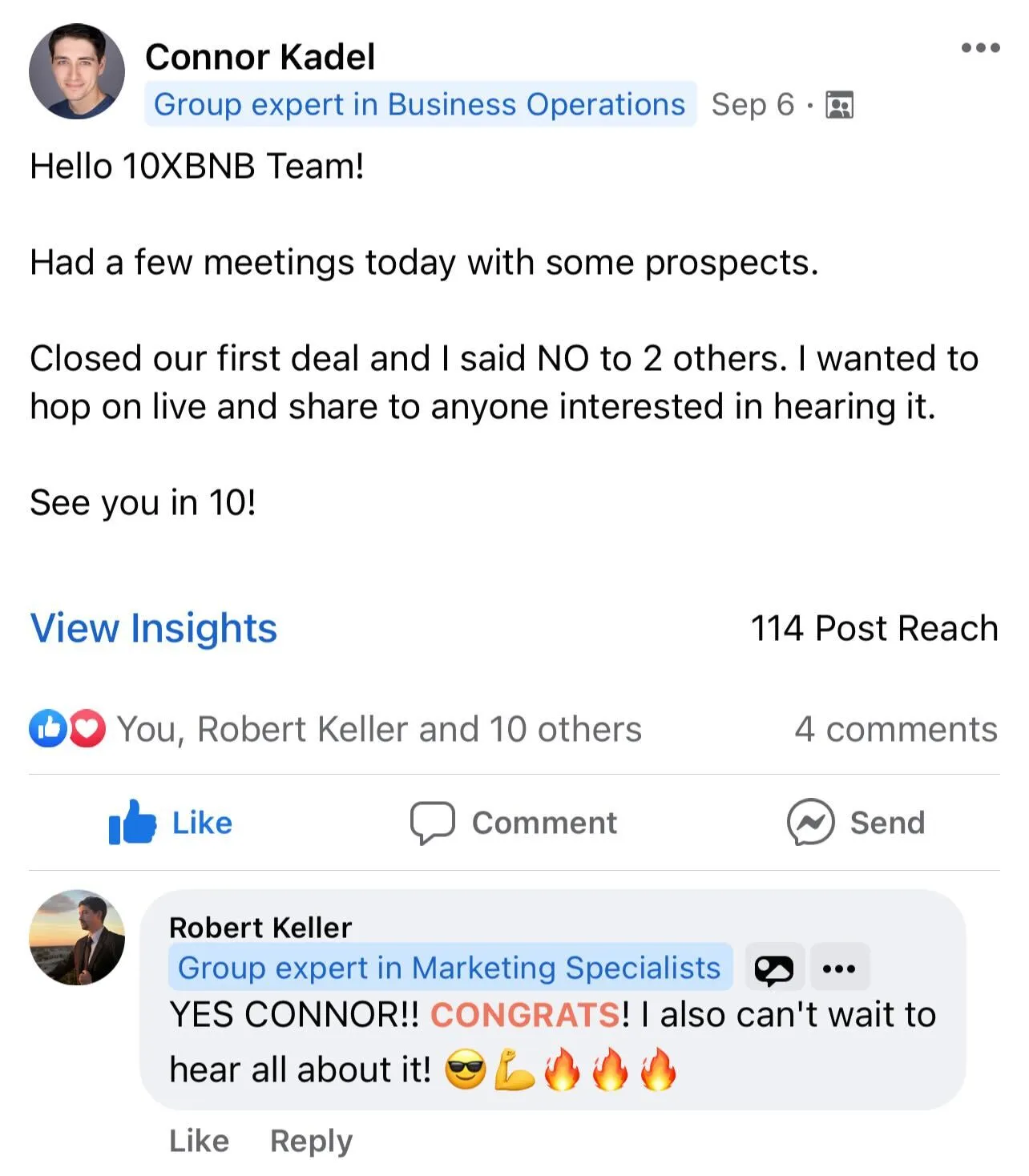
The student operating in the Gulf Coast metro area represents the most aggressive scaling documented in these interviews. Starting from zero, they signed six landlords in their first three to four weeks and scaled to 10 managed properties within seven months. Their first property owner had been earning $1,500 per month. The student doubled that to $3,000+ per month, which became the proof of concept that attracted subsequent landlords. They also secured a $4,500-per-month doctor rental through Furnished Finder, demonstrating how midterm rental strategies can complement short-term bookings.
This student built custom automated prospecting software to generate leads, holds Superhost status with a 4.9 rating across 124 reviews, and has stated a goal of reaching 100 managed properties.
To estimate what you could earn in your target market, use our arbitrage profit calculator.
Midterm Rental Income (Furnished Finder Strategy)
One underreported income stream within the 10XBNB community is midterm rentals -- furnished properties rented for 30+ days to traveling nurses, corporate relocators, and contract professionals. A program coach documented doubling a friend's income on a two-bedroom, two-bathroom property by switching from a traditional long-term rental to a furnished midterm rental on platforms like Furnished Finder. The same coach also doubled their own condo income using the identical strategy.
Midterm rentals offer several advantages: lower guest turnover, reduced cleaning costs, more predictable income, and fewer local regulatory restrictions compared to short-term rentals. They also complement the rental arbitrage model by providing a fallback revenue stream during off-peak short-term rental seasons.
Speed to First Booking: How Fast Students Get Results
One of the primary concerns with any education program is the gap between enrollment and actual income. The data from these interviews shows significant variation, but the fastest results come from students who execute the prospecting scripts immediately rather than waiting until they feel "ready."
Timeline Comparison
| Student Profile | Time to First Listing | Time to First Booking | Method |
| Gulf Coast metro operator | Same day (set up business infrastructure) | Within first month | Direct landlord outreach, Zillow prospecting scripts |
| Midwest marketing professional | One week (full setup complete) | Within first month | Personal network, voicemail drop prospecting |
| 19-year-old, working full-time | One week into program (5 responses from 20 messages) | Phone call scheduled within first week | Cold outreach messaging |
| Career changer, Pacific Northwest | Purchased property, launched March | Booked continuously back-to-back since April | Platform listing optimization |
| Partnership student | Partnered with property owner | First month | VRBO listing, partner referral |
The Midwest marketing professional's timeline is worth examining in detail. This student joined in mid-August and had everything set up within a single week -- business entity, listings, systems. They landed two co-hosting agreements through their personal network. Their first property was a five-bedroom, four-and-a-half-bathroom home near a lake in Texas with a $4,400 monthly mortgage. The BNB Analyzer showed $156,000 in total annual revenue potential and $112,000 in estimated net revenue, compared to the long-term rental rate of $52,000 per year.
This student negotiated a 25% management fee -- significantly higher than the 15% that Evolve (a corporate management company) was charging the property owners. The owners switched from Evolve to the 10XBNB student despite the higher fee because the student delivered better occupancy rates and a more responsive management experience.
Their prospecting method included voicemail drops to 16 phone numbers, which generated one conversion. A third lead came from a personal contact -- a teacher at their child's daycare.
The 19-year-old student's results demonstrate that experience and capital are not prerequisites. Working full-time as a shift manager at a car wash, this student was one week into the program when they reported sending 20 messages and receiving five responses within two days, with a phone call already scheduled.
For a deeper understanding of how the program's prospecting system works, review our Airbnb arbitrage fundamentals guide.
Scaling Stories: From First Property to Full Portfolio
Scaling in the short-term rental business means different things to different operators. Some students optimize a single high-performing property. Others build portfolios of 10+ units within their first year.
Scaling Comparison Table
| Student | Starting Point | Properties at Interview | Monthly Portfolio Revenue | Time Frame | Scaling Strategy |
| Gulf Coast operator | Zero experience, service industry background | 10 | $30,000+ (estimated across portfolio) | 7 months | Landlord outreach, proved concept with first property, built prospecting automation |
| Former finance executive | 20 years corporate, CFO background | 2 (targeting 20, then 100) | $13,000 to property owners | 3-4 months | Co-listing first, arbitrage second, ownership third |
| Midwest professional | Marketing career, new to STR | 2 co-hosting + 1 lead in pipeline | Revenue potential: $156K/year (first property alone) | Under 2 months | Personal network, voicemail drops, local boots-on-the-ground |
| Pacific Northwest owner | First-time STR operator | 1 (optimized) | $25,000-$30,000 year-to-date | ~8 months | Waterfront property, 74 amenities, Superhost focus |
The most common scaling pattern among documented students follows this sequence:
- Prove the model with one property -- deliver results that exceed the owner's expectations
- Use data as your pitch deck -- show prospective landlords or partners the revenue increase from your first property
- Systematize operations -- implement hands-free automation for guest messaging, pricing, and cleaning coordination
- Expand through referrals and prospecting -- satisfied owners refer other property owners; prospecting scripts generate new leads
The Gulf Coast operator exemplifies this pattern. After doubling their first property owner's monthly revenue from $1,500 to $3,000+, signing additional landlords became significantly easier because they had documented proof of performance. They went from zero to 10 properties in seven months by repeating this cycle.
Career Transitions: Who Joins 10XBNB?
The student interviews reveal a wide range of professional backgrounds. This is not a program exclusively for real estate investors or hospitality professionals.
Documented Student Backgrounds
| Previous Career | Age Range | Starting Capital | Current STR Status |
| Equity fund manager / CFO (20 years) | 40s-50s | Significant savings | 2 co-listings, scaling to 20+ |
| Service industry (restaurant/hospitality) | 20s-30s | Minimal | 10 properties, full-time STR operator |
| Marketing professional | 30s-40s | Moderate | 2 co-hosting agreements, pipeline growing |
| Car wash shift manager | 19 | Very limited | First week, 5 responses from 20 outreach messages |
| Program coach (real estate background) | 30s-40s | Moderate | Managing own properties + coaching others |
Two profiles stand out for very different reasons.
The former fund manager who spent 20 years in corporate finance represents the "career upgrader" archetype. This student had significant financial resources and business acumen but wanted to transition out of the corporate world. They evaluated 12 different short-term rental programs before choosing 10XBNB, citing the structured approach and live coaching as differentiators. Their financial background allowed them to immediately recognize the ROI potential in BNB Analyzer reports and negotiate favorable terms with property owners.
The 19-year-old working at a car wash represents the opposite end of the spectrum. With minimal savings and no real estate experience, this student leveraged the program's prospecting scripts to generate five responses from 20 cold outreach messages within their first two days. While their journey is in the earliest stages, the response rate demonstrates that the system works independently of the user's starting resources.
Both profiles suggest the program's methodology scales across experience levels -- the fundamentals of prospecting, negotiation, and property optimization apply whether you are managing a $1,500/month rental or a $7,000/month luxury listing.
To understand the full financial picture before getting started, review our startup costs breakdown.
Partnership Successes: The 10XBNB Student Partnership Program
10XBNB operates a formalized student partnership program that pairs members based on complementary skills and goals. This is not informal networking. The program posts structured partnership opportunities every Friday, provides a partnership contract template, and facilitates multiple collaboration models:
- Newbie-to-newbie partnerships -- accountability partners who keep each other motivated and executing
- Newbie-to-Superhost partnerships -- experienced operators who need boots-on-the-ground help; newer students who need mentorship and real-world exposure
- Joint venture (JV) partnerships -- students pooling capital, leads, or operational bandwidth to close deals together
- Lead-sharing arrangements -- students with prospecting tools generating leads and splitting revenue with operators who close and manage
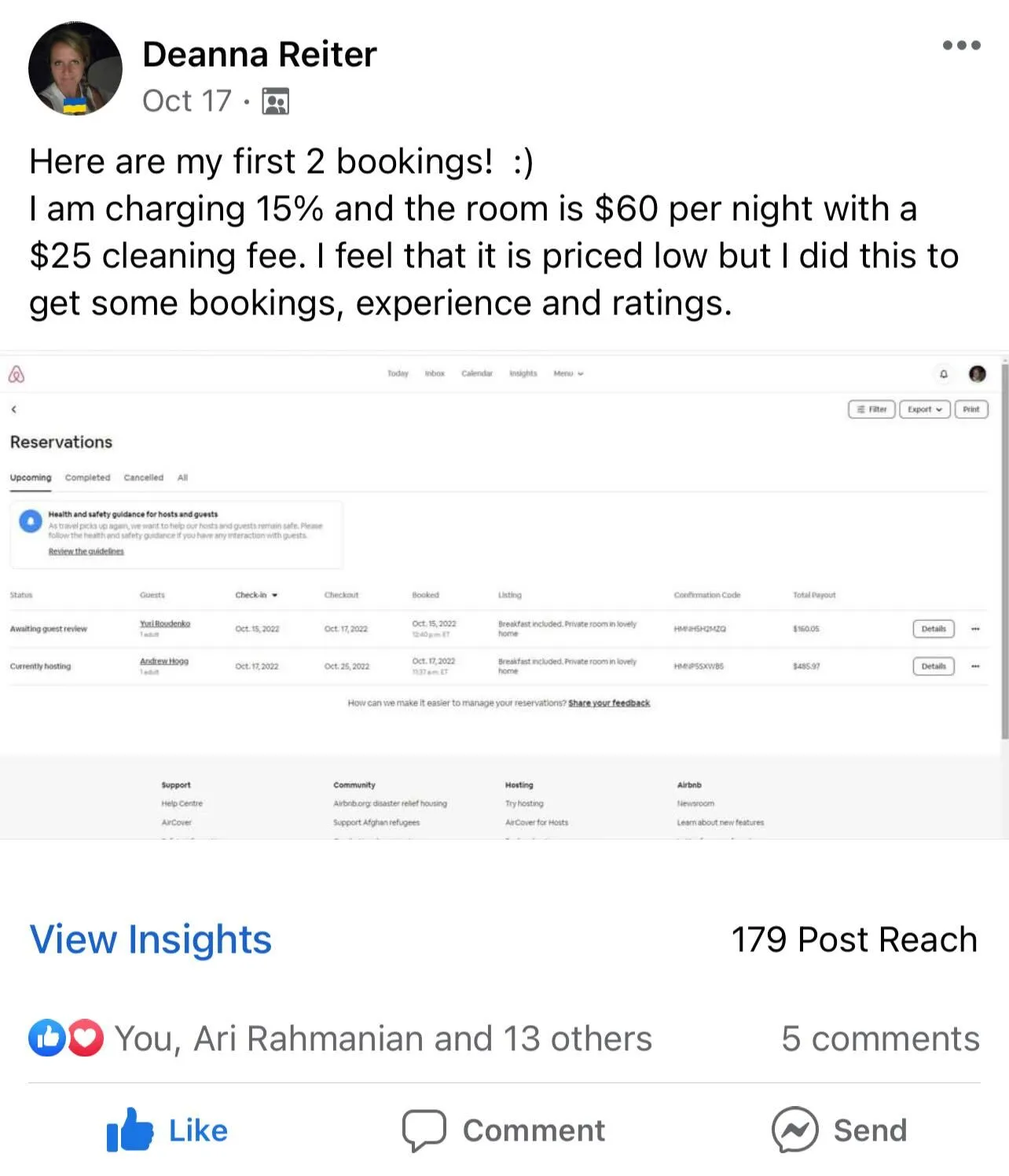
One documented partnership generated $12,000 in revenue within four months on VRBO. The property owner had previously received only a single booking before partnering with a 10XBNB student. The student brought platform optimization knowledge, pricing strategy, and guest communication systems. The owner brought the property. Together they transformed a dormant listing into a consistent revenue generator.
Another partnership pattern involves Superhost students looking for operational support. Airbnb awards Superhost status to hosts who maintain 10 or more five-star reviews per quarter and meet additional performance thresholds. Once a host reaches three to four properties, bandwidth becomes the primary constraint. Documented cases show experienced students offering 80/20 or 50/50 revenue splits to newer students who provide local management support.
This partnership structure addresses one of the most common barriers to entry: feeling like you need to do everything alone. The data shows students who partner tend to execute faster because they share the workload and the psychological weight of starting something new.
Co-Hosting Wins: Outperforming Corporate Management Companies
A recurring theme across student interviews is outperforming corporate property management companies like Evolve. Multiple students documented cases where property owners switched from corporate managers to 10XBNB-trained co-hosts.
The most detailed case: a property owner was paying Evolve a 15% management fee and receiving mediocre results. A 10XBNB student negotiated a 25% management fee -- nearly double what Evolve charged -- and the owner agreed because the student demonstrated better responsiveness, higher occupancy potential, and a more personalized management approach.
Why do individual co-hosts outperform corporate managers? Several factors from the interviews:
- Responsiveness -- Individual co-hosts answer guest messages faster than call-center-based corporate teams
- Listing optimization -- Students trained in pricing tools like Price Labs and platform-specific SEO optimize listings more aggressively than generic corporate templates
- Local market knowledge -- Boots-on-the-ground operators understand their specific market better than remote corporate managers
- Owner communication -- One-on-one relationships with property owners versus being one of hundreds of accounts in a corporate portfolio
- Insurance protection -- Proper short-term rental insurance adds a layer of professional protection that many corporate managers overlook for individual properties
The data suggests that the short-term rental industry's shift away from corporate management companies creates a significant opportunity for trained individual operators. Property owners are increasingly willing to pay higher management fees for better performance and communication.
For a complete walkthrough of building a co-hosting business, see our co-hosting guide.
Common Patterns Across All Student Results
After reviewing all documented student interviews, several consistent patterns emerge:
What successful students do:
- Execute prospecting scripts within the first week rather than waiting to feel ready
- Use BNB Analyzer or BNB IQ data reports to negotiate with property owners from a position of knowledge, not guesswork
- Start with co-hosting to build skills with zero financial risk before transitioning to rental arbitrage
- Leverage personal networks as their first source of leads (daycare contacts, friends, family, colleagues)
- Invest in professional automation tools to manage guest communication and pricing as they scale
- Treat the business seriously from day one: business entity, proper insurance, professional photography, optimized listings
What separates fast starters from slow starters:
- Speed of first outreach (days vs weeks vs months)
- Willingness to make imperfect phone calls rather than perfecting a script forever
- Using voicemail drops, cold messages, and personal network simultaneously rather than relying on a single prospecting channel
- Following the program's progression (co-hosting first, then arbitrage) rather than skipping steps
Revenue benchmarks from documented students:
- Co-hosting income range: $1,100-$2,600+/month per property at 20-25% management fees
- Arbitrage/property income range: $3,000-$13,000+/month per property depending on market and property type
- Midterm rental premium: 2x income compared to traditional long-term leases on the same property
- Scaling velocity: 0 to 10 properties in 7 months (fastest documented), 0 to 2 properties in under 2 months (most common early trajectory)
Frequently Asked Questions
Is 10XBNB worth it for someone with no real estate experience?
Yes, based on documented results. The 19-year-old car wash shift manager generated five responses from 20 cold outreach messages within their first week. The program's scripts and systems are designed to work regardless of background. The former fund manager who evaluated 12 competing programs specifically cited 10XBNB's structured approach as the reason they chose it over alternatives.
How much money do I need to start with 10XBNB?
Co-hosting requires virtually zero startup capital beyond the program cost. You manage other people's properties and earn a percentage. Rental arbitrage requires $4,000-$15,000 for first and last month's rent, furnishing, and setup. Our startup costs guide provides a detailed breakdown by market and property type.
How long does it take to get my first property?
Documented timelines range from one week to two months for the first listing. The fastest results come from students who execute prospecting scripts immediately. The Midwest marketing professional had their full business set up within one week of joining. The Gulf Coast operator signed their first landlord within their first month.
Can I do this part-time while keeping my full-time job?
Yes. Multiple documented students maintained full-time employment while building their short-term rental portfolios. Co-hosting is particularly suited to part-time operators because the workload is flexible. Implementing automation tools for guest messaging, pricing, and cleaning coordination reduces active management time to a few hours per week per property.
What markets work best for 10XBNB students?
Documented student results span multiple markets: Texas (Gulf Coast metro, college towns, lake properties near Dallas), Colorado (mountain towns), Florida (vacation rental markets), and the Pacific Northwest (waterfront). The program teaches market analysis using BNB Analyzer reports to identify profitable cities based on data rather than guesswork.
How does 10XBNB compare to other short-term rental programs?
One student documented evaluating 12 competing programs before choosing 10XBNB. Their deciding factors: live coaching calls (not just pre-recorded content), active student community with structured partnership opportunities, and the co-hosting-to-arbitrage-to-ownership progression that builds skills and capital in stages rather than requiring large upfront investment.
What is the student partnership program?
10XBNB runs a formalized partnership matching system with weekly Friday posts. Students post their skills, location, and what they are looking for. Partnerships include accountability partners, newbie-to-Superhost mentorships, joint ventures with 50/50 splits, and lead-sharing arrangements. A partnership contract template is provided. One documented partnership generated $12,000 in four months from a previously dormant VRBO listing.
Do I need to live near my properties?
Not necessarily. Multiple students manage properties in different states. The Midwest marketing professional manages a property in Texas and another in Florida from the Chicago area. The hands-free automation guide covers the tools and systems needed for remote property management, including automated guest messaging, smart locks, and coordinated cleaning teams.