

Vacation rental SEO is the set of tactics that get your direct booking website, your Airbnb listing, and your property brand in front of guests searching on Google and inside Airbnb’s own search. Done right, it turns your property into a standalone brand that books itself from organic search and cuts your dependency on OTA commissions. Done wrong, you pay Airbnb 3% forever and never show up for the phrases guests actually type into Google. This guide covers both layers of vacation rental SEO in 2026, with the exact strategy we teach inside 10XBNB to build direct bookings alongside platform distribution.
Quick Answer: What Is Vacation Rental SEO in 2026?
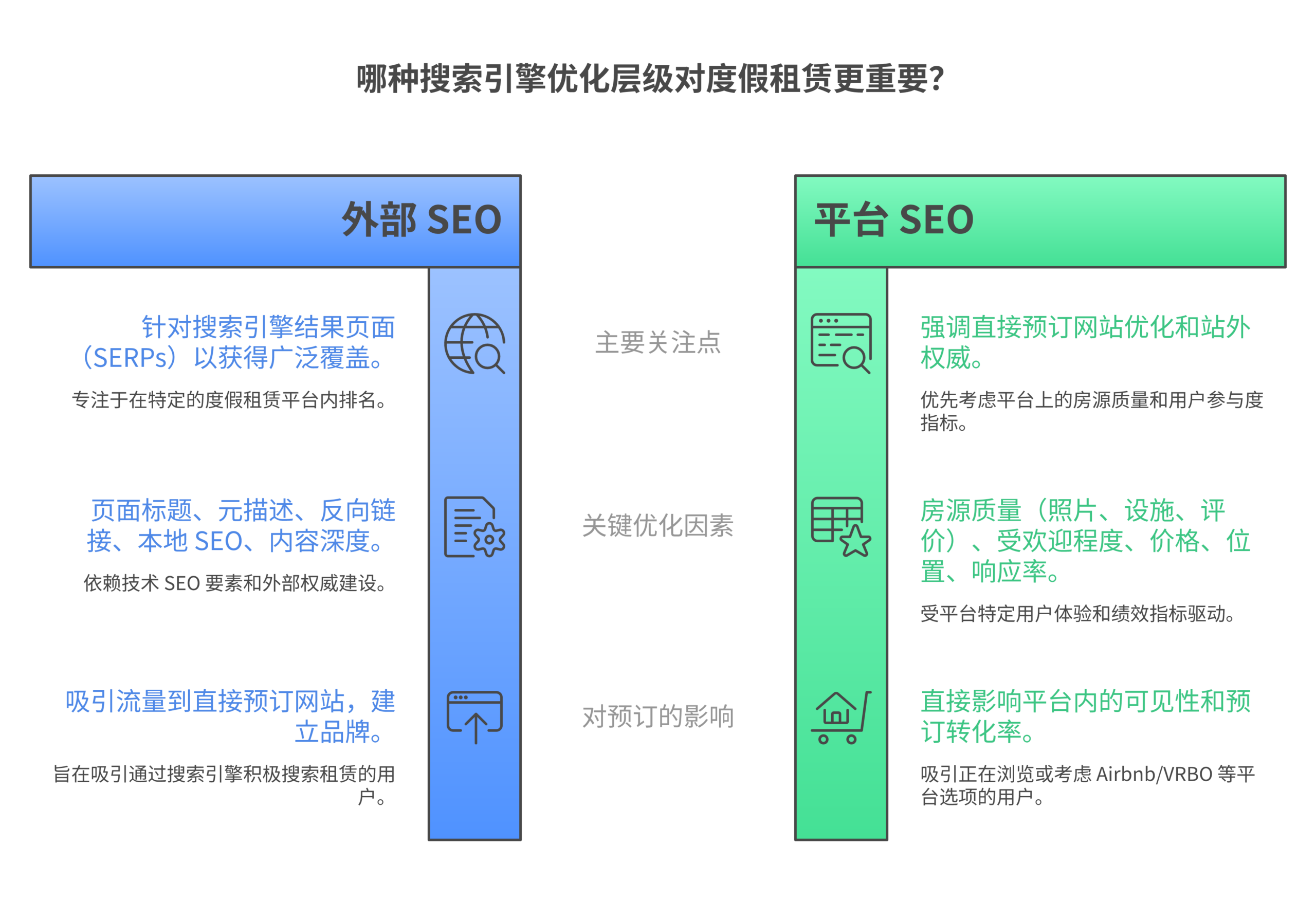
Vacation rental SEO is the process of optimizing your property’s web presence for organic search on Google and on OTA platforms like Airbnb and VRBO. It has two layers: external SEO (ranking your direct booking website on Google for phrases like “Scottsdale vacation rental” or “pet-friendly cabin Asheville”), and platform SEO (ranking your listing inside Airbnb or VRBO search). External SEO is driven by page titles, meta descriptions, image alt text, off page SEO, local SEO signals, and content depth. Platform SEO inside Airbnb is driven by listing quality, popularity, price competitiveness, and location, per Airbnb’s official help documentation. Both layers reinforce each other: a well-optimized direct booking site sends trust signals to Airbnb’s algorithm, and a high-performing Airbnb listing generates the reviews and engagement that feed back into your Google rankings.
The Two Layers of Vacation Rental SEO You Must Get Right
Most vacation rental SEO content confuses the two layers and ends up teaching one while promising both. This is where serious operators lose ground. You need a mental model that separates them cleanly.
Layer 1: External SEO (Google and other search engines). This is traditional SEO as most people know it. You build a direct booking website, you optimize page titles and meta descriptions, you target local queries with local SEO, you build backlinks through off page SEO, and you create content that earns rankings for geographic and intent keywords like “beach vacation rental Destin” or “ski chalet Park City”. When someone searches those phrases on Google, your direct booking site shows up. When they book directly, you keep 100% of the revenue instead of paying 3 to 15 percent in OTA commissions.
Layer 2: Platform SEO (Airbnb, VRBO, Booking.com internal search). This is a separate algorithmic system. Airbnb’s help center confirms their search ranks listings on four main factors: listing quality, popularity, price, and location. VRBO uses similar weighting with different nuances. Platform SEO is won by optimizing your listing title, your first 5 photos, your amenities, your calendar, your pricing, and your review profile. External SEO and platform SEO share zero overlap at the tactical level, but both matter.
The mistake new hosts make is betting 100% on one layer. Hosts who obsess over external SEO without optimizing their Airbnb listing leave 80% of their bookings on the table because OTAs still drive most vacation rental traffic in 2026. Hosts who obsess over Airbnb-only ranking tactics remain dependent on the platform forever and never build a brand that survives an algorithm change. You win when both layers work together.
Keyword Research for Vacation Rentals: Finding What Guests Actually Type
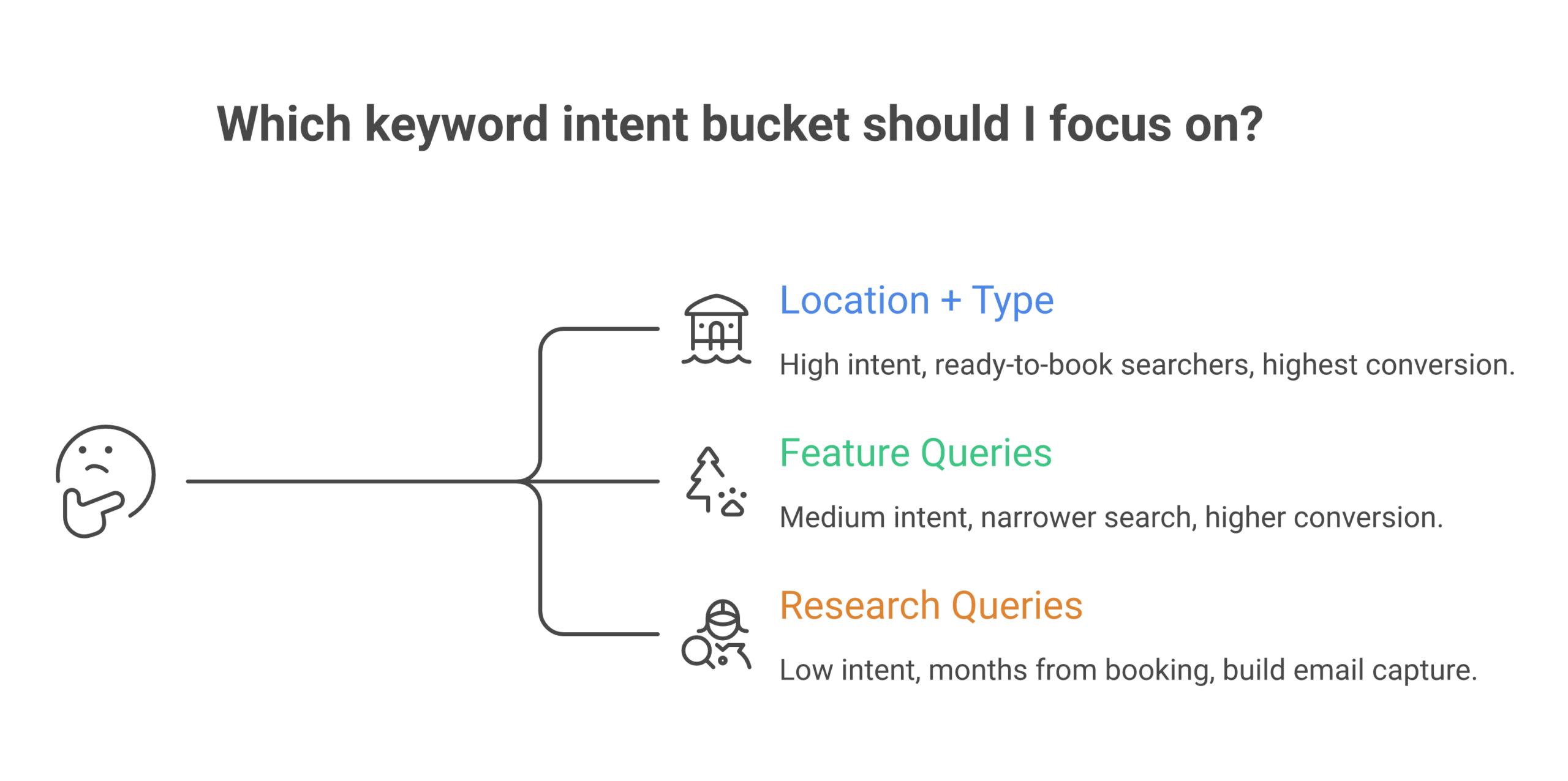
All vacation rental SEO starts with keyword research. Without it, you’re guessing. The best keyword research tools for this vertical are Google Keyword Planner (free), Ahrefs, Semrush, and Keywords Everywhere for quick volume checks. Search intent falls into three buckets guests use when they’re planning a trip.
Location-plus-type queries: “beach house Gulf Shores”, “mountain cabin Blue Ridge”, “downtown condo Austin”. These are transactional. The searcher is ready to book something. Rank for these and you convert. Location-plus-type is the holy grail for vacation rental SEO.
Feature queries: “pet friendly cabin Pigeon Forge”, “hot tub rental Smoky Mountains”, “oceanfront 5 bedroom Destin”. Also transactional, narrower intent. Lower volume but higher conversion because the guest has already filtered by their must-have feature.
Research queries: “best time to visit Gatlinburg”, “things to do in Joshua Tree”, “family activities Orlando”. Informational. These guests are weeks or months out from booking. Content targeting research queries brings them into your funnel early and turns them into direct bookings later through email capture.
Your keyword strategy should target all three buckets with different page types. Location-plus-type queries go on dedicated property pages or category pages. Feature queries get their own filtered pages or blog content. Research queries become blog posts that link back to your booking pages. A vacation rental with a direct booking site targeting all three buckets typically outperforms one targeting only transactional queries because the research-intent content catches guests earlier in the decision process.
On-Page Vacation Rental SEO: Page Titles, Meta Descriptions, and Content
On-page SEO is the set of signals Google reads directly from your website. Five elements matter most for a vacation rental.
Page titles: Every page needs a unique title tag under 60 characters that includes your primary keyword plus a click hook. “Beachfront 4BR Destin Vacation Rental (Pool & Pet-Friendly)” beats “Our Rental Property in Destin” every time because it tells Google and the searcher exactly what the page offers. Put your primary keyword near the front. Include location. Add a differentiator like “Pet-Friendly” or “Pool” when it’s relevant.
Meta descriptions: The meta description is the 150-160 character snippet Google shows under your title in search results. It doesn’t directly affect rankings, but it affects click-through rate, and click-through rate is a ranking signal in organic search. Write meta descriptions that promise specific value: “Sleeps 10, private pool, 2 blocks from Miramar Beach. Book direct and save 15% vs Airbnb. Pet-friendly with no hidden fees.”
Header hierarchy (H1, H2, H3): Every page needs one clear H1 containing the primary keyword, supported by descriptive H2s and H3s that match the subtopics guests care about. For a property page, that means H2s like “Amenities”, “Location”, “Sleeping Arrangements”, “Reviews”, “Availability”. Google reads this hierarchy to understand what the page is actually about.
Image alt text: Every photo on your site needs descriptive alt text that describes the image in a sentence a screen reader could understand. “beachfront-vacation-rental-destin-private-pool.jpg” works as a filename, and “Private heated pool overlooking the Gulf at our beachfront Destin vacation rental” works as alt text. Google ranks image search separately and vacation rental image traffic can drive 10 to 20 percent of total organic visits for well-optimized sites.
Content depth: Thin pages lose. A property page with 1,500 to 2,500 words covering the property, neighborhood, nearby attractions, restaurants, and seasonal considerations builds topical authority and ranks for dozens of long-tail phrases. The best direct booking sites treat each property page like a mini travel guide.
Local SEO for Vacation Rentals: Showing Up in Geographic Searches
Local SEO is how you rank for phrases that include a city or region. For vacation rentals, it’s critical because almost every guest search includes a location. Three tactics drive vacation rental local SEO in 2026.
Google Business Profile: If you operate a vacation rental business (not a single personal property), claim a Google Business Profile under the “Vacation rental” or “Bed and breakfast” category. Fill every field, upload 20+ high-resolution photos, collect reviews, and post weekly updates. A verified GBP with 50+ reviews can outrank a much larger chain on local queries because Google weights local signals heavily for travel intent.
Location-based content: Create dedicated pages for every neighborhood or sub-region you serve. If your property is in Destin, create pages for “Destin vacation rentals”, “Miramar Beach vacation rentals”, “Crystal Beach vacation rentals”, and one for each neighborhood within reasonable travel distance. Each page targets a different local query with unique content about that specific area.
NAP consistency: Your Name, Address, and Phone number must match exactly across your website, Google Business Profile, Yelp, TripAdvisor, local directories, and OTA profiles. Inconsistency confuses Google’s local ranking system and hurts your rankings. Run a citation audit with Moz Local or Whitespark once a year to catch drift.
Off Page SEO: Backlinks and Authority Signals
Off page SEO means everything that happens on other websites that affects your rankings. Backlinks are the core signal. Google counts high-quality inbound links as votes of confidence. A vacation rental with 50 backlinks from travel blogs, local news sites, and regional tourism boards will outrank a property with 5 backlinks, all else being equal.
The best backlink strategies for vacation rentals in 2026 focus on three sources. Local tourism board listings are usually free and carry high authority with Google’s local ranking system. Travel blogger partnerships involve inviting writers to stay in exchange for a published review with a backlink. Digital PR campaigns, like pitching a story about your property’s unique feature to regional newspapers, can earn backlinks from high-domain-authority news sites. Every one of these counts more than a hundred generic directory submissions.
Avoid anything that looks spammy. Paid links, link farms, private blog networks, and generic directory submissions are either worthless or actively harmful in 2026. Google has gotten significantly better at detecting unnatural link patterns and penalties are easy to trigger.
Airbnb Platform SEO: Ranking Inside Airbnb’s Internal Search
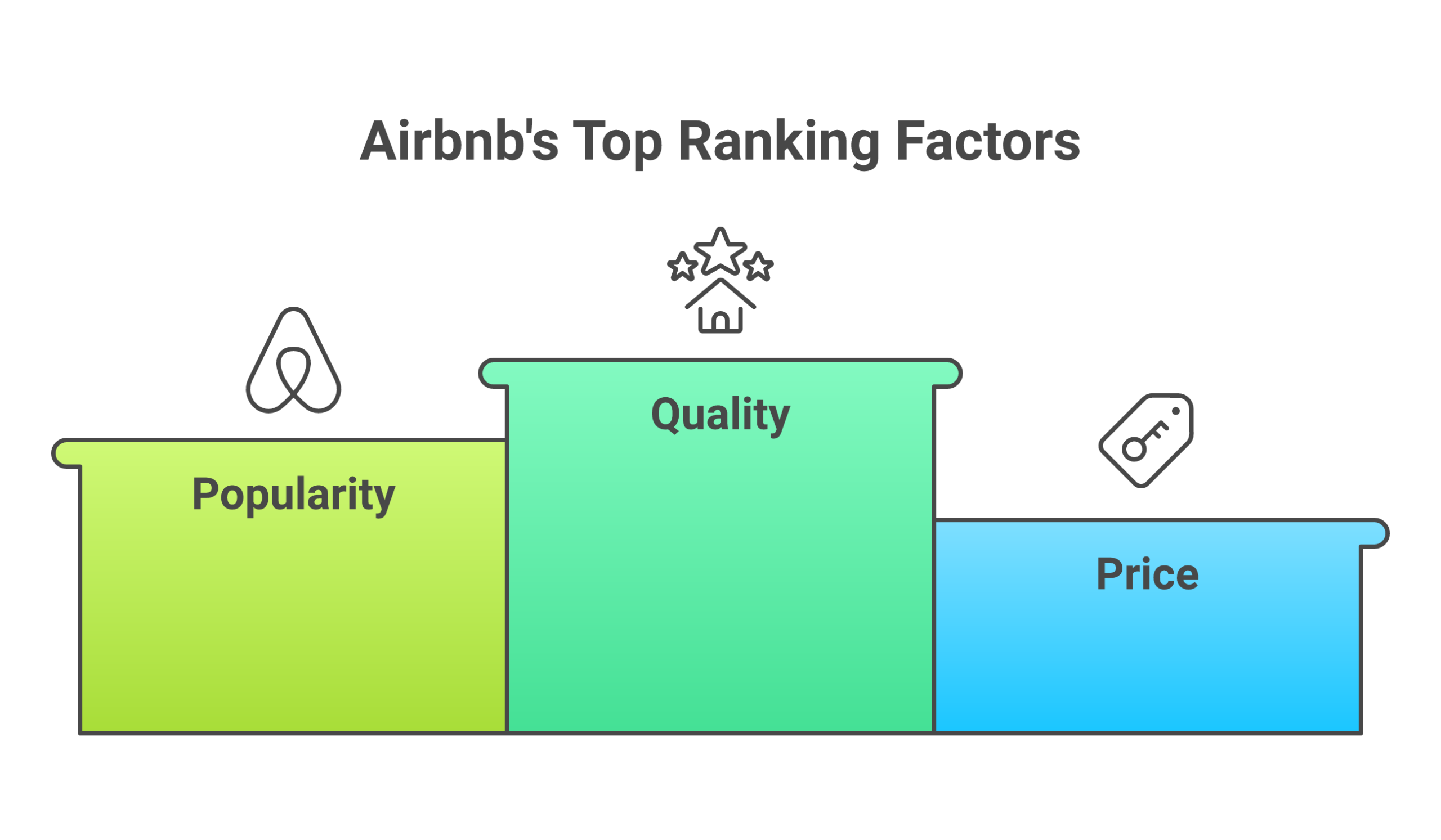
Airbnb’s help center documents the four factors that drive their search ranking: quality, popularity, price, and location. Each one has specific levers you control.
Quality: Higher-rated listings rank higher. This means photos (25+ high-resolution images, first 5 in a specific order showing the best feature first), complete descriptions, detailed amenities (every box you qualify for should be checked), and a strong review profile with an average above 4.7 stars.
Popularity: Airbnb’s algorithm tracks engagement metrics including wishlist saves, inquiry messages, and booking conversion rate. Listings that convert more of the viewers into bookings rank higher over time. This is why a listing with a lower nightly rate often climbs in rankings: more bookings means higher conversion, which means higher ranking, which means more exposure, which compounds.
Price: Airbnb explicitly says listings priced below comparable properties in the area tend to rank higher. Dynamic pricing tools like PriceLabs and Beyond Pricing help you price just below the market average to win the algorithm’s price signal without undercutting your revenue.
Location: Listings in popular areas rank higher by default. You can’t change your location, but you can emphasize nearby attractions in your title and description, link into neighborhood guides, and use location-specific keywords that match how guests search.
Beyond those four, several operational factors quietly affect ranking. Instant Book enables higher visibility because Airbnb pushes bookings through the frictionless flow. Cancellation rate kills ranking: host-led cancellations are a severe violation and repeated cancellations can shadow-ban a listing. Response rate under 24 hours is required for Superhost status and factors into visibility. New listings get a short boost when first published, so launching with strong photos and a complete profile matters more than optimizing later.
Technical SEO for Direct Booking Websites
A direct booking website needs to load fast, work on mobile, and be crawlable by Google’s bots. The technical baseline matters because slow, broken, or hard-to-crawl sites get buried no matter how good the content is.
Core Web Vitals are Google’s main technical ranking signals in 2026. Target a Largest Contentful Paint under 2.5 seconds, an Interaction to Next Paint under 200 milliseconds, and a Cumulative Layout Shift under 0.1. If your property images are 5MB unoptimized files loading without a CDN, you’re failing all three and Google knows it.
Mobile optimization is non-negotiable. Over 60 percent of vacation rental searches now happen on mobile phones. Google uses mobile-first indexing, which means the mobile version of your site is the version Google ranks. A desktop-perfect site that breaks on mobile won’t rank in 2026.
Structured data (schema.org markup) helps search engines understand what each page is about. For vacation rentals, the relevant schemas are LodgingBusiness, Product (for bookable properties), FAQPage (for common guest questions), and Review. Implementing these correctly earns rich results in Google search and measurably lifts click-through rate.
Tracking and Measuring Vacation Rental SEO Results
SEO without measurement is guesswork. Three tools cover 95 percent of what you need to track in 2026.
Google Search Console: Free, from Google. Shows you which queries bring traffic to your site, your average position for each, and click-through rate. Check it weekly and look for striking-distance queries (position 5 to 15 with decent impressions) that are one small optimization from much higher rankings.
Google Analytics 4: Free. Shows which pages drive bookings, how long guests stay, and which content formats convert. Use it to double down on high-intent landing pages.
Airbnb’s built-in performance insights: Inside your host dashboard, Airbnb shows you impressions, views, and booking rate per listing. This is your platform SEO dashboard. Track changes weekly and correlate them with the optimizations you made to verify what’s moving the needle.
Frequently Asked Questions
Does Airbnb have its own SEO algorithm?
Yes. Airbnb uses a proprietary search ranking algorithm that determines which listings appear at the top of guest search results. According to Airbnb’s help center, the algorithm considers four main factors: listing quality (photos, ratings, reviews, amenities), popularity (wishlist saves, bookings, messages), price (competitiveness relative to similar nearby listings), and location (whether the property is in an area guests want to visit). This is separate from traditional Google SEO and requires different optimization tactics.
What ranks listings on Airbnb in 2026?
Airbnb’s official ranking factors are listing quality, popularity, price, and location. Within these, the operational levers that hosts control include photo quality and count (25+ high-resolution photos recommended), complete amenity lists, competitive dynamic pricing, response rate (ideally under 1 hour), cancellation rate (near zero), review score (target 4.8+ stars), calendar availability, and Instant Book enabled. Listings that hit all these signals outrank listings that hit only a few.
How do I rank higher on Google for vacation rental keywords?
Ranking higher on Google for vacation rental keywords requires traditional on-page SEO (optimized page titles, meta descriptions, header structure, content depth), local SEO (Google Business Profile, location-based content, NAP consistency across directories), off page SEO (backlinks from travel blogs, tourism boards, and digital PR), and technical SEO (fast mobile page load, Core Web Vitals, schema markup). Target location-plus-type keywords like “Scottsdale vacation rental” with dedicated property and neighborhood pages.
What are the most important Airbnb SEO tips?
The most impactful Airbnb SEO tips in 2026: upload 25+ professional photos with the best feature first, write a title under 30 mobile characters with location and top feature, price competitively using dynamic pricing tools, maintain a response rate under 1 hour, enable Instant Book, keep your calendar updated and open as far forward as possible, never cancel as a host, earn Superhost status, and check every amenity box that truthfully applies to your property.
Do backlinks matter for vacation rental SEO?
Yes, for direct booking website SEO. Backlinks from high-authority travel blogs, regional tourism boards, local news sites, and digital PR placements are one of the strongest signals Google uses to rank vacation rental websites in organic search. Backlinks do not directly affect Airbnb platform ranking, which is driven by internal platform signals only.
Is local SEO important for vacation rentals?
Yes, crucial. Almost every guest search includes a location phrase like “Scottsdale vacation rental” or “Asheville cabin”, which makes local SEO the most important type of SEO for a vacation rental direct booking website. Prioritize claiming your Google Business Profile, building neighborhood-specific pages, collecting local reviews, and maintaining NAP consistency across all travel and local directories.
How long does vacation rental SEO take to work?
Airbnb platform SEO shows results within days to weeks as the algorithm processes listing changes. Google SEO for direct booking websites typically takes 3 to 6 months to show meaningful movement for new pages, and 6 to 12 months for competitive location keywords. New properties in competitive markets like Destin or Scottsdale may need 12+ months to crack the top 10 on Google. The timeline depends on domain authority, content quality, backlink profile, and competition density.
Should I focus on direct booking SEO or Airbnb SEO first?
Focus on Airbnb SEO first if you’re just starting out because it delivers bookings within days and requires no website. Build your direct booking site and external Google SEO strategy once you have 3 to 5 properties and a steady revenue base to invest in content, technical optimization, and backlink outreach. For co-listing operators who don’t own the properties, stay on platform SEO exclusively since you’re building inside the landlord’s verified account.
The Bottom Line
Vacation rental SEO in 2026 is two games played on two boards: Google search for your direct booking website, and Airbnb’s internal algorithm for your listings. The best operators win both by understanding the different ranking signals on each platform and building a strategy that reinforces both layers. External SEO compounds over months and years through content, backlinks, and local signals. Platform SEO compounds within weeks through photo quality, pricing, reviews, and response rate. Neither is optional if you’re building a serious short-term rental business.
For co-listing operators who don’t own the underlying properties, the calculation shifts: you inherit the ranking equity of the landlord’s verified Airbnb account, which lets you focus entirely on platform-side optimization without building a website from scratch. That’s a structural advantage most independent hosts don’t have, and it’s one of the reasons co-listing remains the fastest path from zero to a cash-flowing short-term rental portfolio in 2026.
Ready to put this into practice? See how co-listing compares to traditional real estate investing, or book a strategy call to map your SEO plan to your specific portfolio.