

An Airbnb mastermind is a small group of serious short-term rental operators who meet regularly to share strategies, solve problems, and hold each other accountable. If you’re an STR host stuck at a plateau, joining or building a mastermind group is one of the fastest ways to scale your rental arbitrage business past 10, 20, or even 50 units.
I’ve seen it happen dozens of times. Ambitious Airbnb hosts plateau because they’re doing it all alone. No network. No feedback loops. No shared resources. Just them and a lot of late-night problem-solving. I was once that guy too. What cracked it wide open for me? Plugging into a mastermind community.

Accessible expertise, collective learning, and behind-the-scenes strategies from others who’ve already solved the problems I was facing. That’s what turned my business from a grind into a system. If you’re in the Airbnb hosting game and relying only on hustle, you’re leaving serious money on the table.
Mastermind strategy isn’t fluffy “networking.” It’s a direct growth lever for your short-term rental business.
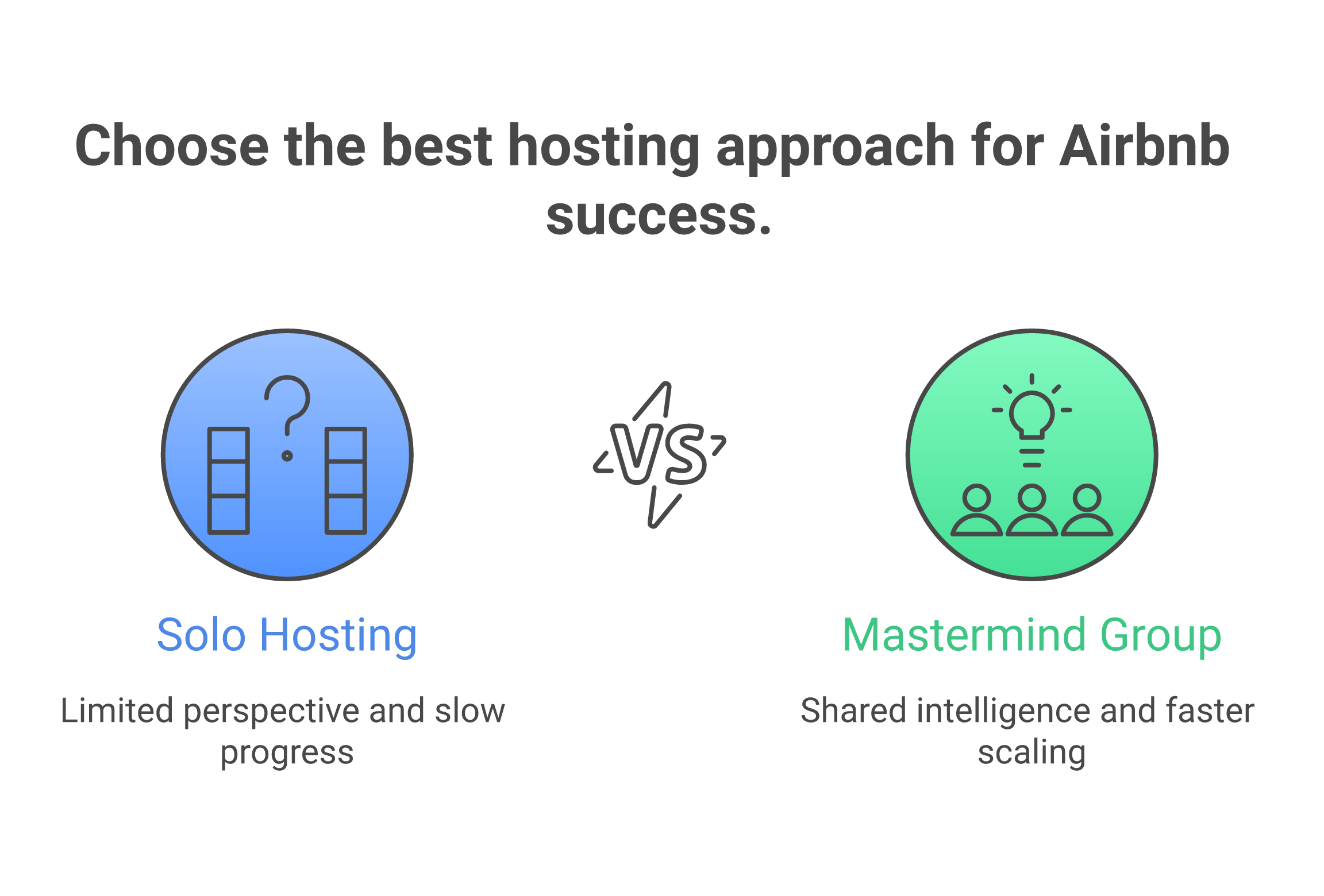
What Is an Airbnb Mastermind Group?
An Airbnb mastermind group is a structured peer group of 4 to 8 short-term rental operators who meet consistently (usually weekly or biweekly) to share wins, troubleshoot problems, and push each other to execute. The concept goes back to Napoleon Hill’s “Think and Grow Rich,” but the modern STR version focuses specifically on property management, pricing, guest experience, and scaling operations.
The format typically follows a “hot seat” model. Each meeting, one or two members get focused time where the entire group works on their specific challenge. The rest share quick updates, wins from the past week, and blockers they’re working through. Some groups charge membership fees ($200 to $2,000+ per month depending on the level), while others run on sweat equity and mutual commitment.
What separates a real mastermind from a random Facebook group? Structure, commitment, and skin in the game. A mastermind has rules, attendance requirements, and a cap on membership size. The small group format means you build genuine relationships with people who understand your exact business model, whether that’s co-listing, arbitrage, or property ownership.
For Airbnb hosts specifically, a mastermind provides access to real-time market intelligence that no course or blog can match. Members share which markets are softening, which amenities are driving bookings this quarter, which property management software just pushed a buggy update, and which cleaning crews actually show up on time. That kind of ground-level insight is only available inside tight-knit groups of active operators.
Why Solo Hosts Hit a Ceiling
Let’s start with the obvious. You’re not meant to build this alone. There’s a reason the top 1% of hosts don’t just have more listings. They have more support, better systems, and sharper strategy. And they share those behind closed doors in mastermind groups.
I’ve been in weekly group coaching calls where a single sentence saved someone five figures. I’m not exaggerating. I once brought up an issue I had with a high-maintenance guest, and another host jumped in with a script that had diffused dozens of similar situations for him. I used the script that day. Smoothed the guest out in minutes.
You can’t Google that.
That’s why masterminds matter. They create a feedback loop from people actively in the trenches. Not random blog posts or generic YouTube advice. You get access to insights that are timely, tactical, and often too valuable to be shared in free public forums.
But it’s not just about hearing others talk. It’s about contributing your own challenges so the group can solve them fast. Bring what’s blocking you, whether it’s pricing, guests, or systems, and you’ll leave with solutions that took others months to figure out.
Real-Time Coaching Beats Guessing
Every week, I jump on live calls with other serious hosts. These aren’t passive webinars. These are working sessions that keep my operation sharp.
Here’s how I approach them:
- I show up with one problem I’m currently facing (guest communication, occupancy dip, cleaner no-show, whatever’s urgent).
- I share data from the week: occupancy rate, guest complaints, pricing shifts.
- I listen to what’s working for others in their markets.
- I apply one new tactic immediately, that same day.
There’s no hiding on these calls. If your pricing strategy is off, someone will call it. If your response time is slow, someone notices. And that’s a good thing.
Why? Because this prevents slow mistakes. It stops you from spending an entire month testing something that doesn’t work when someone else already has the answer.
When I first launched in a new city, I was blindly guessing which amenities people cared about. On a coaching call, another host told me the bookings in that zip code doubled when they added blackout curtains and infant high chairs. I ordered both that night. My bookings jumped the next week.
Fast results don’t come from working harder. They come from asking better questions in smarter rooms.
Automate, Delegate, and Scale with Group Intelligence
The other massive benefit of a mastermind community? You get exposed to tools, templates, and tactics that save you hundreds of hours.
Inside our private group, hosts constantly share:
- Updated guest message scripts that increase response rate
- Cleaner checklists customized for 5-star reviews
- Software integrations that sync pricing, calendars, and reviews across platforms
- Virtual assistant training SOPs so you can scale without burning out
You’ll also see what not to do. Like the time someone bulk-booked a new cleaning crew without onboarding them. Reviews tanked. The group stepped in, shared a pre-vetted cleaner SOP, and helped them recover.
Avoiding mistakes is just as profitable as making breakthroughs.
And when you’re ready to grow? The group is your built-in research lab. Thinking about switching to a new dynamic pricing tool? Ask if anyone’s tried it. Want to test niche targeting for traveling nurses or corporate relocations? Someone’s already got the listing copy dialed in.
You’re not just getting feedback. You’re borrowing momentum from people who are 6 to 12 months ahead of you.
Building Your First Airbnb Mastermind Group From Scratch
You don’t need to wait for an invitation. I started my first local mastermind with three other hosts I met at a short-term rental meetup. We committed to a weekly 60-minute Zoom call every Tuesday at 8 AM. That consistency mattered more than the group size.
Here’s how to build one that actually sticks:
- Cap it at 4 to 8 people. Larger groups dilute the conversation. Everyone should get airtime every session.
- Set a clear format. We use a “hot seat” rotation where one person gets 20 minutes of focused problem-solving from the group. The rest share quick wins and blockers in 5 minutes each.
- Require skin in the game. Whether it’s a paid membership or just a hard rule about attendance, people who show up casually don’t contribute meaningfully. We had a “miss two calls without notice and you’re out” rule. Sounds harsh. Kept the group tight.
- Mix experience levels intentionally. A host managing 2 units brings fresh questions. A host managing 30 units brings systems thinking. Both benefit when paired together.
Where do you find these people? Local rental arbitrage Facebook groups, BiggerPockets forums, Airbnb host meetups, and short-term rental conferences. I’ve also found strong partners through co-hosting networks. If you’re doing co-listing, the hosts you work with are natural mastermind candidates because you already share operational context.
The biggest mistake I see? People join masterminds expecting to take. The ones that last are built on reciprocity. Bring data, bring problems, bring solutions you’ve tested. That’s how you earn trust fast.
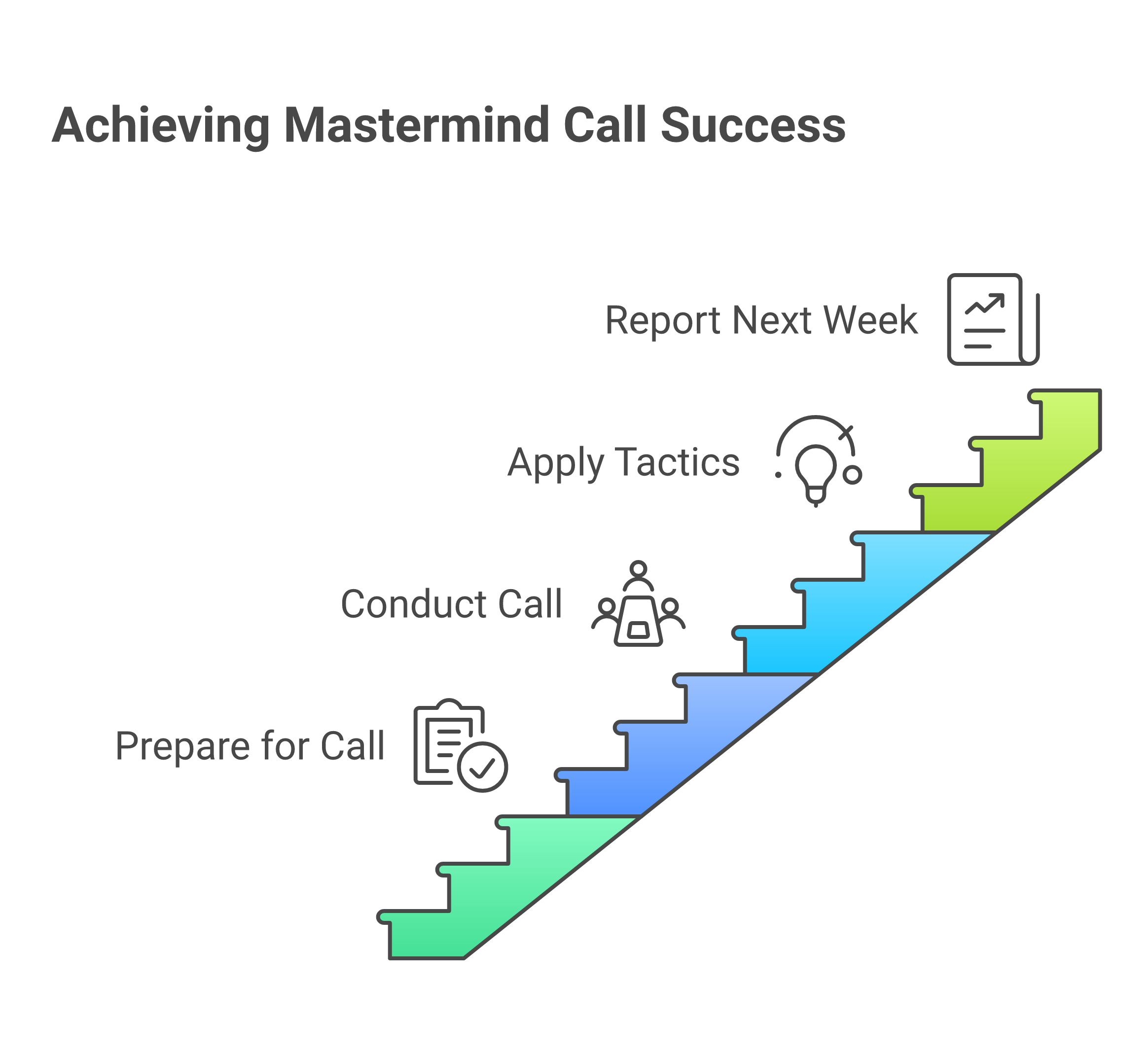
KPI Tracking: What to Bring to Every Mastermind Call
Vague updates waste everyone’s time. “Things are going well” tells the group nothing. Instead, I bring a one-page dashboard to every call. It takes me 10 minutes to prep and saves 30 minutes of back-and-forth.
Here’s what I track and share weekly:
- Occupancy rate (trailing 30 days vs. same period last year)
- Average nightly rate and whether I adjusted pricing that week
- Revenue per available night (RevPAN) across all properties
- Guest review scores (any below 4.5 gets flagged)
- Maintenance spend as a percentage of revenue
- One specific problem I need the group to solve
When everyone brings numbers, the conversation gets tactical fast. One host in my group noticed his occupancy dropped 18% in January while mine held steady. We compared our pricing rules side by side on the call. Turned out he hadn’t adjusted for a local festival that shifted dates. A 5-minute fix on PriceLabs recovered $2,400 in bookings that month.
You can build a simple tracking sheet in Google Sheets or use your property management software’s built-in reports. The format doesn’t matter. What matters is that you show up with real numbers so the group can spot patterns you’re too close to see. For more on the metrics that drive profitability, check our rental arbitrage profit calculator.
Scaling Beyond 10 Units with Group Accountability
Getting to 5 units is a hustle problem. Getting past 10 is a systems problem. And that’s where a mastermind becomes worth 10x what you’d pay for any Airbnb course.
When I hit 8 properties, I was drowning. Cleaning crews were inconsistent. Guest communication took 3 hours a day. My pricing was reactive instead of strategic. I brought this to the mastermind and got three specific recommendations in one session:
- Hire a virtual assistant for guest messaging. Another host shared his exact VA training SOP, a 12-page document that covered check-in messages, complaint resolution scripts, and review request timing. I onboarded a VA that week for $6/hour. My daily messaging time dropped from 3 hours to 20 minutes.
- Switch to zone-based cleaning. Instead of one crew for all properties, a host managing 22 units explained how he uses 3 separate crews organized by zip code. If one crew cancels, only 2 to 3 properties are affected, not all of them.
- Implement a monthly financial review. One host built a spreadsheet template that calculates net profit per unit after all expenses. I was shocked to find that one of my 8 units was actually losing $200/month after accounting for higher-than-average maintenance costs. I renegotiated that lease and brought it back to $400/month profit.
The accountability piece is just as valuable as the advice. When you tell 6 other hosts “I’m going to implement dynamic pricing by Friday,” you actually do it. Public commitments with a peer group have a completion rate I’ve personally seen run above 80%, compared to maybe 20% for things you just write on a to-do list.
If you’re stuck at a plateau, the answer probably isn’t another YouTube video. It’s putting your numbers in front of people who’ve already solved the exact problem you’re facing. That’s what starting an Airbnb business the right way looks like once you get past the basics.
In-Person Retreats vs. Virtual Masterminds
Both work. They work differently.
Virtual masterminds are consistent. Weekly calls build momentum. You can troubleshoot problems in near real-time. The low friction means attendance stays high, especially for hosts managing properties across multiple markets who can’t easily travel.
In-person retreats are concentrated. I’ve attended two multi-day events with other serious hosts, and both times I left with at least one deal or partnership that wouldn’t have happened over Zoom. There’s something about sharing meals and walking through someone’s actual property that builds deeper trust than a screen ever could.
Here’s what I’ve seen work best for in-person events:
- Keep it small. 10 to 15 people max. Larger conferences have their place, but the highest-value conversations happen in groups where everyone knows each other’s portfolio.
- Pick a host city where someone operates. That way you can tour actual properties, meet cleaning crews, and see systems in action. Theory on a slide deck doesn’t compare to watching a host’s turnover process live.
- Schedule unstructured time. The best ideas I’ve gotten came during dinner conversations, not during formal presentations. One casual chat at a rooftop bar led to a co-hosting partnership that added 3 doors to my portfolio in 60 days.
My recommendation: do both. A weekly virtual mastermind for operational rhythm, plus one or two in-person retreats per year for relationship building and big strategic moves.
Resource Sharing: The Hidden ROI of Mastermind Groups
The advice alone justifies the time investment. But the resource sharing? That’s where masterminds pay for themselves in hard dollars.
Over the past year, my group has collectively shared:
- A vendor list of 40+ vetted service providers across 8 cities, including cleaners, handymen, photographers, and interior stagers. Building that list solo would’ve taken months of trial and error.
- Pricing rule templates for PriceLabs and Beyond Pricing. One host spent 2 weeks dialing in his seasonal multipliers for a beach market. He exported his rules and I adapted them for my coastal properties in under an hour.
- Guest communication scripts for every scenario: late checkout requests, noise complaints from neighbors, damage claims, and 5-star review solicitation. These aren’t generic templates from the internet. They’re battle-tested messages refined over thousands of guest interactions.
- Bulk purchasing deals. Three of us pooled our orders for mattresses, towels, and kitchen supplies. We negotiated a 22% discount with a hospitality supplier because we hit their volume threshold together. On a 5-unit restocking order, that saved me roughly $1,100.
There’s also the intangible knowledge that doesn’t show up in any document. Understanding which neighborhoods are about to get new regulations. Hearing which property management software just rolled out a buggy update. Learning which Airbnb Superhost strategies actually move the needle vs. which ones are just vanity metrics. This kind of insider knowledge is only available inside tight-knit groups of active operators.
If you’re exploring the best Airbnb markets for 2026, a mastermind with members already operating in those cities gives you ground-level intelligence that no market report can match. I’ve avoided two bad leases this year based on warnings from group members who knew the landlords or the buildings.
Common Mastermind Mistakes That Kill Momentum
I’ve been in 4 different mastermind groups over the past 3 years. Two of them fizzled out. Here’s what went wrong and how to avoid the same fate.
Mistake 1: No clear rules from day one. The first group I joined had no attendance policy, no format, and no facilitator. Calls turned into rambling conversations. People stopped showing up by month 3. Fix this by writing a one-page charter that covers meeting cadence, format, attendance expectations, and confidentiality.
Mistake 2: Mixing people at wildly different stages. A brand-new host who hasn’t listed their first property yet needs fundamentally different advice than someone optimizing their 15th unit. Both are valid, but they don’t belong in the same mastermind. Group members should be within a 2 to 3x range of each other’s portfolio size.
Mistake 3: All talk, no implementation. The most valuable mastermind habit I’ve adopted is the “implementation report.” At the start of every call, each person shares one thing they committed to last week and whether they did it. This takes 2 minutes per person and completely changes the group’s energy. When everyone is executing, the momentum compounds.
Mistake 4: Not rotating the hot seat. If the same person dominates every call with their problems, others check out. A strict rotation ensures everyone gets focused attention and everyone practices giving strategic advice. Both sides of that equation make you a better operator.
The groups that survive past 12 months share one trait: every member treats the group like a business obligation, not a casual hangout. Show up prepared, contribute actively, and follow through on commitments. That’s the whole formula.
How to Evaluate a Paid Airbnb Mastermind
Not all paid masterminds are created equal. Some charge $500/month and deliver life-changing connections. Others charge $2,000/month and give you a Slack group that nobody uses. Here’s how I evaluate them before committing money.
Ask about the facilitator’s track record. Are they an active STR operator, or just a “guru” who teaches but doesn’t practice? I want someone who manages properties today, not someone who did it 5 years ago and now sells courses full-time. The best facilitators bring current market data to every call because they’re living it.
Check the member roster. Who else is in the group? If the other members are all beginners, you’ll spend every call answering basic questions instead of solving growth problems. If they’re all at your level or above, you’ll be challenged and stretched every week. Ask the organizer for anonymous portfolio stats (average units managed, average revenue, markets represented).
Look at the structure. Weekly calls beat monthly calls for building momentum. A hot-seat format beats open discussion for getting actionable results. A private community (Slack, Circle, or Facebook group) between calls keeps the conversation going. The best masterminds I’ve been in combine all three: weekly calls, hot-seat format, and an active async community.
Calculate the ROI threshold. If the mastermind costs $500/month, you need one actionable insight per month that saves or makes you more than $500. In my experience, that bar is easy to clear. A single pricing adjustment, vendor referral, or avoided mistake typically covers months of membership fees. For context on what you should budget for your STR business overall, see our startup cost breakdown.
Test before you commit. Most quality masterminds offer a trial call or guest session. Use it. Pay attention to the energy level, the specificity of the advice, and whether members actually follow through on commitments. If people are just showing up to chat, move on.
The 10XBNB Community Advantage
Airbnb isn’t meant to be a solo sport. If you want to scale, really scale, then you need other hosts in your ear.
But not just any hosts. Hosts who are obsessed with optimization. Hosts who take action fast. Hosts who share their wins and their war stories so you can copy the wins and dodge the landmines.
Inside a high-level mastermind, you can:
- Partner up for bulk buying on furniture and supplies
- Swap high-performing VAs and contractors
- Create referral deals to grow in new cities
- Share scripts, tools, and templates that shortcut your decisions
At one of our in-person events, I met two hosts who were both targeting traveling nurses. We swapped photos, calendar rules, and listing copy. Three weeks later, I got a 42-day booking at 1.8x my average nightly rate. That came from a single conversation.
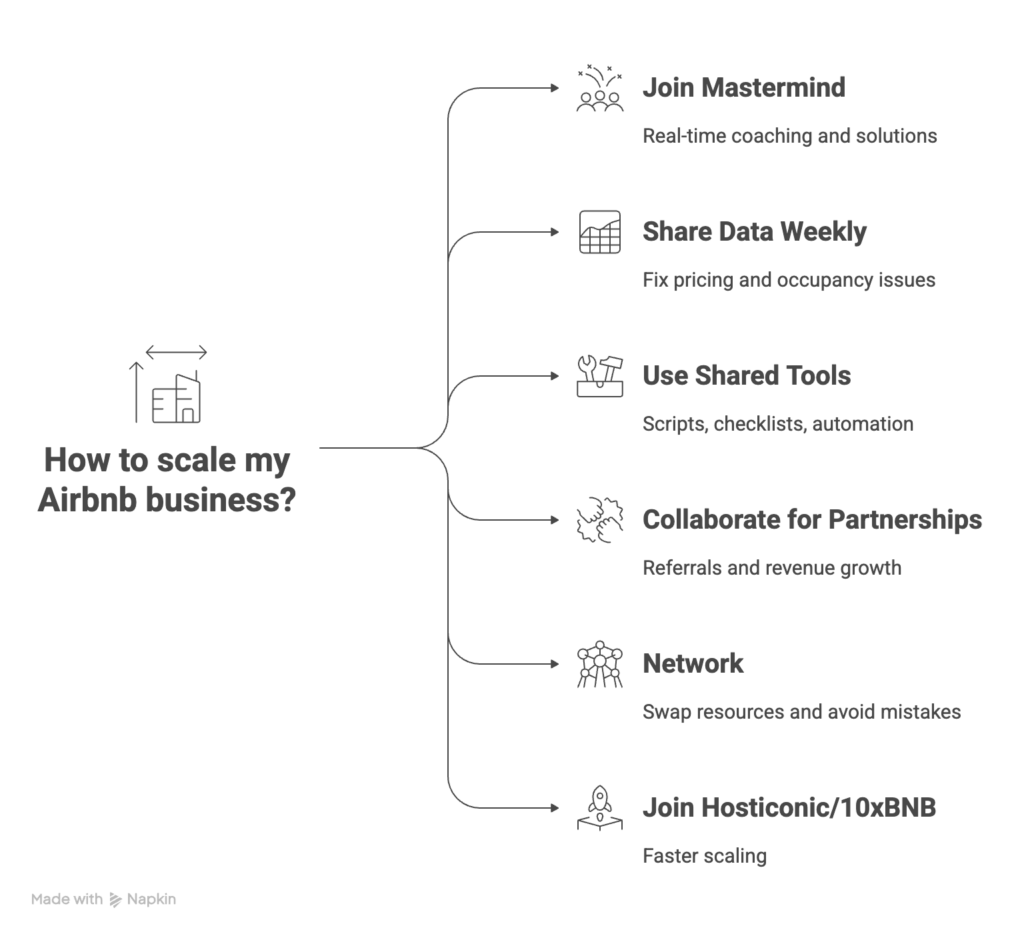
I built 10XBNB to solve exactly this problem. To connect serious rental arbitrage operators who want to scale fast with a proven system. The 10XBNB community includes weekly coaching calls, a private network of active hosts, done-for-you templates, and a track record of real student results. It’s the mastermind I wished existed when I was grinding solo.
If you’re nodding along, apply here. Show up. Ask better questions. Steal smarter answers. Let the network compress your learning curve from years to months.
I didn’t make this leap alone, and you don’t have to either.

Frequently Asked Questions About Airbnb Masterminds
How much does an Airbnb mastermind cost?
Prices range widely. Free peer-organized groups exist where members trade time and accountability. Paid masterminds typically cost $200 to $2,000+ per month depending on the facilitator’s experience, group size, and included resources. Some programs like The Abundant Host charge around $495 for a multi-week cohort. The right mastermind pays for itself within 1 to 2 months through a single actionable insight, vendor referral, or avoided mistake.
How many people should be in a mastermind group?
The sweet spot is 4 to 8 members. Fewer than 4 and you lack diverse perspectives. More than 8 and individual members don’t get enough airtime. I’ve seen groups of 10 to 12 work for monthly calls, but for weekly meetings, keep it under 8 to maintain depth and accountability.
Can beginners join an Airbnb mastermind?
Yes, but choose a group matched to your experience level. A beginner with 0 to 2 listings will get the most value from a group of hosts managing 1 to 5 properties. Joining a group of operators running 20+ units will leave you overwhelmed and unable to contribute meaningfully. If you’re just getting started, check out our guide on how to start an Airbnb business first, then find a peer group at your level.
What’s the difference between a mastermind and a coaching program?
A coaching program is typically one-to-many, led by an instructor who teaches a curriculum. A mastermind is peer-to-peer, where every member both gives and receives advice. The best programs combine both: structured coaching content plus a mastermind community where members apply what they learn together. That’s the model we use inside 10XBNB.
How do I find an Airbnb mastermind near me?
Start with BiggerPockets forums, local real estate investor meetups, and short-term rental Facebook groups in your market. Attend STR conferences and ask around. You can also start your own with 3 to 4 hosts from your local area or co-hosting network. For mentorship options, our guide covers what to look for in a mentor or group leader.
How often should a mastermind group meet?
Weekly calls of 60 to 90 minutes produce the best results for most groups. This cadence keeps momentum high and allows members to troubleshoot issues in near real-time. Monthly meetings work for more senior operators (15+ units) who face fewer day-to-day fires and want to focus on strategic quarterly planning instead.